


A winding diagram is a visual blueprint showing how coils are arranged and connected inside a motor or other electromagnetic component. It maps out important details like coil placement, phase alignment, and slot positions, which are crucial for ensuring the motor operates efficiently and as intended.

These diagrams are essential tools in motor design, troubleshooting, and rewinding tasks. But here’s the catch—winding diagrams often vary between manufacturers and can sometimes be incomplete or missing key details. That’s why learning how to read and interpret them accurately is such a valuable skill for anyone working with electric motors or stators.
Common Winding Types and Patterns
Understanding winding types is key to interpreting diagrams and predicting motor behavior. Here’s a quick guide to the most common ones:
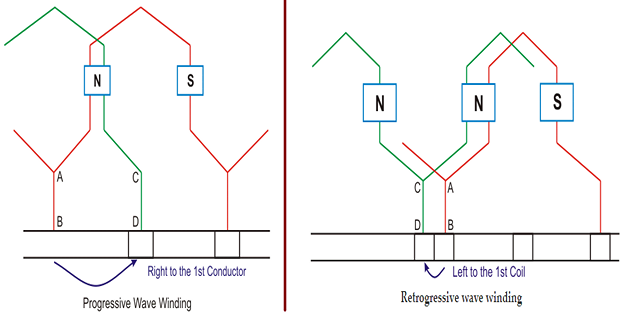
Lap Winding: Used in many AC machines, this layout places each coil in two adjacent slots with a progressive or retrogressive sequence.
Concentric Winding: Coils share a common center point and vary in diameter, often used in motors with automated winding machines.
Single-Tooth/Concentrated Winding: Each coil wraps around a single tooth, maximizing compactness and used in brushless DC motors.
Random Winding: Wires are wound without strict positioning, typical in lower-cost, high-volume motors.
Formed Winding: Coils are pre-shaped and precisely placed, offering better performance and uniformity.
Symbols and Legends

Before you dive into reading a winding diagram, it’s important to get familiar with the symbols and legends—they’re the language of the diagram.
Most diagrams include a legend or abbreviation page that decodes key elements like:
Coil symbols: Represent windings, usually drawn as arcs or loops
Contact symbols: Show switches (normally open/closed) and relay states
Terminal blocks: Mark wire connection points (often labeled X0, XC, etc.)
Phase identifiers: L1, L2, L3 for three-phase power, or U/V/W for motor phases
You’ll also find tags and wire numbers that help trace connections and devices across pages—especially useful when troubleshooting.
Now, keep in mind that symbols can vary slightly depending on the ECAD tool used. For example, a fuse symbol in EPLAN might look different than one in AutoCAD Electrical, even though they represent the same function.
How to Read a Winding Diagram

Reading a winding diagram might seem tricky at first, but with the right steps, you’ll get the hang of it.
These diagrams are essential for diagnosing, repairing, or designing motors and other electromagnetic devices. Here’s how to break it down and understand what you’re looking at.
Step 1: Start with the Legend
Begin by decoding the symbols, abbreviations, and labels using the diagram’s legend or key—it’s your go-to guide for understanding each component.
Step 2: Identify Coil Sides

Locate the “go” and “return” coil sides—these show how the wire travels through different slots in the stator or bobbin.
Step 3: Count Slots and Coils
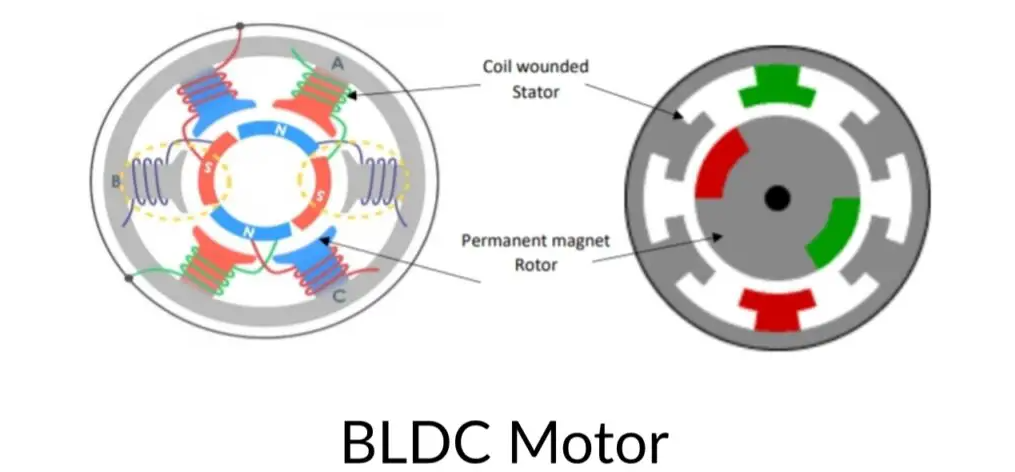
Count the slots and coils carefully. Symmetrical layouts are important for proper phase balance and consistent performance.
Step 4: Determine Coil Span and Pitch

Measure the distance between the go and return sides of a coil. This affects electrical pitch and impacts phase alignment and harmonics.
Step 5: Look at Connection Paths
Trace the coil connections—check if they’re grouped in series or parallel, and how they relate to the phases.
Step 6: Identify Polarity and Phases
Figure out the coil polarities and phase groupings. This step is crucial for ensuring correct motor rotation.
Step 7: Verify Winding Layout

Match the visual layout with a known winding type, such as lap winding, concentric, or single-tooth—each has different performance implications.
Step 8: Cross-check for Missing Information
Many winding diagrams are incomplete or missing interconnectors. Use logic and standard practices to infer what’s missing.
FAQs About Reading a Winding Diagram
1. What does “coil span” mean?
Coil span is the number of slots between the two sides of a coil. It directly affects coil pitch and electrical performance.
2. Why is polarity important in winding diagrams?
Polarity ensures that the magnetic fields generated by coils work in sync. Incorrect polarity can lead to malfunction or reverse rotation.
3. Are all winding diagrams complete?
Not always. Some lack interconnectors or polarity markings, so you’ll need to interpret missing details using engineering rules and visual logic.
Conclusion
Reading a winding diagram may seem complex, but once you understand the symbols, coil layout, and connection logic, it becomes a powerful tool for motor diagnostics and design. Mastering this skill ensures better accuracy, performance, and safety in electrical systems.
Ready to apply your skills? Start analyzing real diagrams, double-check coil spans, and don’t ignore the legend. With practice, you’ll read any winding diagram with confidence—power your understanding one slot at a time!

 English
  Spanish
  Russian
  Italian
  German
  Chinese