


Transformer Winding: Definition & Core Concepts
Explore transformer winding, its types, working principles, and applications. Learn how windings impact voltage regulation, efficiency, and energy transfer.


Renewable energy is an ideal choice for a clean power source. Currently, our energy needs are dependent on fossil fuels, causing greenhouse emissions. Switching to renewable energy can reduce this dependence on fossil fuels.

So one way to do this is to install windmills and solar panels in large fields or rooftops. They use solar and wind energy to convert to electricity. An electrical generator can be used to harness the power of wind, sunlight, and water. The electricity generated can fuel daily life functions.
To ensure optimum production, these generators must work efficiently at a high speed. What makes them do so are coils in them, which are wound by another device known as a winding machine.
Find out more about these machines and their role in the renewable energy industry.
Various winding machine types are used to make electrical components such as coils and rotors. Continue reading to learn more about the different types:

A machine designed for winding wire or coils onto a core or former is known as a coil winding machine. This machine serves various purposes, such as creating inductors and electric motors.
Coil winding machines are of three types–automatic, semi-automatic, and manual. These machines are operated differently; however, the basic function remains the same. The wire is fed from a spool or reel and guided through a mandrel or bobbin. As the mandrel or bobbin rotates, the wire is wound around it in a specific pattern.
Coil winding machines are useful in the production of wind turbine generators and solar panels, along with other electrical components.
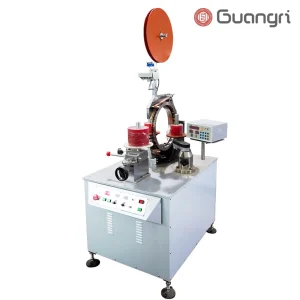
Paper, plastic, metal, or composite materials are used in making tape-winding machines. These machines are capable of designing various types of tapes onto spools, bobbins, or other types of cores. There are various types of tape winding machines depending on how the tape is wound around the coils and its purpose.
Generally, they can handle a range of tape widths and thicknesses and help in tension control mechanisms or automated winding processes.
You’ll find these machines in industries where tapes play a significant role, such as in the manufacturing of thin-film solar panels.
Thanks to these machines and their capabilities, they are useful in many ways.
Tightly coiled, high-precision coils in generators and motors ensure optimal magnetic field interaction. This is what leads to high efficiency in electricity generation. You can make it possible only with the right winding machine.
Copper and silicon make winding machines resistant to harsh environmental conditions. While the two robust materials extend the lifespan of the machine, they also minimize maintenance downtime of the renewable energy equipment.
When looking to produce coils for large-scale renewable energy projects, scale up. Doing so enables the development of megawatt-scale wind farms and solar power plants. These, as we know, contribute significantly to grid-level clean energy supply.
Some recent advancements in winding technology have led to increased efficiency and reduced production costs. This ensures renewable energy systems are more affordable while also being a competitive alternative to traditional fossil fuel power generation.
Clean, renewable energy has the least impact on the environment. The reduced emissions will also lower the carbon footprint and greenhouse gases.
Winding machines are essential equipment used in the manufacturing of various electrical components in clean energy sources. We’ll discuss a few examples:
Wind turbines are massive machines that have blades similar to a fan. These turbine blades move with the strong wind to generate electricity. Here, winding machines are used to produce coils in these generators to create the electric fields needed. These electric fields generate power that is stored in the grid. Buildings can use this clean and green energy while also reducing bills.
Below are some more uses of generators in renewable energy sources:
Similar to basic wind turbines, hydropower generators use winding machines to create stator and rotor coils. It generates electricity from the flow of water.
These plants use winding machines to convert heat from the Earth’s interior into electricity.
Emerging technologies like these rely on winding machines to create electricity from the movement of tides and waves.
Solar panels contain several solar cells made using a semiconductor material. It contains silicon sandwiched between two layers of oppositely charged electrodes. The winding machines have thin coiled wires around the semiconductor material to create these electrodes.
As the sun’s rays strike the cell, it give energy to the electrons and excites them in the semiconductor. The flow of electrons in an excited state from one electrode to the other generates direct current (DC) electricity.
Now that you know about the machines, take the next leap. Read the factors you must consider before you buy them.
The type of equipment and the winding requirement for it are the deciding factors for choosing a specific winding machine. Distinct specifications such as wire size, tension, speed, and winding patterns should be taken into account for obvious reasons.
To produce large volumes of energy, you need two things: speed and efficiency. This demand can be satiated by winding machines that are capable of quick cycle times, automatic material handling, and easy spool changes. On the one hand, they avoid delays, and on the other, you get desired results using the latest technologies.
The delicate solar cells need a high-speed, precision machine to lay and bond the cells onto backing materials efficiently. So, looking for features such as automated material handling, laser edge alignment, and controlled heat is a wise decision.
Note the dimensions of the coil, such as the diameter, width, and height. Knowing the size and geometry of a coil ensures that you find the full range of coils that you require for your specific needs.
While the renewable energy sector is already making efforts to curtail greenhouse gas emissions, you do your bit. Pick energy-efficient winding machines that help with the cause and lower the overall impact on the environment.
The innovative future of winding machines looks bright as the demand for renewable energy worldwide rises. With continuous technological advancements, we can expect some smarter machines to take center stage. Advances in materials and automation will assist these, promising even greater efficiency, reliability, and affordability. So sit back while the winding machines make cleaner energy production easier and within reach.


Explore transformer winding, its types, working principles, and applications. Learn how windings impact voltage regulation, efficiency, and energy transfer.

Compare toroidal and E-I transformers by efficiency, noise, size, cost, EMI, inrush current, and applications to find the right choice.

Master coil winding machine operation with practical tips on setup, tension control, programming, safety, maintenance, and precise, efficient winding.
A guide to leading transformer winding machine manufacturers worldwide, comparing their specialties and solutions to help you find the right production partner.

A concise guide to concentrated vs distributed windings, covering structure, EMF, efficiency, losses, and key applications.

Top coil winding machine manufacturers in India offer CNC, toroidal, and SPM solutions for transformer and motor industries worldwide.
 English
  Spanish
  Russian
  Italian
  German
  Chinese