Winding machines help wind wires, cables, and yarns onto coils, bobbins, and spools. From the electrical components that power our cities to the packaging that protects our goods, winding machines play a crucial role in countless industries. However, their use is not as simple as turning raw material into some usable form. Winding machines enhance productivity and efficiency in the manufacturing processes and ensure smooth functioning.
There is an increase in demand for automation today, and this has led to widespread growth and development of winding machines. According to Fortune Business Insights, the market will reach a staggering $395 billion by 2029. In the forecasted period, the market will grow exponentially, and the spur is attributed to the desire to improve product quality and efficiency and reduce overall costs.
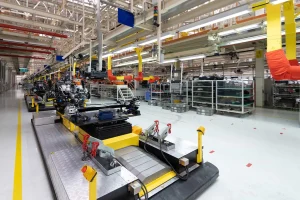
Whatever the reason, winding machines help drive automation in several areas. Before we discuss winding machines in detail, let’s understand industrial automation.
What is industrial automation?
Industrial automation is nothing but a series of technologies that use control systems such as robots and computers. These systems can work independently with feedback loops and sensory programs designed to adjust the operations automatically.
Types of industrial automation
This automation is mainly of four types:
Fixed automation
Fixed automation systems or hard automation systems are created to perform a specific task repeatedly. These are usually employed for high-volume production of standardized products.
Hard automation systems find application in the food and textile industry.
Programmable Automation
As the name suggests, these systems use programmable logic controllers (PLCs) or other computers to control machines and processes. The programs can be altered to accommodate different products or production requirements. Initial setup may be costly, but in the long run, it proves useful.
Such automations are widely used in machinery manufacturing and automobiles.
Flexible automation
Flexible automation or soft automation is used to produce a variety of products. Mostly used in computer-controlled manufacturing systems where a human instructs the equipment to carry out the process.
This kind of automation system is used in discreet manufacturing in the textile industry. Other compatible manufacturing systems include job shop manufacturing (in custom machinery), batch process manufacturing (in the pharmaceutical industry), and continuous process manufacturing (in food and beverage manufacturing).
Integrated Automation
Integrated automation implies complete automation of manufacturing operations. These are handled entirely by computers with little or no human intervention.
There are several technologies that use integrated automation systems, including computer numerical control machine tools, computer-aided process planning, automatic storage and retrieval systems, automated conveyor belts and cranes, and automated material handling systems, e.g., robots, among others.
Which Industries are Using Automation Systems and Robotics?
Different industries are now employing automation systems and robotics to streamline their work, be more productive, and increase their ROI. These industries include:
Automotive
Condiment packaging
Healthcare
Manufacturing
Transportation
Agriculture
Electronics
Industrial automation
Prepared Foods
Retail
Types of Winding Machines in Industrial Automation
Different winding machines are utilized for automation purposes.
Coil winding machines
These machines create an electromagnetic coil by looping wire around a core. This coiled structure is used across various industries for different purposes, such as in making chokes, inductors, and electric motors, among others. This makes them fit the requirements of industrial automation, whether for heavy-duty or medium coil winding.
Electromagnetic winding machines play a key role in manufacturing essential components that help optimize the performance of automated devices. These include actuators, servo motors, transformers, and other electrical components that power automation equipment.
Additionally, precisely wound coils are also required for making motors that drive a robot’s limbs and joints.
Filament winding machines
Filament winding works for industrial automation. They are used to manufacture composite materials by laying down continuous filaments, such as fibers or tapes, onto a rotating mandrel. This forms hollow structures for pipes and tanks. Circular or prismatic parts are also developed using filament winding machines. An example of this is the development of lightweight aerospace components.
Features of Winding Machines (useful for automation and robotics)
Many winding machines have special features to cater to the needs of the automation and robotics process. These include but are not limited to:
Automatic splice initiation: This feature ensures that there are clean cuts and no overlapping has taken place. This automatic feature is useful in increasing productivity, reducing waste, and keeping a check on quality.
Web break detection: A few Industrial winding machines come with built-in sensors to control the spooling material. These sensors work by releasing a beam of light in the direction of the material to see if the light is reflected. No reflection implies something is wrong with the procedure.
Actuated knife cut-off: This feature allows the blade to cut the material at the desired place. This takes place when the spool has attained the required diameter.
Key Factors in Selecting Winding Machines
When choosing a winding machine for industrial application, look for the following:
Application/ Material
Type of wire: you must establish the type of wire you’ll be winding with the machine, such as copper, magnet wire, or optical fiber. This holds importance as each material has different properties and, therefore, requires compatible winding techniques.
Geometry of the coil: Know the desired shape and size of the final coil beforehand, including factors like diameter, height, and winding pattern. This is often the no. 1 deciding factor in winding machines.
Production volume: without learning the required production output and winding speed, you may end up selecting the wrong machine. High-volume applications need high-speed machines, while precision winding might suffice with slower speeds.
Winding Technology:
Traverse winding: Helps in streamlining the winding of wide coils into long, thin strips.
Cam winding: Guides in precise control over winding patterns for complex coil shapes. An example is robotized filament winding.
CNC winding: It provides flexibility and control for intricate winding patterns and multi-axis movements.
Machine Specifications:
Spindle speed and torque: Always choose a machine with sufficient speed and torque to handle your wire material and production requirements.
Tension control: to ensure consistent winding quality and prevent wire breakage, select a machine with appropriate tension control mechanisms.
Automation level: Depending upon the level of automation you need, decide whether you need manual or fully integrated systems with robots and conveyor belts will fulfill your requirements.
More factors
Brand reputation and service: Only a reputable manufacturer with a proven track record and quick after-sales service should be chosen.
Budget: As the winding machines can range significantly in price, so determine your budget constraints before exploring options.
Safety features: Make sure that the winding machine complies with safety regulations and incorporates features like guards and emergency stops.
Applications of the Winding Machines
These machines come equipped with various features to ensure optimal performance and control in various industries. We will dissect each one by one.
Textile Industry
Yarn winding: Winding machines accurately wind yarn onto bobbins, cones, or other carriers for weaving, knitting, embroidery, and other textile processes.
Fabric winding: Used for winding fabrics onto rolls for storage, transportation, or further processing like printing or dyeing.
Electrical and Electronic Components
Electric motors: Winding machines are essential for creating the coils used in various types of electric motors, ranging from tiny motors in smartphones to massive industrial motors.
Transformers: The intricate coils found in transformers are meticulously wound using these machines for efficient power transmission and distribution.
Inductors and capacitors: These crucial components in electronic circuits rely on precisely wound coils, which winding machines provide with accuracy and consistency.
Electromagnets: Winding machines are used to create the coils for electromagnets used in various applications, including lifting magnets, MRI machines, and particle accelerators.
Automotive Industry
Tire winding: Wind steel wires and fabric layers to build the foundation of tires for cars, trucks, and other vehicles.
Hose winding: Winding flexible hoses for fuel lines, brake lines, and other automotive applications.
Packaging Industry
Film winding: Affix or wind plastic films onto rolls for packaging applications like food wrapping, stretch film, and labels.
Tape winding: Adhesive tapes are rolled tightly onto rolls for industrial and commercial use.
Renewable Energy
Wind turbines: The massive coils in wind turbine generators are wound using specialized machines to ensure efficient power generation.
Solar panels: The copper wire used in solar cells is wound onto conductive strips using high-precision winding machines.
Other renewable energy systems: From hydro generators to wave energy converters, winding machines play a role in creating the essential coils for these technologies.
Consumer Electronics and Appliances
Speakers, headphones, and microphones: The voice coils in these devices are carefully wound using winding machines for optimal sound quality.
Electric vehicle components: From battery packs to electric motors, winding machines are used in the production of various components for electric vehicles.
Transformers in power adapters: Miniature transformers in power adapters rely on precise coil winding for efficient voltage conversion.
A Few Other Applications
Medical device manufacturing: Winding suture thread and other medical materials for precise control and sterility.
Construction: Winding reinforcing mesh and other materials for building applications.
Aerospace: Wind composite materials for aircraft and spacecraft components.
Challenges in Winding Automation
Here are several significant challenges.
Automation requires robust algorithms to detect and prevent any potential windings before they occur.
Sensors are affected by temperature, humidity, and dust. These factors may cause the readings of the sensors to be inaccurate or misleading, leading eventually to problems in quality control.
Exact sensors for measuring and controlling the tension, position, and diameter of a wire, especially at high speeds.
Sensors are required to be calibrated and maintained regularly for best performance.
Winding machines handle copper, aluminum, and polymers, each of which has different properties and handling requirements.
With frail or fine wires, automated systems must avoid tangles and breakages.
Real-time data from sensors and cameras must be quickly processed and analyzed for precise control over winding parameters.
Getting the feedback loop between sensors and actuators perfect is vital to achieving winding processesthat are correct and stable.
Maintenance and Troubleshooting for Winding Machines:
It is important to overhaul your machine for optimum results.
Perform routine maintenance on the wound-cleaning machine. This includes promptly clearing external dust and sludge from the winder motor, ideally done daily.
Clean other parts of the machine that are not connected to electricity, such as the exterior panels or control knobs.
Look at the screws in fixing parts, including end cap screws, foot screws, and bearing cap bolts. If they are loose, give them a little twist.
Read the manufacturer’s recommendation and calibrate the tension sensors and other measurement equipment. Calibrations can also be made more frequently for critical processes.
Take regular care of all bearings. This may involve cleaning and replacing grease or lubricating oil at varying intervals depending on work conditions, environment, and lubricant type. Generally, cleaning and lubrication should occur every 3-6 months. In harsher environments with high temperatures or dust, clean and lubricate more frequently.
Don’t let the workplace risk of fire damage your insulation of winding machinery. Keep the environment dry and be mindful of humidity and corrosive gases, as they can lead to dangerous grounding faults and electric shocks. Regularly checking insulation resistance and ensuring solid grounding are proactive steps to prevent accidents and equipment malfunctions.
Parting Thoughts
Winding machinesare helping industries adopt automation and robotics like never before. From household goods like electric motors and transformers to medical equipment and aerospace, they can help make anything. However, with the rapid changes in technology, winding machines also vary in degrees of complexity and accuracy.
With the continuous development of new materials, sensors, and control systems, winding machines will become even more versatile and efficient. They will play an even more important role in the manufacturing of the future, helping to produce the products that we need to live our lives.
Related Winding Machines for You
Automatic Inductor Winding Machine
Inductor Winding Machine
Stator Winding Machine
Rectangular Transformer Winding Machine
Desktop Toroidal Transformer Winding Machine
Floor Type Toroidal Transformer Winding Machine
Toroid Taping Machine
Hear From Our Proud Partners
With Guangri's winding machines, we've noticed a tremendous boost in efficiency and consistent performance that has reshaped our production landscape.
We've come to rely on the durability and user-friendliness of Guangri machinery; it's become the cornerstone of our operational success.
The precision and speed of Guangri machines have been game-changers, catapulting our productivity to new heights and streamlining our processes.
Seamless production and top-notch quality are the hallmarks of our Guangri machine experience, ensuring uninterrupted operations.
Guangri's technological innovations have not just improved but completely transformed our manufacturing workflow with remarkable efficiency.
In an industry where excellence is expected, Guangri machines stand out for their reliable performance and superior craftsmanship.
Guangri has redefined reliability for us. The exceptional performance of their machines has exceeded what we thought was possible.
Guangri's precision machinery has distinguished our production capabilities, setting a new standard of excellence within our industry.
Lasted Articles for You
Stay current with our newest contributions to the world of industrial machinery and innovation. Engage with our most recent thought leadership pieces and enrich your understanding of the industry’s future.
Explore transformer winding, its types, working principles, and applications. Learn how windings impact voltage regulation, efficiency, and energy transfer.
A guide to leading transformer winding machine manufacturers worldwide, comparing their specialties and solutions to help you find the right production partner.
To provide the best experiences, we use technologies like cookies to store and/or access device information. Consenting to these technologies will allow us to process data such as browsing behavior or unique IDs on this site. Not consenting or withdrawing consent, may adversely affect certain features and functions.
Functional Always active
The technical storage or access is strictly necessary for the legitimate purpose of enabling the use of a specific service explicitly requested by the subscriber or user, or for the sole purpose of carrying out the transmission of a communication over an electronic communications network.
Preferences
The technical storage or access is necessary for the legitimate purpose of storing preferences that are not requested by the subscriber or user.
Statistics
The technical storage or access that is used exclusively for statistical purposes.The technical storage or access that is used exclusively for anonymous statistical purposes. Without a subpoena, voluntary compliance on the part of your Internet Service Provider, or additional records from a third party, information stored or retrieved for this purpose alone cannot usually be used to identify you.
Marketing
The technical storage or access is required to create user profiles to send advertising, or to track the user on a website or across several websites for similar marketing purposes.
To provide the best experiences, we use technologies like cookies to store and/or access device information. Consenting to these technologies will allow us to process data such as browsing behavior or unique IDs on this site. Not consenting or withdrawing consent, may adversely affect certain features and functions.
Functional Always active
The technical storage or access is strictly necessary for the legitimate purpose of enabling the use of a specific service explicitly requested by the subscriber or user, or for the sole purpose of carrying out the transmission of a communication over an electronic communications network.
Preferences
The technical storage or access is necessary for the legitimate purpose of storing preferences that are not requested by the subscriber or user.
Statistics
The technical storage or access that is used exclusively for statistical purposes.The technical storage or access that is used exclusively for anonymous statistical purposes. Without a subpoena, voluntary compliance on the part of your Internet Service Provider, or additional records from a third party, information stored or retrieved for this purpose alone cannot usually be used to identify you.
Marketing
The technical storage or access is required to create user profiles to send advertising, or to track the user on a website or across several websites for similar marketing purposes.




 English
  Spanish
  Russian
  Italian
  German
  Chinese