


Introduction
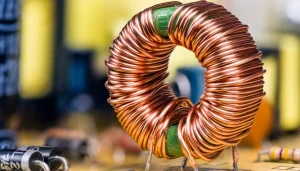
Toroidal transformer are widely used in high-end industries such as audio equipment, medical devices, and new energy vehicle. Their advantages—high efficiency, low magnetic leakage, compact structure, and low noise—make them an ideal choice for modern power systems. However, the precision of the manufacturing process directly determines the electrical performance and service life of the transformer.
Winding accounts for over 40% of the toroidal transformer manufacturing process. Selecting the right toroidal winding machine directly improves efficiency, yield rate, and transformer performance. As a result, winding equipment has become a key factor limiting production upgrades in many transformer factories.
This article shows how to choose the right toroidal transformer winding machine to improve manufacturing quality and efficiency.


The Special Characteristics of Toroidal Transformer Winding
The Special Characteristics of Toroidal Transformer Winding Determine the Core Role of Toroidal Transformer Winding Machine Selection
Compared with traditional EI-type transformers, a toroidal transformer uses a circular core structure. Bobbinless winding requires the coil to be tightly wrapped around the core, demanding high precision in the toroidal winding process. During winding, the wire must be evenly arranged with stable tension to prevent overlapping, loose turns, or wire breakage. Accurate turn control ensures proper winding density and depends on a reliable toroidal transformer winding machine.
The challenges of toroidal transformer winding mainly include three aspects.
First, the winding space is limited. The small window of the toroidal core requires precise wire guiding and stable wire laying within a confined area.
Second, different applications require diverse winding structures, such as single-wire winding, multi-wire parallel winding, or multi-layer cross winding. The winding machine must therefore provide sufficient flexibility to support different production processes.
Third, performance requirements are extremely strict. Industries such as medical, aerospace, and new energy demand toroidal transformers with low loss, high insulation, and consistent performance.
If the winding machine cannot meet these requirements, even high-quality cores and copper wires cannot ensure a qualified product. Unstable tension may stretch or loosen the wire, affecting resistance and inductance. Poor wire placement can lead to overlapping turns, higher copper loss, and increased magnetic leakage. Turn count errors can cause output voltage deviations and reduce transformer reliability.
Three Core Pain Points in Toroidal Transformer Manufacturing
Choosing the Right Toroidal Transformer Winding Machine Directly Solves the Three Core Pain Points in Toroidal Transformer Manufacturing
In actual production, most manufacturers face three major challenges: low winding efficiency, poor product yield, and inconsistent performance. The root cause of these issues is often the mismatch between the winding machine and the production requirements. Industry data and real cases confirm that the right winding machine can greatly improve quality and production efficiency.
Pain Point 1: Low Winding Efficiency, Unable to Meet Market Demand
Traditional manual winding of a 100–500VA toroidal transformer can take 30–60 minutes and requires continuous operator control. This results in low efficiency and increases the risk of errors caused by operator fatigue. In contrast, a fully automatic toroidal winding machine can reach speeds of up to 1200 RPM through advanced control systems and multi-axis synchronization. A single machine can produce 800–1000 units per day, 3–5 times more than traditional equipment, while enabling unattended operation and reducing labor costs.
For example, the fifth-generation vertical toroidal winding machine developed by Foshan Guangri Electronic Machinery Co., Ltd. Its modular design and high-speed servo system cut changeover time to 15 minutes and increase efficiency by 60%. After introducing this equipment, a new energy enterprise doubled its toroidal transformer production capacity and successfully met delivery demands.
Pain Point 2: Low Product Yield and Excessive Production Loss
The winding yield rate of toroidal transformers directly determines manufacturing cost. Industry data shows that when an unsuitable winding machine is used, the defect rate in the winding process can reach 10%–15%. The main defects include wire breakage, overlapping turns, insulation damage, and turn-count deviations, all of which lead to product scrap. High-quality and well-matched winding machines, however, utilize precise closed-loop tension control, accurate turn counting, and optimized trajectory algorithms to reduce the defect rate to below 0.5%, and even below 0.3%.
For instance, in the production of miniature toroidal transformers used in medical equipment, the specialized winding machine from Switzerland’s Schleuniger uses a dual closed-loop tension control system that keeps copper wire tension fluctuations within ±3g. This effectively prevents wire stretching and insulation damage, increasing the winding yield to 99.7%. Compared with traditional equipment, it reduces material losses by more than 90%, saving companies hundreds of thousands of yuan in raw material costs annually.
Pain Point 3: Poor Performance Consistency, Unable to Meet High-End Application Requirements
High-end industries such as medical devices and aerospace require extremely high performance consistency in toroidal transformers. Within the same production batch, inductance deviation typically must remain within ±2%, while resistance deviation must stay within ±1%. Manual winding or basic equipment often cannot maintain stable winding parameters due to operator variation and limited precision, leading to inconsistent product performance and making them unsuitable for high-reliability applications.
Modern high-precision toroidal winding machines solve this challenge. Equipped with advanced servo systems and precision guide rails, these machines can achieve winding accuracy of up to ±0.008 mm and turn-count precision of 0.1 turns. Stable tension control and precise wire positioning ensure consistent spacing and winding layers, significantly improving batch-to-batch product consistency.
For example, advanced winding machines used in marine transformer production can maintain positioning accuracy of 0.01 mm/m even in harsh environments such as salt-spray conditions. This level of precision helps manufacturers achieve extremely high consistency rates, meeting the strict reliability standards required in offshore energy and other demanding industries.
Core Principles for Selecting a Toroidal Transformer Winding Machine
Core Principles for Toroidal Transformer Winding Machine Selection: Matching Production Needs Is Key

The essence of selecting the right winding machine is not pursuing the most advanced or expensive equipment, but achieving performance compatibility, efficiency matching, and cost control based on actual production requirements. Based on the 2026 industry procurement guidelines and technology trends, the following four core principles are recommended for manufacturers.
1. Precision Matching: Select the Appropriate Accuracy Level Based on Product Positioning
Winding accuracy is the core guarantee of toroidal transformer performance. Selection should be based on application requirements:
- For general industrial control toroidal transformers, winding accuracy should be ≤0.02 mm, with turn error ≤±1 turn.
- For high-end products used in medical, 5G, or aerospace industries, winding accuracy should be ≤0.01 mm, with turn error ≤±0.5 turns.
- For miniature toroidal transformers (such as those used in pacemakers), accuracy must reach ±0.005 mm.
Tension control accuracy should also be considered. High-end products should use equipment with tension fluctuation ≤±2% to prevent performance issues caused by tension variation. For example, the six-axis linkage winding machine from Marsilli (Italy) uses a 3D dynamic compensation system to solve the edge-turning problem in flat-wire winding. This reduces insulation damage rates to below 0.3% and meets the high-precision requirements of toroidal transformers used in new energy vehicle drive motors.
2. Efficiency Matching: Select the Appropriate Automation Level According to Production Scale
Manufacturers should choose manual, semi-automatic, or fully automatic winding machines based on their production capacity:
- For small-batch and multi-specification customized production (daily capacity <500 units), semi-automatic winding machines provide a balance between flexibility and cost.
- For large-scale standardized production (daily capacity ≥1000 units), fully automatic winding machines are recommended. These machines support automatic wire laying, wire-break detection, and data traceability, enabling unattended production and significantly improving efficiency.
Changeover efficiency should also be considered. Modular equipment can reduce changeover time to less than 15 minutes, making it suitable for multi-variety small-batch production and avoiding equipment idle time. The Panasonic JM-3000 series winding machines reduce changeover time by 80%, making them highly suitable for multi-specification toroidal transformer production and widely favored by companies supplying 5G base stations.
3. Process Compatibility: Meet Diverse Winding Structure Requirements
Toroidal transformers used in different applications often require different winding structures. The winding machine must therefore support various process requirements:
- For multi-wire parallel winding (such as large-current transformers), equipment should support at least 16 wires wound simultaneously.
- For multi-layer cross winding or figure-eight winding (used in high-frequency transformers), machines should include trajectory optimization algorithms.
- For special-shaped toroidal transformers, six-axis linkage or magnetic levitation winding technology may be required.
For example, the Detzo H-2000 winding machine (Germany) integrates dual-wire parallel winding technology, improving efficiency by 60% and meeting the requirements of toroidal transformers used in 5G base station filters. The Sabic ultra-low-temperature winding machine (Japan) uses a constant-temperature oil bath lubrication system that enables stable winding at temperatures as low as -40°C, making it suitable for high-speed railway transformer production.
4. Cost Control: Balance Initial Investment and Long-Term Returns
When selecting a winding machine, companies must balance initial purchase cost with long-term operating benefits. Basic semi-automatic machines have lower purchase costs and are suitable for small-scale production, but they typically involve higher labor and material loss costs. Fully automatic high-precision winding machines require higher initial investment (approximately 400,000–600,000 RMB), but significantly reduce labor costs and improve yield rates, resulting in long-term ROI exceeding 120%.
In addition, equipment reliability and after-sales service should be considered. Manufacturers should prioritize suppliers with a mean time between failures (MTBF) exceeding 8,000 hours, and those offering at least one-year warranty and 24-hour technical support, such as Foshan Guangri Electronic Machinery Co., Ltd., to avoid production interruptions caused by equipment failures.
Conclusion:
The Winding Machine Is the “Core Engine” of Toroidal Transformer Manufacturing
The quality of a toroidal transformer starts with the core and copper wire, but it is ultimately determined by the winding process and the precision of the winding machine. As industries such as new energy, 5G, and medical technology continue to grow, the demand for high-performance toroidal transformers is rapidly increasing. Choosing the right winding machine is therefore no longer just an equipment purchase—it is a strategic decision that directly impacts product quality, production efficiency, and manufacturing costs.
For transformer manufacturers, the right winding machine can significantly improve efficiency, increase yield rates, and ensure consistent product performance. With winding technology evolving toward higher precision, automation, and flexibility in 2026, manufacturers should carefully evaluate their production needs and select the most suitable equipment. The right toroidal winding machine can become the true “core engine” of modern transformer manufacturing, helping companies enhance competitiveness and expand production capacity.
FAQs
Why is the winding machine so important in toroidal transformer manufacturing?
The winding process accounts for more than 40% of the toroidal transformer manufacturing process. The precision of the winding machine directly affects coil arrangement, tension stability, and turn accuracy. A high-quality toroidal transformer winding machine ensures uniform winding, reduces defects such as wire breakage or overlapping turns, and significantly improves transformer performance and reliability.
What are the main challenges in toroidal transformer winding?
Toroidal transformer winding presents several technical challenges. First, the limited space inside the toroidal core requires precise wire guiding and accurate wire placement. Second, different applications may require single-wire, multi-wire parallel, or multi-layer winding structures. Third, industries such as medical equipment and new energy demand high electrical performance and consistency, which requires stable tension control and precise turn counting during the winding process.
How does an automatic toroidal winding machine improve production efficiency?
A fully automatic toroidal winding machine can reach speeds of up to 1200 RPM, allowing a single machine to produce 800–1000 transformers per day. Compared with manual winding, this improves efficiency by 3–5 times while reducing labor requirements. Automatic machines also support unattended operation, automatic wire laying, and real-time monitoring, which further enhances production efficiency and stability.
What factors should manufacturers consider when choosing a toroidal winding machine?
Manufacturers should evaluate several key factors when selecting a toroidal winding machine, including winding precision, automation level, process compatibility, and long-term operating cost. High-precision applications such as medical or aerospace transformers require tighter winding accuracy and tension control, while large-scale production may benefit from fully automatic equipment with faster changeover and higher production capacity.
Can the right winding machine improve transformer product quality?
Yes. The right toroidal winding machine significantly improves product quality by ensuring stable tension control, accurate turn counting, and precise wire positioning. This reduces common defects such as insulation damage, wire breakage, and turn-count errors. As a result, manufacturers can achieve higher yield rates, better electrical performance, and more consistent transformer quality across production batches.

 English
  Spanish
  Russian
  Italian
  German
  Chinese