


Introduction
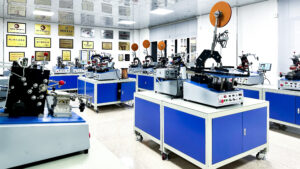
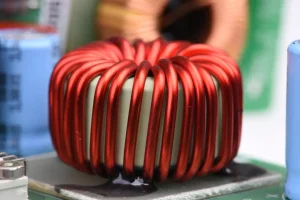
A toroidal transformer winding machine winds insulated wire around a ring-shaped magnetic core to form a coil.
Proper setup, wire loading, and parameter configuration help prepare the machine for production.
Guangri offers desktop gear-type, high-speed, and floor-standing toroidal winding machines for different coil specifications. Explore our desktop toroidal transformer winding machines to compare available models. This guide covers basic operating procedures and selected machine specifications.
Pre-Operation Inspection and Machine Setup
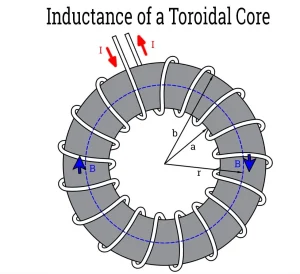
Before starting the machine, check:
Power supply and electrical connections.
Winding mechanisms and moving components.
Wire guides and feeding components.
Wire condition and diameter.
Magnetic core positioning.
Resolve any loose, damaged, or incorrectly positioned components before operation.
Switch on the machine and configure the winding parameters according to the coil drawing. Depending on the model, settings may include:
Number of turns
Winding speed
Winding direction
Available functions vary by controller. Follow the operating instructions for the specific model.
For additional reference, the IEC 60204-1 standard outlines general requirements for the electrical equipment of machinery.
Idle Run and Function Verification
Perform an idle run before production to check:
Whether the machine starts and stops normally.
Whether the winding mechanism moves smoothly.
Whether the turn counter responds correctly.
Whether displayed values match the settings.
Whether abnormal noise or vibration occurs.
If any abnormal condition appears, stop the machine and identify the cause before continuing.
Wire Loading and Threading
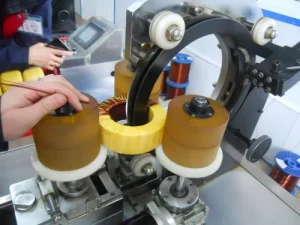
Select insulated copper wire according to the coil design. Check its diameter and insulation condition before loading.
Thread the wire through the winding mechanism and follow the specified path. Position the magnetic core according to the machine instructions.
Before starting, confirm that:
The core is correctly positioned.
The wire passes through the core opening freely.
The wire is not twisted or tangled.
The wire path is clear of moving components.
Correct loading helps prepare the machine for winding.
Start the Winding Operation
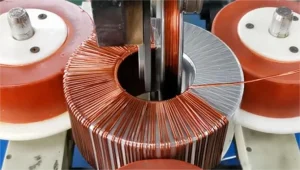
Start the winding cycle according to the selected model’s operating procedure.
During production, monitor:
Wire placement: Whether the wire follows the required path.
Wire condition: Whether the insulation shows visible damage.
Turn counting: Whether the displayed count operates correctly.
Machine operation: Whether unusual noise or vibration occurs.
If the wire becomes tangled or its position shifts, stop the machine before inspection. Never adjust the wire while moving components are running.
After winding, remove the coil and check it against the required production specifications.
Guangri Toroidal Transformer Winding Machine Models
Guangri offers desktop and floor-standing machines for different wire diameters, core dimensions, coil heights, and production requirements.
1.Desktop Toroidal Transformer Winding Machines
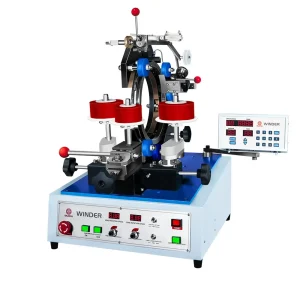
Guangri’s desktop toroidal winding machine series includes gear-type medium-speed and high-speed models.
Gear-Type Medium-Speed Series
The JG-5204 and JG-6204 are designed for relatively thicker wire applications. Both have a maximum winding speed of 260 rpm and storage capacity for 29 programs.
| Technical parameter | JG-5204 | JG-6204 |
|---|---|---|
| Wire diameter | 0.70–2.00 mm | 0.70–2.50 mm |
| Maximum winding speed | 260 rpm | 260 rpm |
| Maximum finished coil OD | 60–200 mm | 60–200 mm |
| Minimum finished coil ID | 40 mm | 40 mm |
| Maximum finished coil height | 80 mm | 100 mm |
| Program capacity | 29 | 29 |
High-Speed Series
The JG-2074 and JG-3074 are designed for wire diameters from 0.20 to 0.70 mm. Both offer a maximum winding speed of 1,000 rpm and storage capacity for 29 programs.
| Technical parameter | JG-2074 | JG-3074 |
|---|---|---|
| Wire diameter | 0.20–0.70 mm | 0.20–0.70 mm |
| Maximum winding speed | 1,000 rpm | 1,000 rpm |
| Maximum finished coil OD | 60–200 mm | 60–200 mm |
| Minimum finished coil ID | 35 mm | 35 mm |
| Maximum finished coil height | 80 mm | 100 mm |
| Program capacity | 29 | 29 |
The four models differ in wire diameter and coil height. Selection should be based on the actual coil design and production requirements.
2.Floor-Standing Toroidal Winding Machines
Guangri also offers floor-standing toroidal winding machines for larger cores and different production arrangements.
JG-8204 Floor-Standing Toroidal Winding Machine
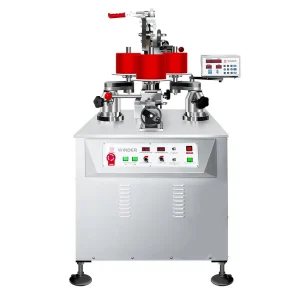
The JG-8204 is designed for toroidal coil production. Its floor-standing structure provides an alternative to desktop configurations. The suitable setup should be confirmed according to core dimensions, wire diameter, and coil specifications.
JG-8554SR-T300 Combined Toroidal Winding and Taping Machine
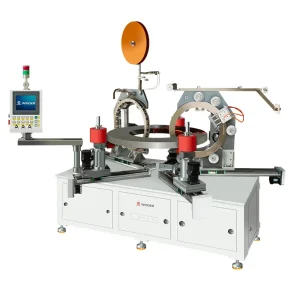
The JG-8554SR-T300 combines winding and insulation taping through a dual-head design, allowing both operations to be performed simultaneously on large ring-shaped magnetic cores.
It uses a PLC and touchscreen with physical operating buttons. Its control system incorporates servo and stepper motor feedback for closed-loop control.
This model is an option for manufacturers looking to combine winding and insulation taping in one production setup.
How to Choose Between Desktop and Floor-Standing Machines
Machine selection depends on wire diameter, core dimensions, finished coil size, and production requirements.
| Selection factor | Desktop models | Floor-standing models |
|---|---|---|
| Examples | JG-5204, JG-6204, JG-2074, JG-3074 | JG-8204, JG-8554SR-T300 |
| Configuration | Compact desktop structure | Floor-standing structure |
| Main considerations | Wire diameter, coil dimensions, speed | Core dimensions, configuration, production process |
| Additional functions | Model-dependent | Winding and taping on JG-8554SR-T300 |
Maximum winding speed should not be the only selection criterion. Manufacturers should also consider workpiece dimensions and required production functions.
For more information, explore Guangri’s winding technology and solutions.
FAQ
Q1: What should operators check before starting a toroidal winding machine?
Check the power supply, mechanical components, wire guides, wire condition, magnetic core, and controller settings. Perform an idle run before production.
Q2: How do I choose the correct winding speed?
Speed depends on wire diameter, core dimensions, winding requirements, and machine specifications. The JG-5204 and JG-6204 reach 260 rpm, while the JG-2074 and JG-3074 reach 1,000 rpm. These are maximum model-specific values, not recommended speeds for every coil.
Q3: What should I do if the wire is not positioned evenly?
Stop the machine and inspect the wire path, guide components, and workpiece positioning. Check the winding settings against the coil requirements.
Q4: Can one machine perform both winding and insulation taping?
Yes. The JG-8554SR-T300 features a dual-head design for simultaneous toroidal winding and insulation taping.
Q5: How many winding programs can Guangri’s desktop machines store?
The JG-5204, JG-6204, JG-2074, and JG-3074 each support 29 stored programs. Other models may have different configurations.
Conclusion
Proper setup and operation are important for consistent toroidal coil production.
Guangri provides desktop and floor-standing toroidal winding machines, including combined winding and taping solutions for different production requirements.
Contact Guangri to discuss your winding application and machine requirements.
 English
 Spanish
 Russian
 Italian
 German
 Chinese