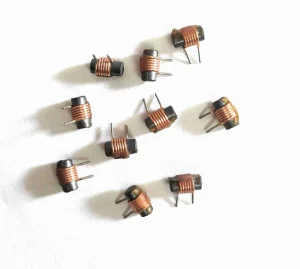
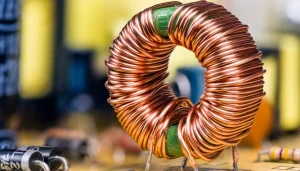
Coil winding machines are used to wind wire into precise coils for motors, transformers, and electronic components.
These machines are essential in industries like automotive, energy, and electronics.

The global market is set to grow from USD 4.06 billion in 2024 to USD 8.72 billion by 2034, at a CAGR of 7.9%.
What Are Coil Winding Machines?

Coil winding machines create wire coils for motors, transformers, and inductors. They include parts like a wire guide, spindle, and programmable controller.
There are three main types: manual for basic tasks, semi-automatic for moderate precision, and fully automatic machines for fast, high-precision industrial production.
Market Size and Growth Forecast (2024–2034)

The global coil winding machines market is valued at USD 4.06 billion in 2024 and is expected to reach USD 8.72 billion by 2034, growing at a CAGR of 7.9%.
Some segments, like electrical coil windings, are rising even faster—up to 9.7% CAGR.
From 2019 to 2023, the market grew at a slower pace of around 3.6%, reflecting post-pandemic recovery and the early stages of EV and renewable energy adoption.
However, the outlook has since accelerated due to strong demand in sectors like electric vehicles, renewable power systems, aerospace, and smart electronics.
Comparative reports also project significant growth:
One forecast sees the market reaching USD 2.06B by 2030 at 8.7% CAGR
Another predicts a rise to USD 3.8B by 2033 at 5.2% CAGR
The variation across reports reflects different scopes and segments, but the trend is clear—coil winding technology is on the rise globally.
Key Market Drivers
Electrification of Vehicles

Electric vehicles rely on high-precision coils for motors and batteries.
As global EV adoption rises, so does demand for coil winding machines.
Governments are backing this shift—like the U.S. investing $7.5 billion in nationwide EV charging networks, boosting the entire EV supply chain.
Renewable Energy Expansion

Coil winding machines are essential for making components used in wind turbines and solar inverters.
As countries expand their green energy infrastructure, the need for transformers and power generators grows, pushing up demand for efficient, automated coil production.
Industry 4.0 and Smart Manufacturing

Smart factories are adopting AI, CNC, and robotics to streamline coil winding.
These technologies enable real-time monitoring and predictive maintenance, helping manufacturers cut labor costs, reduce errors, and ramp up production speed—all while improving product quality and reliability.
Miniaturization and High Precision Needs

As wearables, IoT devices, and telecom equipment get smaller, the need for micro-transformers and ultra-precise coils increases.
Modern winding machines now deliver the tight tolerances and fine wire handling needed to meet the demands of today’s compact, high-performance electronics.
Market Segmentation
By Machine Type

Coil winding machines come in manual, semi-automatic, and fully automatic versions—automated models dominate with 55% market share in 2024.
For specialized needs, ring and precision winders offer extra control, making them ideal for advanced applications in defense, telecom, and high-frequency devices.
5.2 By Coil Type

Machines are used to wind various coil types like motor coils, transformer coils, and inductors.
There’s also growing demand for solenoidal and specialty coils, especially in medical devices, aerospace, and telecom gear requiring compact, high-performance winding configurations.
5.3 By Industry

Major users include the automotive industry, especially for EV motors, and electronics, which need precision windings.
Renewable energy, aerospace & defense, and medical equipment industries also rely heavily on advanced coils.
Even textile and building sectors use specialized coil applications.
5.4 By Technology

Winding machines now range from conventional models to advanced systems like CNC, robotic platforms, and AI-enabled smart systems.
These newer technologies bring speed, accuracy, and adaptability, catering to industries demanding real-time data, remote control, and zero-defect production lines.
5.5 By End User
Key end users include OEMs (Original Equipment Manufacturers) and aftermarket suppliers.
R&D labs use manual and semi-auto models for prototyping, while service providers handle upgrades and repairs.
Each user type drives demand for different machine capacities and custom features.
Regional Market Insights

The demand for coil winding machines is growing worldwide, but the pace and drivers vary by region.
Here’s a quick look at how different areas are shaping the market:
Asia-Pacific (China, India, Japan, South Korea)
Fastest-growing region thanks to rapid industrialization, booming EV production, and energy infrastructure expansion.
Example: India’s goal of installing 175 GW of renewable energy boosts demand for transformers and coils.North America
Market growth is fueled by EV innovation, aerospace advancements, and defense sector investments.
Smart factory trends are pushing the adoption of CNC and robotic winding machines.Europe
Countries like Germany and France lead in automation and sustainability.
Precision engineering and green energy commitments are key market drivers.Latin America & Middle East
These regions are seeing steady but moderate growth.
Infrastructure upgrades and energy reform projects are opening up new coil winding applications.
Challenges in the Market

Coil winding machines, especially fully automated models, come with high upfront costs.
There’s also a shortage of skilled labor, rising complexity in precision manufacturing, and ongoing global supply chain delays affecting component availability.
Trends and Innovations

The industry is moving toward modular, customizable designs and integrating AI diagnostics and IoT monitoring.
Eco-friendly, low-waste systems are gaining traction, along with machines built for specialized coil production in niche markets like defense and telecom.
Future Outlook (2025–2034)

The coil winding machines market is set for strong growth, driven by rising EV adoption, renewable energy projects, and smart manufacturing.
Expect increased demand for high-speed, high-precision machines, regional onshoring to ease supply risks, and more R&D investment in micro-coil and hybrid winding technology.
Conclusion

The coil winding machines market is set for steady growth across industries like EVs, energy, and electronics. Innovation in automation, precision, and sustainability will define the market leaders.
Looking to upgrade your production? Contact us to explore smart coil winding solutions tailored to your industry needs.