


In electric motors, motor windings play a central role in operation. They generate the magnetic field that drives the motor’s rotation, directly affecting its torque output, operating efficiency, and ability to manage heat during operation.

Among the different types of motor windings, stator windings deserve particular attention. They do more than carry electrical current; they play a key role in determining how a motor operates. Whether in high-speed industrial motors or compact EV drives, the choice of stator winding method can significantly affect motor performance, manufacturing costs, and operational reliability.
This guide covers the most common motor winding classifications and seven key stator winding methods, highlighting their defining features to help you identify the right winding design for each application.
Stator-Winding Forms & Magnetic-Pole Creation

Understanding how magnetic poles form within the stator provides insight into the operating characteristics of different motor types.
The stator winding layout determines the number of magnetic poles generated and influences how efficiently the motor converts electrical energy into mechanical motion.
Salient-Pole (Concentrated Poles)
Each coil produces one magnetic pole. The coils are connected in reverse series (head-to-head) to create alternating magnetic polarities. This winding arrangement is commonly used in DC motors and synchronous motors.
Non-Salient-Pole
Each coil produces two magnetic poles. The coils are connected in forward series (tail-to-tail), with the current flowing in the same direction. This winding arrangement is well suited to AC motors, where a more uniform magnetic field is required.
Seven Common Stator Winding Methods

When designing electric motors, stator winding methods play an important role in determining efficiency, torque, and overall motor size. Below are seven common stator winding techniques, each suited to different motor designs and performance requirements.
Single-Layer Winding
Commonly used in small motors, this method places one coil side in each slot. It offers a simple, cost-effective design and is suitable for applications where space is not a major constraint.Double-Layer Winding
Often found in larger or higher-power motors, this method places two coil sides in each slot, one above the other. This arrangement helps improve power density and efficiency.Concentrated Winding
In this method, coils are wound around individual stator teeth. The design features shorter end turns and can help reduce copper losses. It is commonly used in motors with fewer poles.Distributed Winding
This method distributes coils across multiple stator teeth to create a more uniform magnetic field and reduce harmonics. It is commonly used in high-speed motors and precision motor applications.Interior (Embedded-Tooth) Winding
Designed to fit inside stator slots, this method is space-saving and ideal for large machines that demand robust power without bulky dimensions.Slotless Winding
Eliminates stator slots entirely, leading to ultra-smooth rotation and minimal cogging—often used in medical and aerospace drives.Toroidal Winding
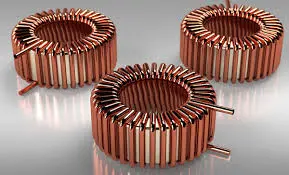
In this method, the coil is wound into a continuous ring shape, which can improve cooling and reduce energy losses. It is suitable for specialized applications that require compact and efficient motor designs.
FAQs
1. When should I use a double-layer winding?
Double-layer windings are well suited to larger motors that require higher performance, greater power density, and more parallel winding branches.
2. Why choose toroidal winding over traditional types?
Toroidal windings can help reduce energy losses and heat buildup. Their design supports better cooling and higher efficiency, making them suitable for compact motors and specialized applications.
3. Are slotless windings better than interior windings?
It depends on the application. Slotless windings reduce cogging torque and allow smoother motor operation, making them suitable for medical equipment and high-precision motors. By comparison, interior windings make efficient use of space and are suited to large-scale machines.
Conclusion


 English
 Spanish
 Russian
 Italian
 German
 Chinese