


In electric motors, bobinados del motor play a central role in operation. They generate the campo magnético that drives the motor’s rotation, directly affecting its par de salida, operating efficiency, and ability to manage calor Durante la operación.

Among the different types of motor windings, devanados del estator deserve particular attention. They do more than carry electrical current; they play a key role in determining how a motor operates. Whether in high-speed industrial motors or compact EV drives, the choice of estator método de bobinado can significantly affect motor performance, manufacturing costs, and operational reliability.
This guide covers the most common clasificaciones de bobinados de motores y seven key stator winding methods, highlighting their defining features to help you identify the right winding design for each application.
Formas de bobinado del estator y creación de polos magnéticos

Entendiendo cómo polos magnéticos form within the stator provides insight into the operating characteristics of different motor types.
El stator winding layout determines the number of magnetic poles generated and influences how efficiently the motor converts electrical energy into mechanical motion.
Polos salientes (polos concentrados)
Each coil produces one magnetic pole. The coils are connected in serie inversa (head-to-head) to create alternating magnetic polarities. This winding arrangement is commonly used in DC motors and synchronous motors.
Polo no saliente
Each coil produces two magnetic poles. The coils are connected in serie de avance (tail-to-tail), with the current flowing in the same direction. This winding arrangement is well suited to motores de corriente alterna, where a more uniform magnetic field is required.
Siete métodos comunes de bobinado del estator

When designing electric motors, métodos de bobinado del estator play an important role in determining efficiency, torque, y en general motor size. Below are seven common stator winding techniques, each suited to different motor designs and performance requirements.
Bobinado de una sola capa
Commonly used in small motors, this method places one coil side in each slot. It offers a simple y rentable diseño and is suitable for applications where space is not a major constraint.Bobinado de doble capa
Often found in larger or higher-power motors, this method places two coil sides in each slot, one above the other. This arrangement helps improve power density and efficiency.Bobinado concentrado
En este método, bobinas are wound around individual stator teeth. The design features shorter end turns and can help reduce copper losses. It is commonly used in motors with menos postes.Bobinado distribuido
This method distributes coils across multiple stator teeth to create a more uniform magnetic field y reducir armonía. It is commonly used in motores de alta velocidad and precision motor applications.Bobinado interior (dientes incrustados)
Diseñado para encajar dentro de las ranuras del estator, este método es ahorro de espacio y ideal para máquinas grandes que exigen potencia robusta sin dimensiones voluminosas.Bobinado sin ranuras
Elimina por completo las ranuras del estator, lo que genera rotación ultra suave y engranaje mínimo—usado a menudo en campañas médicas y aeroespaciales.Bobinado toroidal
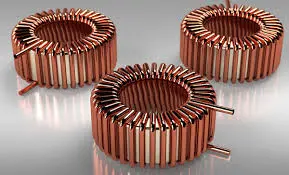
In this method, the coil is wound into a continuo ring shape, which can improve enfriamiento and reduce pérdidas de energía. It is suitable for especializado aplicaciones that require compact and efficient motor designs.
Preguntas frecuentes
1. ¿Cuándo debo utilizar un bobinado de doble capa?
Bobinados de doble capa are well suited to larger motors that require higher performance, greater power density, and more parallel winding branches.
2. ¿Por qué elegir el bobinado toroidal en lugar de los tipos tradicionales?
Devanados toroidales can help reduce energy losses and heat buildup. Their design supports mejor refrigeración y más alto eficiencia, making them suitable for compact motors and specialized applications.
3. ¿Son los bobinados sin ranuras mejores que los bobinados interiores?
Depende de la aplicación. Slotless windings reducir par de retención and allow smoother motor operation, making them suitable for medical equipment and high-precision motors. By comparison, interior windings make efficient use of space and are suited to large-scale machines.
Conclusión


 Spanish
 English
 Russian
 Italian
 German
 Chinese