


Magnetic components play a critical role in modern power electronics by using magnetic fields to control the flow of electrical energy. Depending on the application, they can almacenar energía, convert voltage, filtrar señales, and reduce interferencia electromagnética (EMI), making them essential to reliable and efficient power conversion systems.

De vehículos eléctricos (VE) y teléfonos inteligentes a dispositivos médicos y sistemas de energía renovable, magnetic components are essential for maintaining reliable, efficient, and compact power systems. Without them, accurate power regulation, voltage conversion, and energy transfer would be far more difficult to achieve.
As demand continues to grow for menor, más rápido, y electrónica más ecológica, el diseño y selección de componentes magnéticos have become increasingly important. Understanding how these components work—and selecting the right solution for each application—can directly affect eficiencia, seguridad, y en general rendimiento del sistema.
¿Qué son los componentes magnéticos?

Los componentes magnéticos son dispositivos eléctricos pasivos that control and transfer energy through magnetic fields. At their core, they typically use wire windings—usually cobre o aluminio—wrapped around a magnetic material. When current flows through these windings, a magnetic field is created, allowing the component to regulate voltage, current, or electromagnetic noise.
In power electronics, these components are essential because they can almacenar energía, filtrar señales, y convertir la energía de manera eficiente without generating energy themselves.
The three main types of magnetic components each serve a different function:
- Transformadores: Provide conversión de voltaje, stepping voltage up or down between circuits through carefully designed devanados del transformador.
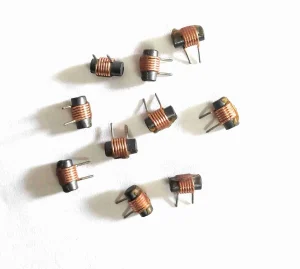
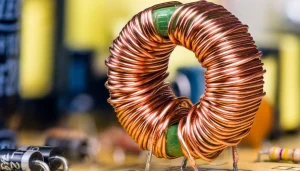
- Inductores: Help stabilize electrical current by resisting sudden changes, making them useful for almacen de energia y filtrado.
- Estranguladores: Specialized inductors designed to suprimir EMI (electromagnetic interference) and reduce unwanted high-frequency noise.
From smartphones to solar inverters, these magnetic components work behind the scenes to support stable, efficient, and reliable power management.
Principales tipos de componentes magnéticos
Magnetic components are available in several forms, each designed for a specific role in power management. Among them, three main types are widely used across modern electronic and electrical systems.
A. Transformadores

Transformadores son esenciales para conversión de voltaje, transferring electrical energy between circuits through magnetic coupling and carefully designed devanados del transformador. They are commonly used for:
- Stepping voltage up or down
- Providing galvanic isolation to reduce electric shock risk and prevent ground loops
- Supporting power conditioning Para estabilizar el voltaje y proteger equipos sensibles
Aplicaciones comunes incluir:
- Convertidores CA-CC en fuentes de alimentación
- Centros de datos y servidores
- Estaciones de carga para vehículos eléctricos
- Sistemas de automatización industrial
B. Inductores

Inductores are coils designed to almacenar energía en campos magnéticos while resisting sudden changes in current. This makes them especially useful for:
- Corriente de suavizado en fuentes de alimentación conmutadas
- Almacenamiento de energía in compact electronic circuits
- Protección de componentes de picos de voltaje
Common applications include:
- Convertidores DC-DC
- Circuitos de accionamiento de motores
- Smartphones and portable electronic devices
C. Se ahoga

Los estranguladores son inductores de propósito especial Diseñado para filtrar el ruido de alta frecuencia while allowing desired signals, such as DC or low-frequency AC, to pass through. By reducing unwanted EMI, they help improve signal quality and overall system stability.
Typical applications include:
- Sistemas de telecomunicaciones
- Equipo de audio
- Filtros de fuente de alimentación
Together, these magnetic components play distinct but essential roles in building sistemas electrónicos de potencia estables, eficientes y seguros.
Cómo funcionan los componentes magnéticos

At the core of magnetic device operation es Ley de inducción de Faraday: a changing magnetic field within a closed loop induces a voltage (EMF) in that loop. Magnetic components apply this principle by combining bobinados de cobre con un núcleo ferromagnético, which helps concentrate flujo magnético and support efficient energy transfer.
- Devanado primario → AC current creates an alternating magnetic field within the transformer core.
- Centro → Concentrates and guides the magnetic flux with minimal loss.
- Devanado secundario → Receives the changing magnetic flux and induces a new voltage according to Faraday’s Law.
Para inductors and chokes, the same electromagnetic principle is applied differently for energy storage or noise suppressionAl ajustar el material del núcleo, geometría, y Número de vueltas, engineers can optimize inductance, saturation current, and frequency response to meet specific power-electronic requirements.
Casos de uso por industria

Los componentes magnéticos están en todas partes. Así es como los utilizan las diferentes industrias:
Automotor – Encontrado en Inversores de vehículos eléctricos, cargadores integrados y sistemas de gestión de baterías (BMS).
Telecomunicaciones - Permitir integridad de la señal, aislamiento y supresión de ruido en sistemas de alta frecuencia.
Electrónica de consumo - Fuerza cargadores móviles, computadoras portátiles y dispositivos domésticos inteligentes de manera eficiente.
Médico - Apoyo dispositivos portátiles, sistemas de imágenes y equipos de diagnóstico con aislamiento de energía.
Automatización industrial – Utilizado en accionamientos de motor, PLCy convertidores DC-DC para control de procesos.
Defensa – Desplegado en transformadores robustos para aviónica, radar y electrónica de misión crítica.
Conclusión

With these electromagnetic principles in mind,magnetic components are essential to efficient power electronics, supporting functions such as almacen de energia, conversión de voltaje, y noise suppression. Well-designed components and devanados del transformador help improve system stability, safety, and overall performance across a wide range of industrial applications.
For support with more efficient magnetic designs, explore our solutions or Contáctenos for expert assistance tailored to your application.

 Spanish
 English
 Russian
 Italian
 German
 Chinese