


In electric motors, Motorwicklungen play a central role in operation. They generate the magnetisches Feld that drives the motor’s rotation, directly affecting its Drehmomentabgabe, operating efficiency, and ability to manage Hitze während des Betriebs.

Among the different types of motor windings, Statorwicklungen deserve particular attention. They do more than carry electrical current; they play a key role in determining how a motor operates. Whether in high-speed industrial motors or compact EV drives, the choice of Stator Wickelverfahren can significantly affect motor performance, manufacturing costs, and operational reliability.
This guide covers the most common Motorwicklungsklassifizierungen Und seven key stator winding methods, highlighting their defining features to help you identify the right winding design for each application.
Statorwicklungsformen und Magnetpolbildung

Verstehen, wie Magnetpole form within the stator provides insight into the operating characteristics of different motor types.
Der stator winding layout determines the number of magnetic poles generated and influences how efficiently the motor converts electrical energy into mechanical motion.
Hervorstehende Pole (konzentrierte Pole)
Each coil produces one magnetic pole. The coils are connected in umgekehrte Serie (head-to-head) to create alternating magnetic polarities. This winding arrangement is commonly used in DC motors and synchronous motors.
Nicht ausgeprägter Pol
Each coil produces two magnetic poles. The coils are connected in Vorwärtsserie (tail-to-tail), with the current flowing in the same direction. This winding arrangement is well suited to Wechselstrommotoren, where a more uniform magnetic field is required.
Sieben gängige Statorwickelmethoden

When designing electric motors, Statorwickelmethoden play an important role in determining efficiency, torqueund insgesamt motor size. Below are seven common stator winding techniques, each suited to different motor designs and performance requirements.
Einlagige Wicklung
Commonly used in small motors, this method places one coil side in each slot. It offers a einfach, kostengünstig Design and is suitable for applications where space is not a major constraint.Doppellagige Wicklung
Often found in larger or higher-power motors, this method places two coil sides in each slot, one above the other. This arrangement helps improve power density and efficiency.Konzentrierte Wicklung
Bei dieser Methode Spulen are wound around individual stator teeth. The design features shorter end turns and can help reduce copper losses. It is commonly used in motors with weniger Pole.Verteilte Wicklung
This method distributes coils across multiple stator teeth to create a more uniform magnetic field Und reduzieren Obertöne. It is commonly used in Hochgeschwindigkeitsmotoren and precision motor applications.Innenwicklung (eingebettete Zähne)
Diese Methode ist für den Einsatz in Statornuten konzipiert und platzsparend und ideal für Großmaschinen die robuste Leistung ohne sperrige Abmessungen erfordern.Nutenlose Wicklung
Eliminiert Statorschlitze vollständig, was zu ultra-sanfte Rotation Und minimales Rastmoment– oft verwendet in Antriebe für Medizin und Luft- und Raumfahrt.Ringkernwicklung
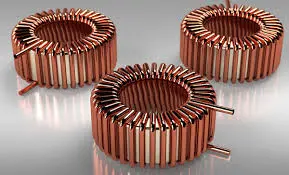
In this method, the coil is wound into a kontinuierlich ring shape, which can improve Kühlung and reduce Energieverluste. It is suitable for spezialisiert Anwendungen that require compact and efficient motor designs.
FAQs
1. Wann sollte ich eine Doppellagenwicklung verwenden?
Doppellagige Wicklungen are well suited to larger motors that require higher performance, greater power density, and more parallel winding branches.
2. Warum sollte man sich für eine Ringkernwicklung statt für herkömmliche Wicklungen entscheiden?
Ringkernwicklungen can help reduce energy losses and heat buildup. Their design supports bessere Kühlung Und höher Effizienz, making them suitable for compact motors and specialized applications.
3. Sind nutenlose Wicklungen besser als Innenwicklungen?
Das hängt von der Anwendung ab. Slotless windings reduzieren Rastmoment and allow smoother motor operation, making them suitable for medical equipment and high-precision motors. By comparison, interior windings make efficient use of space and are suited to large-scale machines.
Abschluss


 German
 English
 Spanish
 Russian
 Italian
 Chinese