


In electric motors, avvolgimenti del motore play a central role in operation. They generate the campo magnetico that drives the motor’s rotation, directly affecting its coppia di uscita, operating efficiency, and ability to manage Calore durante il funzionamento.

Among the different types of motor windings, avvolgimenti dello statore deserve particular attention. They do more than carry electrical current; they play a key role in determining how a motor operates. Whether in high-speed industrial motors or compact EV drives, the choice of statore metodo di avvolgimento can significantly affect motor performance, manufacturing costs, and operational reliability.
This guide covers the most common classificazioni degli avvolgimenti del motore E seven key stator winding methods, highlighting their defining features to help you identify the right winding design for each application.
Forme di avvolgimento dello statore e creazione del polo magnetico

Capire come poli magnetici form within the stator provides insight into the operating characteristics of different motor types.
IL stator winding layout determines the number of magnetic poles generated and influences how efficiently the motor converts electrical energy into mechanical motion.
Polo saliente (poli concentrati)
Each coil produces one magnetic pole. The coils are connected in serie inversa (head-to-head) to create alternating magnetic polarities. This winding arrangement is commonly used in DC motors and synchronous motors.
Polo non saliente
Each coil produces two magnetic poles. The coils are connected in serie in avanti (tail-to-tail), with the current flowing in the same direction. This winding arrangement is well suited to Motori CA, where a more uniform magnetic field is required.
Sette metodi comuni di avvolgimento dello statore

When designing electric motors, metodi di avvolgimento dello statore play an important role in determining efficiency, torquee nel complesso motor size. Below are seven common stator winding techniques, each suited to different motor designs and performance requirements.
Avvolgimento a strato singolo
Commonly used in small motors, this method places one coil side in each slot. It offers a semplice, conveniente progetto and is suitable for applications where space is not a major constraint.Avvolgimento a doppio strato
Often found in larger or higher-power motors, this method places two coil sides in each slot, one above the other. This arrangement helps improve power density and efficiency.Avvolgimento concentrato
In questo metodo, bobine are wound around individual stator teeth. The design features shorter end turns and can help reduce copper losses. It is commonly used in motors with meno pali.Avvolgimento distribuito
This method distributes coils across multiple stator teeth to create a more uniform magnetic field E ridurre armoniche. It is commonly used in motori ad alta velocità and precision motor applications.Avvolgimento interno (dente incorporato)
Progettato per adattarsi all'interno delle fessure dello statore, questo metodo è salvaspazio e ideale per grandi macchine che richiedono potenza elevata senza dimensioni ingombranti.Avvolgimento senza fessura
Elimina completamente le fessure dello statore, portando a rotazione ultra fluida E minimo ingranaggio—spesso usato in unità mediche e aerospaziali.Avvolgimento toroidale
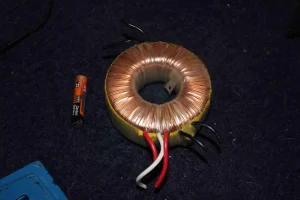
In this method, the coil is wound into a continuo ring shape, which can improve raffreddamento and reduce perdite di energia. It is suitable for specializzato applicazioni that require compact and efficient motor designs.
Domande frequenti
1. Quando dovrei usare un avvolgimento a doppio strato?
Avvolgimenti a doppio strato are well suited to larger motors that require higher performance, greater power density, and more parallel winding branches.
2. Perché scegliere l'avvolgimento toroidale rispetto ai tipi tradizionali?
Avvolgimenti toroidali can help reduce energy losses and heat buildup. Their design supports migliore raffreddamento E più alto efficienza, making them suitable for compact motors and specialized applications.
3. Gli avvolgimenti senza fessura sono migliori di quelli interni?
Dipende dall'applicazione. Slotless windings ridurre coppia di accoppiamento and allow smoother motor operation, making them suitable for medical equipment and high-precision motors. By comparison, interior windings make efficient use of space and are suited to large-scale machines.
Conclusione


 Italian
 English
 Spanish
 Russian
 German
 Chinese