


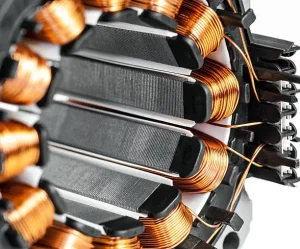
Every transformer experiences energy losses during operation, and understanding these losses is essential to improving efficiency and performance. One of the most significant is perdita di rame, which occurs in the avvolgimenti del trasformatore due to the electrical resistance of the winding conductors.
When current flows through avvolgimenti del trasformatore, electrical resistance generates heat, resulting in perdita di rame. This heat reduces transformer efficiency and places additional stress on the insulation and other components, potentially shortening the transformer’s service life over time.

Poiché la domanda di sistemi ad alta efficienza energetica continues to grow, reducing transformer copper losses has become increasingly important. Whether designing new equipment or maintaining existing infrastructure, minimizing these losses can help lower energy costs, improve affidabilità, and support sostenibilità in modern sistemi di alimentazione.
Cosa sono le perdite di rame?
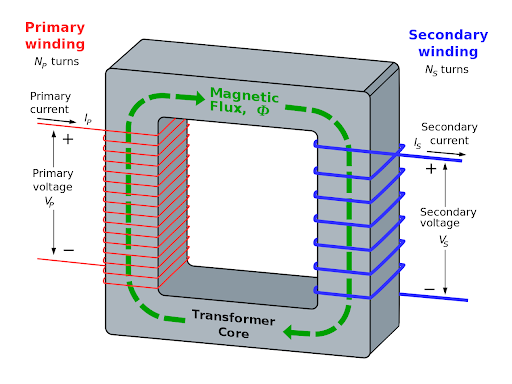
Perdite di rame, also known as Perdite I²R, occur in a avvolgimenti del trasformatore when current flows through them under load. As the current encounters electrical resistance in the winding conductors, heat is generated in accordance with Joule’s law.
Unlike no-load losses, copper losses depend on the load current. As the current flowing through the windings increases, more heat is generated and more electrical energy is dissipated as heat.
Both the avvolgimenti primari e secondari contribute to transformer copper losses. The total copper loss is calculated using the following formula:
P = I²R
where I represents the current and R represents the winding resistance.
A differenza di core (iron) losses, which occur even when the transformer is operating without a load, copper losses depend on the load current. As current increases, copper losses rise in proportion to the square of the current. Therefore, minimizing copper losses is essential for maintaining transformer efficiency, particularly under high-load conditions.
Perché si verificano perdite di rame?

Copper losses in transformers result from several physical and electrical factors related to progettazione dell'avvolgimento, conductor materials, and operating conditions. The main causes include:
Resistenza ohmica negli avvolgimenti
All conductors have electrical resistance, including highly conductive materials such as rame. As current flows through the windings, this resistance converts part of the electrical energy into heat.Magnitudo attuale (relazione I²)
Copper losses increase with the square of the current, as described by the formula P = I²R. Doubling the current increases copper losses fourfold, making them significantly higher under heavy-load conditions.Geometria dell'avvolgimento e strati della bobina
Additional coil layers and longer wire paths increase the total winding resistance. An inefficient winding layout can also hinder heat dissipation, further increasing perdite di rame.Effetti della temperatura
As temperature increases, the electrical resistance of copper rises. Transformers operating at higher temperatures therefore experience greater perdite di rame, which can contribute to further heat generation.Frequenza di commutazione ed effetto pelle
In high-frequency transformers, the effetto pelle causes current to concentrate near the conductor’s surface. This reduces the effective cross-sectional area available for current flow, increasing AC resistance and associated losses.Armoniche ed effetto di prossimità
Harmonic currents, often associated with non-linear loads, and the effetto di prossimità, caused by interactions between nearby conductors, can increase effective winding resistance and contribute to additional losses.
Understanding these factors is an important first step toward reducing transformer copper losses and designing more efficient, durable transformers.
Formula e misurazione

Per calcolare perdite di rame in un trasformatore, utilizziamo una formula semplice ma potente basata su Legge di Joule:
P = I² × R
Dove:
P = perdita di potenza (watt)
IO = corrente attraverso l'avvolgimento (ampere)
R = resistenza dell'avvolgimento (ohm)
Per un trasformatore con entrambi avvolgimenti primari e secondari, la perdita totale di rame è:
Pc = Ip² × Rp + Is² × Rs
Dove:
IP E È = corrente negli avvolgimenti primario e secondario
Rp E Rupie = resistenza degli avvolgimenti primario e secondario
Questa formula mostra che anche un piccolo aumento di corrente provoca un forte aumento della perdita di potenza, poiché la corrente è al quadrato. Ecco perché le condizioni di carico elevato richiedono particolare attenzione.
A misurare le perdite di rame, gli ingegneri spesso eseguono un prova di cortocircuito, dove il secondario è in cortocircuito e una riduzione voltaggio viene applicato al primario per misurare la corrente e le perdite in condizioni di carico.
Applicando questa formula e questo test, possiamo valutare, prevedere e ottimizzare in modo efficiente le prestazioni di carico di un trasformatore.
Impatto sull'efficienza del trasformatore

Trasformatore rame perdite reduce energy efficiency by converting part of the input power into heat rather than useful output. Because these losses increase with the square of the load current, they become particularly significant under heavy-load conditions.
Heat generated by perdite di rame increases the transformer’s operating temperature, making effective cooling essential to prevent overheating. Without proper gestione termica, prolonged heat exposure can degrade isolamento dell'avvolgimento, ridurre transformer performance, and potentially lead to premature failure.
Over time, temperature fluctuations and excessive current can shorten a transformer’s service life and reduce its reliability. Energy wasted through perdite di rame also increases costi operativi, particularly in industrial applications where transformers run continuously.
Reducing copper losses is not only about improving transformer efficiency but also about enhancing equipment durability, maintaining safety, and lowering costs throughout the transformer’s service life.
Come ridurre le perdite di rame

Reducing perdite di rame is essential for improving transformer efficiency, extending service life, and lowering operating costs. Two key approaches are progettazione del trasformatore and operational management.
Strategie di progettazione
Increase conductor cross-sectional area: Larger conductors reduce electrical resistance and help dissipate heat.
Select high-conductivity materials: Materials such as rame puro E foglio di rame have low resistivity, helping reduce I²R losses.
Ottimizzare il layout di avvolgimento: A well-designed winding layout promotes distribuzione uniforme della corrente, helping limit localized heating and skin effect issues.
Strategie operative
Avoid overloading or underloading: Transformers are designed to operate within their rated load range, while operating outside this range can increase losses.
Maintain effective cooling: Cooling systems help keep winding temperatures under control, limiting increases in resistenza elettrica.
Use harmonic filters or low-THD equipment: Harmonic currents can increase copper losses, so filtering harmonics helps reduce their impact on transformer performance.
Together, these design and operational measures provide a practical approach to reducing transformer copper losses, minimizing energy waste, and maintaining efficient operation.
Perdita di rame vs perdita di ferro
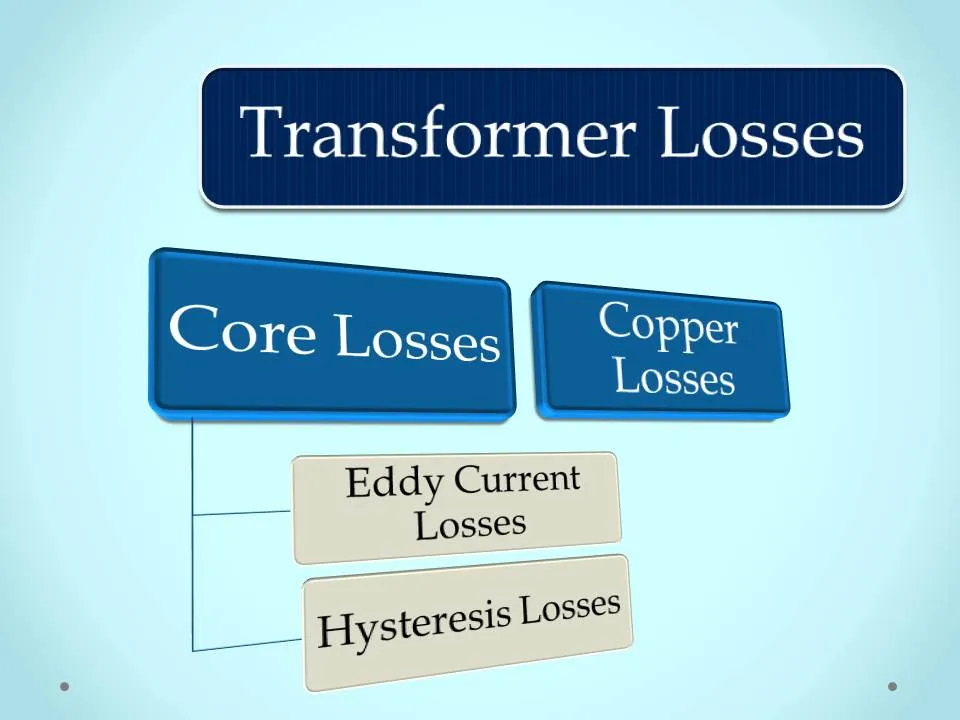
To better understand transformer efficiency, it is important to distinguish between perdite di rame E perdite di ferro, the two main types of transformer losses. Their key differences are outlined below.
Tendenze nella riduzione delle perdite

COME la tecnologia dei trasformatori si evolve, manufacturers and engineers are adopting more effective approaches to reducing perdite di energia, in particolare perdite di rame. Key trends include:
Nuclei in metallo amorfo + avvolgimenti a bassa resistenza: Combining these technologies helps reduce both copper losses and iron losses, improving efficiency, particularly in distribution transformers.
Strumenti di simulazione digitale: Software-based analisi dei punti caldi and thermal modeling help predict where losses and overheating may occur, supporting better winding and cooling designs.
Bilanciamento del carico della rete intelligente: With real-time data and AI, smart grids optimize transformer loading, preventing overloads that can sharply increase perdite di rame.
Filo Litz nei trasformatori ad alta frequenza: Used in EV chargers, UPS systems, E dispositivi medici, Filo litz helps reduce the skin effect and proximity effect, minimizing perdite di rame in high-frequency applications.
These developments reflect the industry’s ongoing focus on improving efficienza energetica, reliability, and environmental sustainability across power infrastructure.
Domande frequenti
1. Le perdite di rame sono costanti?
No. Perdite di rame depend on the load and increase with the square of the current.
2. Gli avvolgimenti in alluminio presentano maggiori perdite di rame?
Sì. L'alluminio ha maggiore resistenza elettrica than copper, which can result in greater winding losses under the same current conditions.
3. È possibile eliminare le perdite di rame?
No. They cannot be eliminated entirely, but they can be minimizzato through thoughtful transformer design and proper load management.

 Italian
 English
 Spanish
 Russian
 German
 Chinese
Una risposta
Grazie per aver condiviso questo articolo illuminante! Ho trovato le informazioni davvero utili e stimolanti. Il tuo stile di scrittura è coinvolgente e ha reso l'argomento molto più facile da capire. Non vedo l'ora di leggere altri tuoi post!