


If you’ve ever looked into how a generator is built or tuned for specific performance, you’ve likely come across the term winding pitch. In simple terms, winding pitch refers to how far a coil stretches across the stator slots in relation to the magnetic pole pitch. It’s usually expressed as a fraction—like 2/3 or 5/6—and while it may sound technical, it plays a big role in how a generator performs.

Why does it matter? Because winding pitch directly affects the generator’s output waveform, heat generation, and electrical compatibility. A well-chosen pitch can help reduce unwanted harmonics, improve efficiency, and ensure smoother operation—especially when multiple generators are running in parallel. Understanding this one factor can make all the difference in optimizing your system for reliability and longevity.
What Is Generator Winding Pitch?
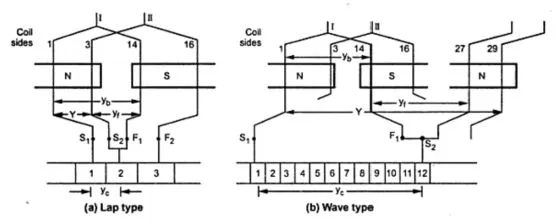
Winding pitch refers to the ratio between the number of stator slots a coil spans (called coil span) and the number of slots per magnetic pole (pole pitch). It tells us how “stretched” the coil is across the stator in relation to the pole’s magnetic field.
In a full-pitch winding, the coil spans exactly one pole pitch—this is a 1/1 winding pitch. It means the coil connects two slots that are one pole apart, capturing the full magnetic flux. However, most modern generators use fractional pitch windings, like 5/6 or 2/3, where the coil span is slightly shorter than a full pole pitch.
Here’s a quick example:
In a 4-pole generator with a 48-slot stator, each pole spans 12 slots (because 48 ÷ 4 = 12).
If each coil spans 12 slots, the winding pitch is 12/12 = 1/1 (full pitch)
If the coil spans 10 slots, the pitch becomes 10/12 = 5/6
If it spans 8 slots, the pitch is 8/12 = 2/3
This simple ratio impacts not just efficiency, but also harmonics, heating, and generator compatibility—especially in parallel systems.
Why Winding Pitch Matters in Generator Design

Winding pitch affects a generator’s harmonic distortion, thermal performance, and ability to run in parallel with other units.
Choosing the right pitch—like 2/3 to eliminate 3rd harmonics or 5/6 to reduce 5th and 7th—helps improve waveform quality and system compatibility.
It also supports material savings and cost-efficient design.
Common Winding Pitches and Their Effects

Let’s take a closer look at the most widely used winding pitches in generator design and how they influence performance, harmonics, and system suitability.
2/3 Winding Pitch
The 2/3 winding pitch is designed to eliminate 3rd harmonic voltages, which can cause heating and waveform distortion in grounded systems.
It’s widely used in North America and suits low-voltage, three-phase, four-wire setups where the neutral is solidly grounded.
5/6 Winding Pitch
This pitch helps reduce 5th and 7th harmonics, improving the efficiency and waveform quality of the generator.
It’s ideal for medium and high-voltage systems, offering a more compact and power-dense generator design.
4/5 and Other Pitches
4/5 and similar custom winding pitches provide tailored control over harmonics, balancing between harmonic suppression and thermal behavior.
They’re commonly used in systems with non-linear loads, like UPS-backed equipment or facilities with high-frequency switching devices.
Choosing the Right Pitch: Application-Based Guide

Not sure which winding pitch fits your project? Use this quick-reference table to help you make a smarter, more efficient choice based on your application. The right pitch improves performance, prevents harmonics issues, and protects your system long-term.
FAQs About Generator Winding Pitch
1. Can I run generators with different winding pitches in parallel?
It’s not recommended unless properly managed. Mismatched pitches (like 2/3 and 5/6) can cause circulating currents and damage equipment unless a neutral reactor or similar solution is used.
2. Does winding pitch affect generator size?
Yes, a shorter pitch like 5/6 can lead to more compact designs and better material efficiency. However, it may require more field power to maintain voltage.
Conclusion

Winding pitch plays a vital role in generator performance, influencing harmonics, thermal behavior, and system compatibility. Choosing between 2/3, 5/6, or other pitches depends on your specific application and electrical setup.
Need help selecting the right pitch for your system? Consult with a generator expert today to ensure optimal performance.

 English
  Spanish
  Russian
  Italian
  German
  Chinese
One Response
Hola saludos.- Esta todo muy bien pero eso es del pasado, polaricen el sistema el rotor con polo norte y polo sur y después como si el generador estuviese a plena carga coloquen la polaridad de tendrían los bobinados por la ley de Lenz y verán que en el sentido de avance se hace un cosido magnético entre el rotor y el estator, mientras que en la parte trasera se hace una fuerte atracción por ser polos opuestos. Todo esto hace que se genera una relacción de armadura muy fuerte y tengamos que aplicar una fuerza un poco mayor a la turbina del eje. Estos generadores son el pasado mi invención por el “Generador perfecto” no necesita de llevar una turbina aplicada al eje pues la energía eléctrica puede crearse. Saludos A. Conde