winding machine application - Energy Storage
Energy Storage
Winding Machines for the Aerospace and Defense Industry
Aerospace Industry
Car assembly on production line at Winding Machines for the Automotive Industry
Automotive Industry
winding machine application - Electrical and Electronics
Electrical and Electronics
Winding Machine for Communication Equipment
Communication Equipment
winding machine application - Consumer Electronics
Consumer Electronics
Winding Machines for Household Appliances
Household Appliances
winding machine application - Industrial Automation and Robotics
Industrial Automation
Winding Machine for the Lighting Industry
Lighting Industry
winding machine application - Renewable Energy Industry
Renewable Energy Industry
A man operating a wire making machine at GuangRi
Why Choose Us
A man operating a machine that produces a red wire This image showcases the Transformer Winding Machine and its technology
Winding Technology
A man in a suit holding a small coil symbolizing Development Engineering for Different Industries
Development & Engineering
Partner Development Programs A business environment where a diverse group is observing a handshake between two people implying a successful agreement or partnership
Partner Support
A company team building event on the beach showing a group of people posing for a photo
GuangRi Gallery

BLDC Motor Winding: Types, Function & Techniques

Discover BLDC motor winding types, working principles, key techniques. Learn how proper winding design impacts motor efficiency, torque, and heat dissipation.

Table of Contents

BLDC motor winding plays a crucial role in motor performance by generating the necessary magnetic field for rotation.
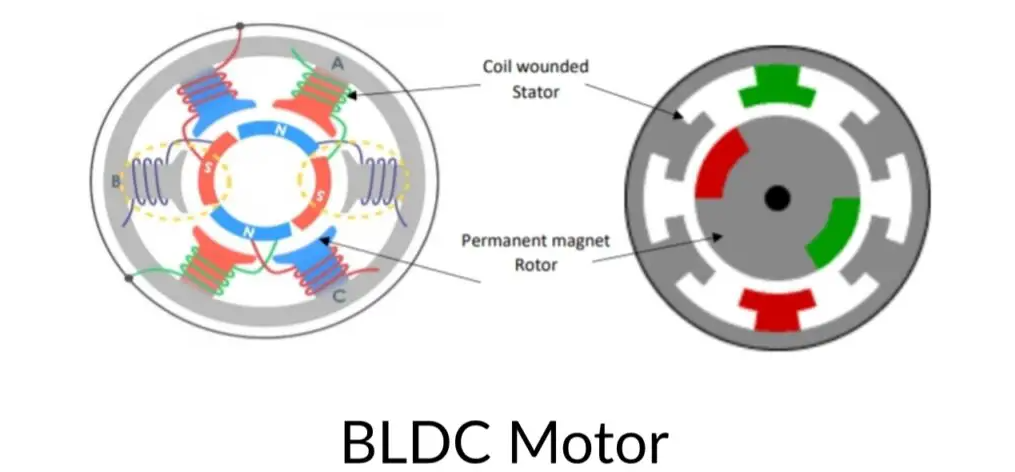
Diagram of a BLDC motor showing stator coils and rotor magnets

A well-designed winding improves efficiency, torque, and durability.

Common winding types include concentrated, distributed, and flat-wire windings, each offering unique advantages for different applications.

What Is BLDC Motor Winding?
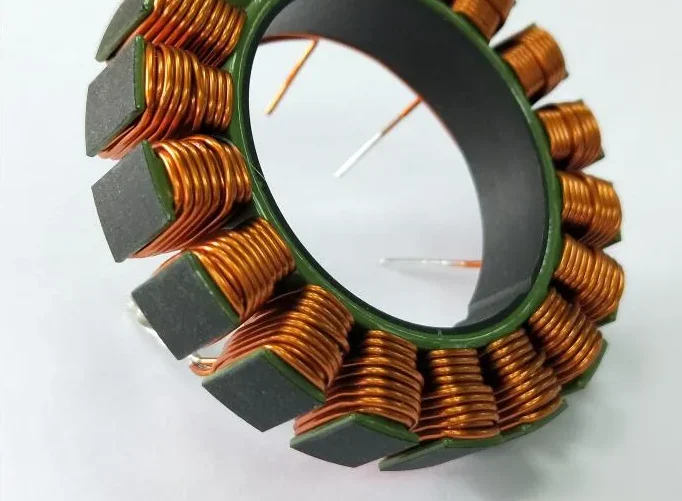
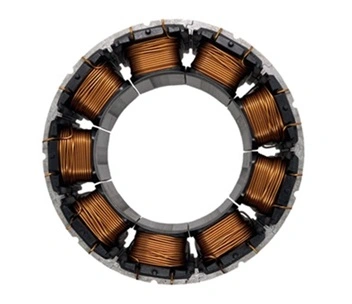
BLDC motor winding with copper wire coils on a stator assembly

BLDC motor winding refers to the copper wire arrangement in the stator that generates a rotating magnetic field, driving the rotor.

It impacts efficiency, torque, and heat dissipation. There are three main types:

Visual comparison showing concentrated windings on the left and distributed windings on the right

  • Concentrated Winding: Copper coils wound around individual stator teeth, ideal for compact motors.
  • Distributed Winding: Coils span multiple teeth, reducing harmonics and improving efficiency.
  • Flat-Wire Winding: Uses rectangular copper wire for better heat dissipation and higher power output.

How BLDC Motor Windings Work
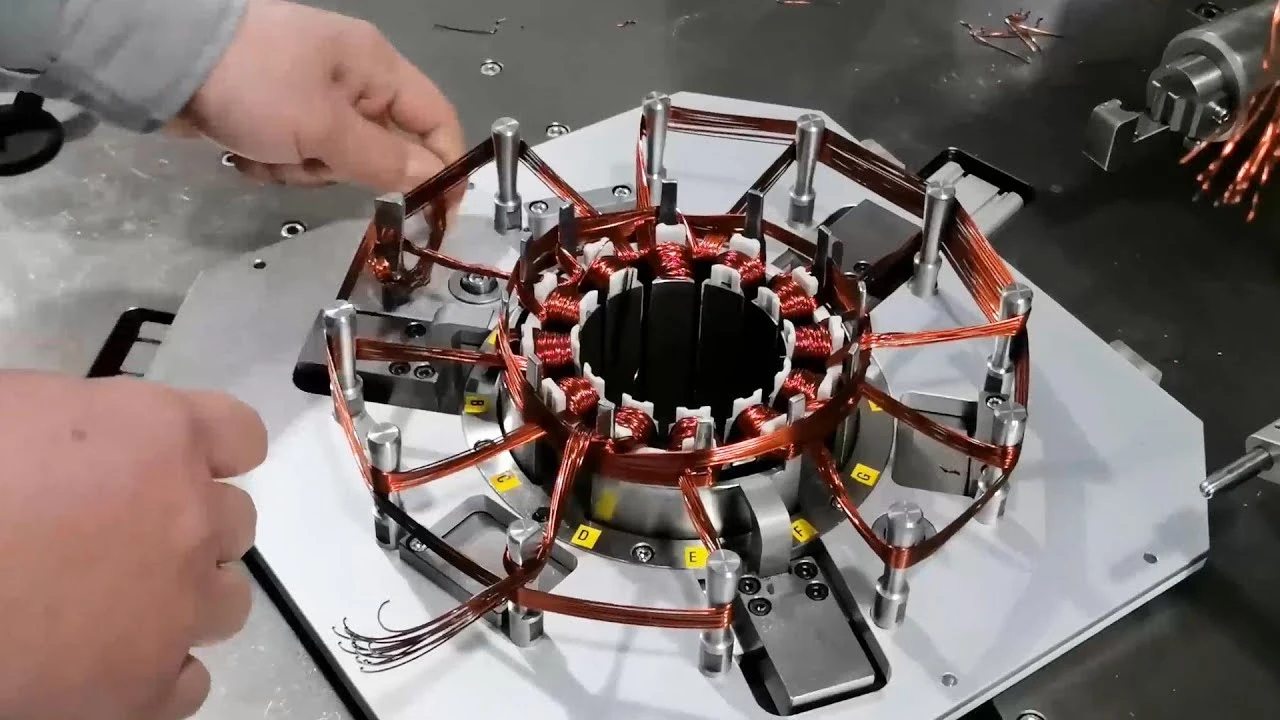
Challenges in BLDC motor winding process shown highlighting intricate coil placements

BLDC motor windings create a rotating magnetic field through electromagnetic induction, interacting with rotor magnets for motion.

They follow two connection configurations: delta connection, which supports higher speeds and is often paired with concentrated windings, and star connection, which provides smoother performance with lower torque ripple, commonly used in distributed windings.

Winding design significantly affects performance—more turns result in higher voltage but lower current, thicker wire reduces resistance for better efficiency, and superior insulation minimizes heat loss, extending the motor’s lifespan.
BLDC Motor Winding Techniques

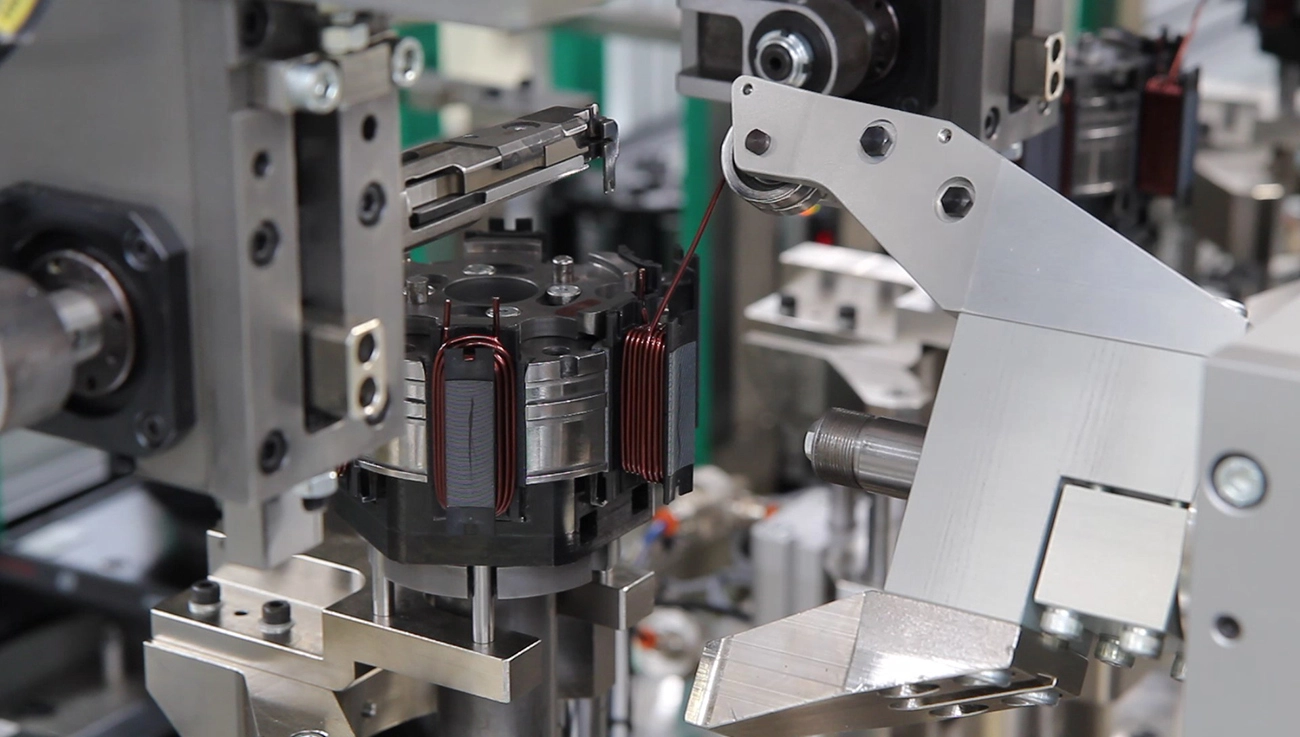
Automated flyer winding process for BLDC motor stator coils

Flyer winding uses a high-speed rotating flyer to wind copper wire around stator slots, making it a fast and efficient method for large-scale production, ideal for simple winding structures.

Needle winding employs a moving needle to precisely place wire, allowing multi-layer and complex winding paths while ensuring accurate wire placement for better motor stability.

Flat-wire winding follows a structured process, including slot paper insertion, coil manufacturing, hairpin insertion, welding, and insulation treatment.

This technique maximizes the slot fill rate, enhancing power density and efficiency in high-performance applications.

Conclusion

Key features of BLDC motor winding with copper coils in a stator

BLDC motor winding is essential for efficiency, heat dissipation, and durability.

Selecting the right winding type ensures optimal performance for various applications.

Advanced winding techniques enhance motor longevity and reliability.

For expert guidance on BLDC motor winding solutions, contact us today.

Our team can help you choose the best winding design for your needs.

FAQs About BLDC Motor Winding

Which winding is used in a BLDC motor?

The most common winding configuration in BLDC motors is the star (Y) connection, where the three stator windings are connected at a central neutral point. This design provides smooth operation and reduces torque ripple.

Do brushless motors have windings?

Yes, brushless motors have stator windings made of copper wire. These windings generate a rotating magnetic field that interacts with the rotor’s permanent magnets to produce motion.

What is the winding resistance of a BLDC motor?

The winding resistance of a BLDC motor varies depending on its power rating. For example, a 400W BLDC motor with a 220V DC rating and 3.6A RMS current typically has a winding resistance of around 6Ω.

Related Articles

Leave a Reply

Your email address will not be published. Required fields are marked *

Lasted Articles for You
en_USEnglish

Get in Touch for Technical Support

***We value your privacy and are committed to safeguarding your personal information with the utmost care.