


Magnetic components play a critical role in modern power electronics by using magnetic fields to control the flow of electrical energy. Depending on the application, they can store energy, convert voltage, filter signals, and reduce electromagnetic interference (EMI), making them essential to reliable and efficient power conversion systems.

From electric vehicles (EVs) and smartphones to medical devices and renewable energy systems, magnetic components are essential for maintaining reliable, efficient, and compact power systems. Without them, accurate power regulation, voltage conversion, and energy transfer would be far more difficult to achieve.
As demand continues to grow for smaller, faster, and greener electronics, the design and selection of magnetic components have become increasingly important. Understanding how these components work—and selecting the right solution for each application—can directly affect efficiency, safety, and overall system performance.
What Are Magnetic Components?

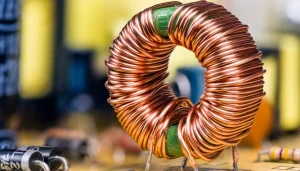
Magnetic components are passive electrical devices that control and transfer energy through magnetic fields. At their core, they typically use wire windings—usually copper or aluminum—wrapped around a magnetic material. When current flows through these windings, a magnetic field is created, allowing the component to regulate voltage, current, or electromagnetic noise.
In power electronics, these components are essential because they can store energy, filter signals, and convert power efficiently without generating energy themselves.
The three main types of magnetic components each serve a different function:
- Transformers: Provide voltage conversion, stepping voltage up or down between circuits through carefully designed transformer windings.
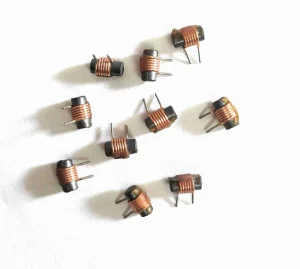
- Inductors: Help stabilize electrical current by resisting sudden changes, making them useful for energy storage and filtering.
- Chokes: Specialized inductors designed to suppress EMI (electromagnetic interference) and reduce unwanted high-frequency noise.
From smartphones to solar inverters, these magnetic components work behind the scenes to support stable, efficient, and reliable power management.
Major Types of Magnetic Components
Magnetic components are available in several forms, each designed for a specific role in power management. Among them, three main types are widely used across modern electronic and electrical systems.
A. Transformers

Transformers are essential for voltage conversion, transferring electrical energy between circuits through magnetic coupling and carefully designed transformer windings. They are commonly used for:
- Stepping voltage up or down
- Providing galvanic isolation to reduce electric shock risk and prevent ground loops
- Supporting power conditioning to stabilize voltage and protect sensitive equipment
Common applications include:
- AC-DC converters in power supplies
- Data centers and servers
- EV charging stations
- Industrial automation systems
B. Inductors

Inductors are coils designed to store energy in magnetic fields while resisting sudden changes in current. This makes them especially useful for:
- Smoothing current in switching power supplies
- Storing energy in compact electronic circuits
- Protecting components from voltage spikes
Common applications include:
- DC-DC converters
- Motor drive circuits
- Smartphones and portable electronic devices
C. Chokes

Chokes are special-purpose inductors designed to filter high-frequency noise while allowing desired signals, such as DC or low-frequency AC, to pass through. By reducing unwanted EMI, they help improve signal quality and overall system stability.
Typical applications include:
- Telecommunication systems
- Audio equipment
- Power supply filters
Together, these magnetic components play distinct but essential roles in building stable, efficient, and safe power electronics systems.
How Magnetic Components Work

At the core of magnetic device operation is Faraday’s Law of Induction: a changing magnetic field within a closed loop induces a voltage (EMF) in that loop. Magnetic components apply this principle by combining copper windings with a ferromagnetic core, which helps concentrate magnetic flux and support efficient energy transfer.
- Primary winding → AC current creates an alternating magnetic field within the transformer core.
- Core → Concentrates and guides the magnetic flux with minimal loss.
- Secondary winding → Receives the changing magnetic flux and induces a new voltage according to Faraday’s Law.
For inductors and chokes, the same electromagnetic principle is applied differently for energy storage or noise suppression. By adjusting the core material, geometry, and number of turns, engineers can optimize inductance, saturation current, and frequency response to meet specific power-electronic requirements.
Use Cases by Industry

Magnetic components are everywhere. Here’s how different industries use them:
Automotive – Found in EV inverters, onboard chargers, and battery management systems (BMS).
Telecom – Enable signal integrity, isolation, and noise suppression in high-frequency systems.
Consumer electronics – Power mobile chargers, laptops, and smart home devices efficiently.
Medical – Support wearable devices, imaging systems, and power-isolated diagnostics equipment.
Industrial automation – Used in motor drives, PLCs, and DC-DC converters for process control.
Defense – Deployed in rugged transformers for avionics, radar, and mission-critical electronics.
Conclusion

With these electromagnetic principles in mind,magnetic components are essential to efficient power electronics, supporting functions such as energy storage, voltage conversion, and noise suppression. Well-designed components and transformer windings help improve system stability, safety, and overall performance across a wide range of industrial applications.
For support with more efficient magnetic designs, explore our solutions or contact us for expert assistance tailored to your application.

 English
  Spanish
  Russian
  Italian
  German
  Chinese