


Coils and windings are often confused, especially by beginners in electronics.
Though related, they serve different roles in electrical components.

Understanding their differences is key to grasping how motors, transformers, and inductors work.
Let’s break it down in a simple way that makes sense for real-world applications.
What Is a Coil?
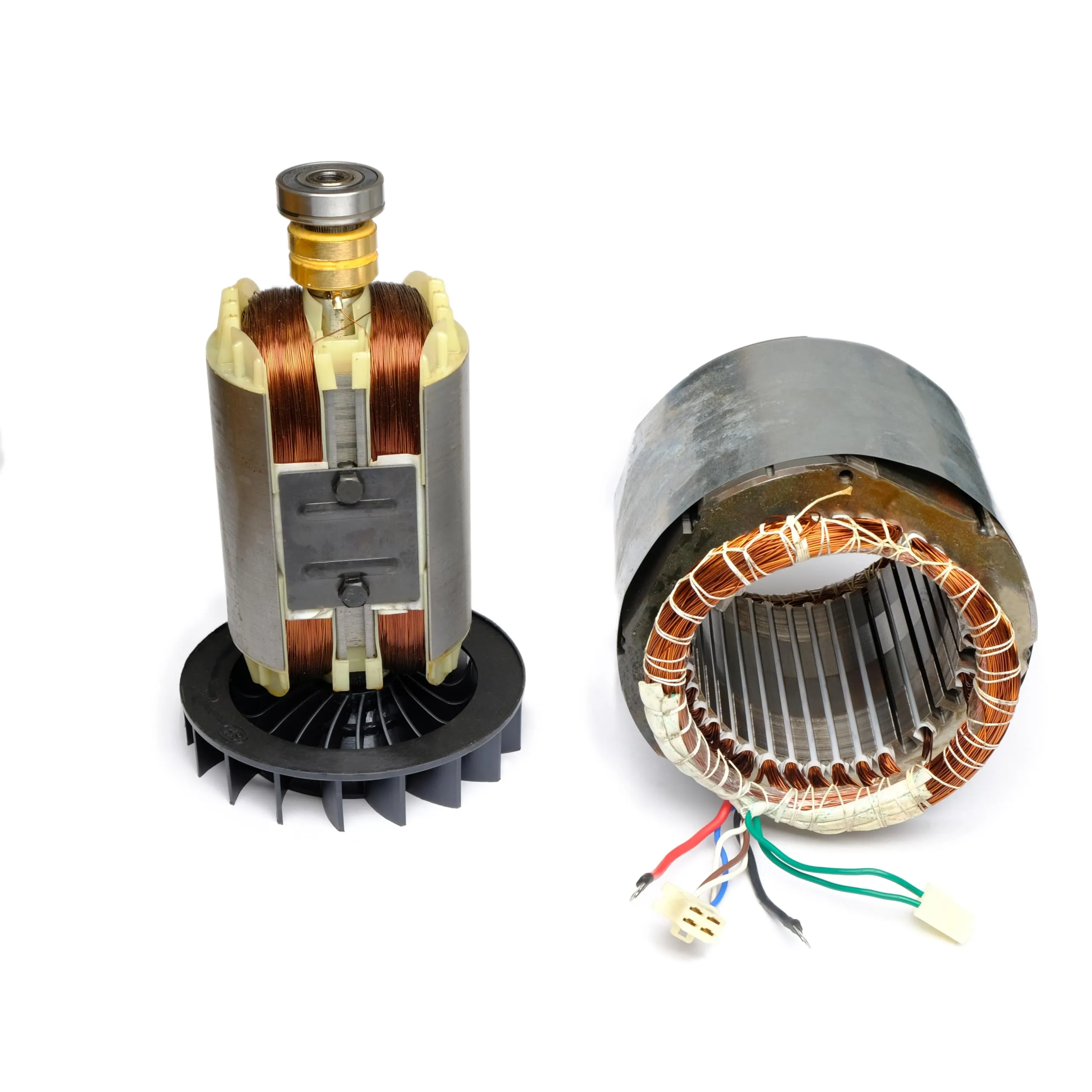
A coil is a loop or series of loops of insulated wire, often wrapped around a core.
It stores energy in a magnetic field when current flows through it.
Coils are used in inductors, relays, antennas, and more. They can be single-turn or multi-turn, and are the basic unit of inductance.
What Is a Winding?

A winding is a structured set of coils arranged to serve a specific function, such as transferring energy in a transformer or generating motion in a motor.
It includes not just the turns of wire but also how they’re connected—series or parallel—and how they’re arranged in slots or around cores.
Coil vs. Winding: Key Differences
Here are the main differences:
Basic Structure

A coil is a single loop or spiral of insulated wire, essentially just one unit.
A winding, however, is a collection of coils arranged together to form a functional assembly, such as in motors or transformers.
Function

Coils generate magnetic fields or store inductive energy and are used in applications like inductors and antennas.
Windings, on the other hand, handle larger-scale tasks like voltage transformation, energy transfer, or powering motors and generators.
Application Scope

Coils are ideal for compact, electronic components—think inductors in filters or sensors.
Windings are central to large systems, found in transformers, motors, and generators where multiple coils work together in a strategic layout.
Design Complexity

Windings consider critical design factors—coil pitch, pole distance, layer configuration (single or double), and symmetry—especially important in multi-phase systems.
Coils are far simpler, with no need for such structural planning.
Electrical Role

Individually, coils manage reactance, resonance, and filtering tasks in circuits.
As part of windings, they contribute to magnetic circuit control and precise voltage transformation across phases and cores.
Analogy
Think of a coil as a single brick, while a winding is the entire wall built from those bricks.
Coils are components; windings create the structure and functionality in electrical systems.
Conclusion

Understanding the difference between coils and windings reveals how basic components work together in advanced electrical systems.
Have more questions or need help choosing the right solution? Contact us today for expert guidance on coil and winding technologies tailored to your application.
FAQs
What is the difference between coil and winding?
A coil is a single loop or series of turns of insulated wire that generates a magnetic field or stores energy when current flows.
A winding is a structured assembly of one or more coils arranged and connected (in series or parallel) to perform functions in devices like transformers, motors, and generators.
Is a transformer coil or winding?
In a transformer, terms are interchangeable but “winding” is preferred:
A coil refers to one loop or turn of wire.
A transformer winding consists of multiple coils wrapped around the core—forming primary or secondary circuits.
What is the difference between core and winding?
The core is a magnetic structure (often iron or ferrite) that concentrates and guides magnetic fields inside devices like transformers or inductors.
A winding is the conductive wire wrapped around or configured on the core to generate or receive electrical energy via magnetic coupling.
What is an electrical winding?
An electrical winding refers to conductors (insulated wire or foil) wrapped around a core to form coils. Multiple windings—such as primary and secondary in transformers—enable electromagnetic induction, voltage transformation, and power transfer .

 English
  Spanish
  Russian
  Italian
  German
  Chinese