


Motor winding plays a crucial role in turning electrical energy into the motion that powers everything from electric vehicles (EVs) to industrial machinery and automated systems. At the heart of every efficient motor is a well-designed winding process that impacts its performance, size, and cost.

As technology advances, winding techniques continue to evolve—improving not just how motors operate, but also how compact, powerful, and energy-efficient they can be. In this guide, we’ll walk you through the key winding methods, explore popular winding techniques, compare different winding machines, and highlight emerging innovations shaping the future of motor manufacturing.
Winding Methods: Direct vs. Indirect

Motor windings are applied in two main ways: direct and indirect.
Direct winding wraps wire directly on the stator. It’s fast and cost-effective, but allows less insulation and lower wire volume.
Indirect winding winds wire onto a bobbin first, then transfers it. It offers better insulation and fits complex designs, but takes more steps and cost.
Winding Techniques Explained
Understanding how wire is wound onto a motor makes it easier to see why some motors are more efficient—or faster to produce—than others. Below are three widely used winding techniques, each with its own strengths.
1. Needle Winding

This method guides the wire through a hollow needle that loops around the pole, similar to how a sewing machine stitches fabric. It offers precise placement and easy automation but is slower, making it less ideal for large-scale production.
2. Shedder (Flyer) Winding

A spinning flyer arm quickly throws wire onto the coil at high speeds, making it perfect for fast production lines. However, its speed can lead to looser, uneven wire placement, which may reduce space efficiency inside the coil.
3. Linear Winding

Linear winding spins wire onto bobbins in straight paths, delivering a neat, compressed finish. It’s ideal for precision builds but only works with indirect winding since transferring the bobbin is part of the process.
Special Winding Types by Application
Not all motors are created equal—winding type often depends on what the motor needs to do. Let’s break down three special winding styles and where you’ll find them in the real world.
Concentrated Winding

This type uses larger coils placed in fewer slots, creating a compact winding setup. It’s great for producing high torque and has a relatively simple manufacturing process.
However, it can lead to uneven magnetic fields and generate more harmonics, which may affect performance in sensitive applications.
Used in: Large synchronous motors, industrial generators, and motors where torque matters more than precision.
Distributed Winding

In this method, smaller coils are spread across many slots, helping balance the magnetic field. It delivers a smooth, efficient performance that’s perfect for high-precision work.
On the downside, it’s more complex to wind and adds to production costs.
Used in: Precision-controlled motors like CNC machines, servo motors, and robotics.
Linear Motor Winding
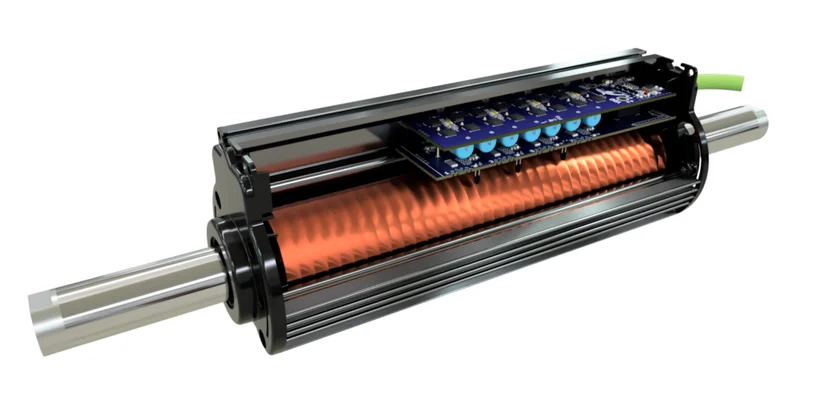
Here, the windings are arranged in straight lines rather than in a circular layout. This setup supports direct linear motion, making it ideal for maglev trains, elevators, and automated conveyor systems.
While it requires a more specialized design, the efficiency and speed are well worth it in these applications.
FAQs
1. What is the difference between concentrated and distributed winding?
Concentrated winding places coils in fewer slots, offering high torque but less uniform fields. Distributed winding spreads coils across many slots for smoother operation and better efficiency.
2. Why use linear motor winding?
Linear winding is ideal for applications needing straight-line motion, like maglev trains and elevators. It reduces mechanical complexity and improves speed control.
3. Which winding type is best for high torque?
Concentrated winding is your go-to for high torque output, especially in motors where speed variation isn’t critical, like heavy-duty industrial machinery.
Conclusion

Motor winding technologies directly shape the performance, size, and efficiency of modern motors. From direct and indirect methods to linear and distributed designs, each type serves specific needs in industries like EVs, automation, and heavy machinery.
Looking to upgrade your motor systems or explore advanced winding solutions? Contact us today for expert guidance and tailored support.
 English
  Spanish
  Russian
  Italian
  German
  Chinese