


When designing a coil, its geometry is just as important as the materials and turns count. The shape of the coil defines the magnetic path, which in turn affects efficiency, leakage inductance, and electromagnetic interference (EMI). A well-chosen geometry also determines how much copper fits into the core window (fill factor), how easily heat can be dissipated, and how compact or costly the final design will be.
In power magnetics, reducing leakage and stray fields is critical. Minimizing leakage flux not only boosts efficiency but also helps control waveforms, ensuring stable performance in applications like power supplies, EV systems, and medical equipment. This is why coil shape—toroidal, rectangular, or oval—remains at the heart of modern transformer and inductor design.
Quick Physics Primer (Design Levers)
Before comparing coil shapes, it helps to understand the physics behind them. The way a coil is wound and the shape it takes directly influence how efficiently it handles magnetic energy.
Magnetic Path & Leakage
The geometry and winding layout set the magnetic path. Any unlinked flux becomes leakage flux, which wastes energy and can distort waveforms. A design with lower leakage reduces stress on snubbers and boosts efficiency, especially in high-frequency power electronics.AC Losses
Current doesn’t always flow evenly in a conductor. At higher frequencies, skin and proximity effects crowd current into smaller areas, increasing resistance and creating hot spots. Coil geometry and spacing determine how severe these losses are, making smart design critical for thermal stability.Fill Factor & Packing
The fill factor shows how much copper you can pack into a given space. Orthocyclic winding patterns arrange wires in a tightly stacked, honeycomb-like structure, improving copper use and reducing winding height. While theory suggests up to 90% packing for round wires, in practice around 70% is more realistic, balancing density with manufacturability.
Toroidal Coils (Round Cores)

Toroidal coils are built around ring-shaped cores. Their biggest advantage is very low stray magnetic field, which means less EMI and quieter operation. They are compact, efficient, and produce little hum, making them a top choice in audio, medical, and precision power supplies.
The trade-offs? Toroids can be harder to wind and repair, often cost more, and have practical limits when scaled to very high power. They also draw higher inrush currents at startup. Still, when minimal noise and leakage are critical, toroids are usually the first option.
Rectangular Coils (E-I / Racetrack on Laminations)

Rectangular coils—often wound on E-I laminated cores or in racetrack form—are known for being robust, economical, and easier to manufacture. They allow air gaps, making them well-suited for switch-mode power supply (SMPS) inductors and flyback transformers.
On the downside, rectangular coils tend to produce more stray fields, audible hum, and leakage inductance compared to toroids. They remain the go-to solution for industrial and cost-sensitive applications, or where intentional gapping is needed for magnetic control.
Oval / Racetrack Coils

Oval, or racetrack, coils are a middle ground between round and rectangular geometries. Their shape provides good packaging efficiency while maintaining strong electromagnetic performance. Research shows they can deliver lower parasitic capacitance and higher Q factors than some square or rectangular designs.
These coils are widely used in compact inductors, magnets, and custom applications where space is tight and controlled capacitance is essential. For designs that demand both efficient geometry and a slim footprint, oval coils are an attractive choice.
Winding Pattern & Packing Density
| Aspect | Key Idea | Toroidal (Round Core) | Rectangular / E-I | Oval / Racetrack | Notes / When to Use |
|---|---|---|---|---|---|
| Winding pattern & packing density | Orthocyclic boosts fill factor; simple layer is faster but gappier | Supports tight orthocyclic packing; compact coils | Good with traverse control; simple layer common for cost/speed | Balanced packing in slim envelopes | Choose orthocyclic for small volume & repeatable inductance |
| EMI & stray field | Flux containment vs. radiated field to surroundings | Very low stray field; quiet operation | Higher stray field; may need orientation/shielding | Moderate; depends on layout and chassis | Plan placement/shields early to avoid EMI issues |
| Leakage inductance & sectioning | Geometry + interleaving (“p” sections) dominate leakage | Short mean turn length; low leakage with interleaves | Higher baseline leakage; improved by interleaving/shorter MTL | Good control with careful sectioning | Lower turns reduce leakage but impact voltage; balance in tests |
| Mechanical & fault behavior | Short-circuit forces and coil stability | Round windings hold shape well under fault forces | Can deform without bracing; needs strong supports in HV/industrial | Generally stable with adequate banding/potting | Account for through-faults; specify bracing early |
| Thermal & serviceability | Cooling paths, potting/shields, maintenance access | Efficient but can trap heat if enclosed; model hotspots | Often easier airflow and service (frames, vents, shields) | Slim form aids airflow; potting/shielding straightforward | Use thermal modeling + test; design for ventilation & access |

How the wire is wound inside a coil makes a big difference. Orthocyclic winding, where each turn neatly nestles into the groove of the layer below, greatly improves the fill factor and keeps spacing consistent. This pattern allows tighter tolerance and more copper in a smaller space, which means higher efficiency and reduced coil size.
By contrast, simple layer winding is easier and faster but leaves gaps and uneven spacing. For applications where small volume and repeatable inductance are critical—like precision transformers or compact inductors—orthocyclic winding is the smarter choice.
EMI & Stray Field by Geometry

Coil shape also determines how magnetic fields escape—or stay contained. Toroidal coils excel at keeping the flux closed within the core, which minimizes external fields and reduces the risk of unwanted coupling into nearby circuits. That’s why they’re often chosen for low-noise designs in audio and medical gear.
E-I and rectangular coils, however, tend to radiate more flux into their surroundings. This can cause interference if the coils are placed too close to sensitive electronics. In these cases, designers may need to orient the coils carefully, add shielding, or design chassis paths to guide the magnetic field safely. Planning placement early ensures cleaner performance and fewer EMI headaches.
Leakage Inductance & Sectioning
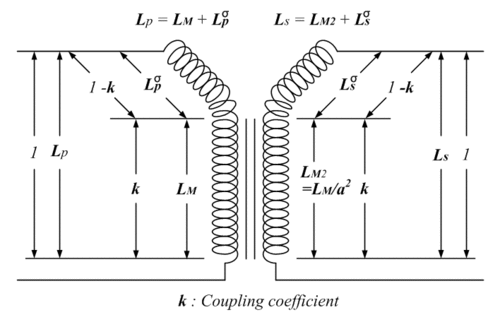
Leakage inductance is shaped by both coil geometry and winding layout. By interleaving or sectioning windings (adding more “p” sections), designers shorten the mean turn length and reduce the space where flux can escape. Fewer turns also directly cut leakage, but that comes with trade-offs in voltage handling. The key takeaway: geometry plus smart layout is what allows transformers to meet demanding dynamic performance specs without excessive leakage.
Mechanical & Fault Behavior (Design Caveats)

Not all coils respond the same under stress. Round windings generally hold their shape better under short-circuit forces, making them more robust for sudden current surges. Rectangular stacks, by contrast, can deform if not heavily braced. In high-voltage or industrial applications, it’s critical to account for through-faults and add proper mechanical supports to keep coils stable and safe.
Thermal & Serviceability

Coil shape also influences cooling and long-term service. Toroids, while efficient, can trap heat if they’re fully enclosed, which makes thermal modeling and testing essential. E-I frames and racetrack coils, on the other hand, often allow better airflow, potting, or shielding, making them easier to cool and maintain. In practice, engineers must balance compactness with ventilation paths and serviceability to ensure reliable operation over the coil’s lifetime.
Application Matching (Rule-of-Thumb Guide)

Choosing the right coil geometry often comes down to the application:
Audio, medical, or low-EMI power supplies → Start with toroidal coils for minimal noise and leakage. If cost is a concern, rectangular coils with shielding can be a reasonable alternative.
SMPS inductors and flyback transformers → Rectangular or E-cores with a designed air gap are usually preferred. They provide the control needed for high-frequency switching designs.
Tight packaging or controlled capacitance designs → Oval or racetrack coils are excellent candidates. Their geometry balances space efficiency with good electromagnetic behavior.
These quick guidelines help match geometry with real-world needs, but the best designs often combine theory with practical testing.
Decision Checklist

When finalizing coil geometry, keep this simple checklist in mind:
Target flux and leakage limits → Select the geometry that best contains or manages flux.
Fill factor goals → Pick a winding pattern (orthocyclic vs. simple layer) that achieves the copper density you need.
AC losses → Balance proximity effects and spacing to control heating.
EMI management → Plan for spacing, shielding, or orientation to avoid interference.
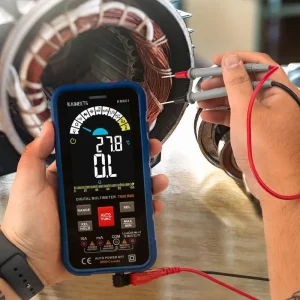
Prototype validation → Always measure leakage inductance, resistance, and temperature rise under load to confirm performance.
A structured checklist ensures you catch the details that often separate a good design from a great one.
Ready to Optimize Your Coil Designs?

The right coil geometry can make all the difference in performance, efficiency, and long-term reliability. Whether you’re exploring toroidal, rectangular, or oval designs, our team can help you choose, prototype, and scale with confidence.
Contact us today to discuss your project and discover custom coil winding solutions tailored to your needs.
FAQs
What is the difference between the two coil shapes?
Coil shape affects magnetic path, leakage, and packing density. Toroidal coils confine flux tightly and minimize EMI, while rectangular or square coils are easier to wind and better for designs requiring air gaps.
What are the disadvantages of toroidal transformers?
Harder and more costly to wind and repair
Higher inrush current compared to EI types
Size scaling is limited for very high power
Can trap heat if not well ventilated
What is the shape of a toroid coil?
A toroid coil has a doughnut-shaped core, with wire wound evenly around the circular path. This geometry keeps magnetic flux almost entirely inside the core, reducing stray fields.
What is the difference between toroidal and square transformers?
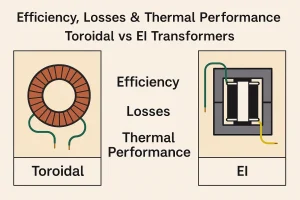
Toroidal: Round core, compact, low hum, minimal leakage, high efficiency.
Square/EI: Laminated rectangular core, easier to wind, lower cost, allows gapped designs but with higher stray fields and noise.
 English
  Spanish
  Russian
  Italian
  German
  Chinese