


Coil winding is a key process in the manufacturing of electrical devices, involving the wrapping of wire around a core to create coils.
These coils are essential in components like transformers, motors, and inductors, where they generate magnetic fields that enable energy transfer and voltage regulation.

Different winding methods are used to meet specific performance needs, such as enhancing power efficiency, managing heat, and ensuring magnetic field consistency, tailored to each application’s demands.
What is Coil Winding?
Coil winding is a fundamental process in the creation of many electrical components, where wire is wrapped around a core to form coils.
These coils are crucial in generating magnetic fields when current flows through them, allowing devices like transformers, inductors, and motors to perform essential tasks such as energy transfer, voltage conversion, and magnetic flux creation.
Purpose of Winding Techniques

Different winding techniques are used to meet specific application requirements, from efficiency and heat management to magnetic field stability.
Here’s why various winding methods are chosen for different purposes:
- Small Electronics: In devices like chargers or inductors, precise winding techniques ensure consistent performance and manage heat in compact spaces.
- Industrial Machinery: For larger machinery, robust winding methods handle higher power demands and reduce energy loss.
- Power Efficiency: Structured winding techniques help reduce resistance and improve energy transfer, which is essential in transformers and motors.
- Thermal Management: Certain winding patterns dissipate heat more effectively, which is important for high-power applications to prevent overheating.
Each winding method serves a unique purpose, allowing manufacturers to optimize devices for durability, efficiency, and performance in their intended applications.
Types of Coil Winding
Different types of coil winding techniques are used to optimize performance, efficiency, and durability in electrical devices.
Each method offers distinct advantages and is suited to particular applications.
Let’s explore some of the most common winding types and their unique characteristics.
1. Random Coil Winding

In random coil winding, the wire is wound without a strict pattern, resulting in overlapping layers that fill space irregularly.
This type of winding is often used in applications where quick production and low cost are prioritized over precision.
- Advantages: Random winding is cost-effective and quick to produce, making it suitable for smaller components where tight performance specifications are less critical.
- Drawbacks: It can lead to increased resistance and uneven magnetic fields, affecting efficiency.
- Applications: Common in small transformers, low-cost inductors, and other basic components where exact performance is not essential.
2. Orthocyclic Coil Winding
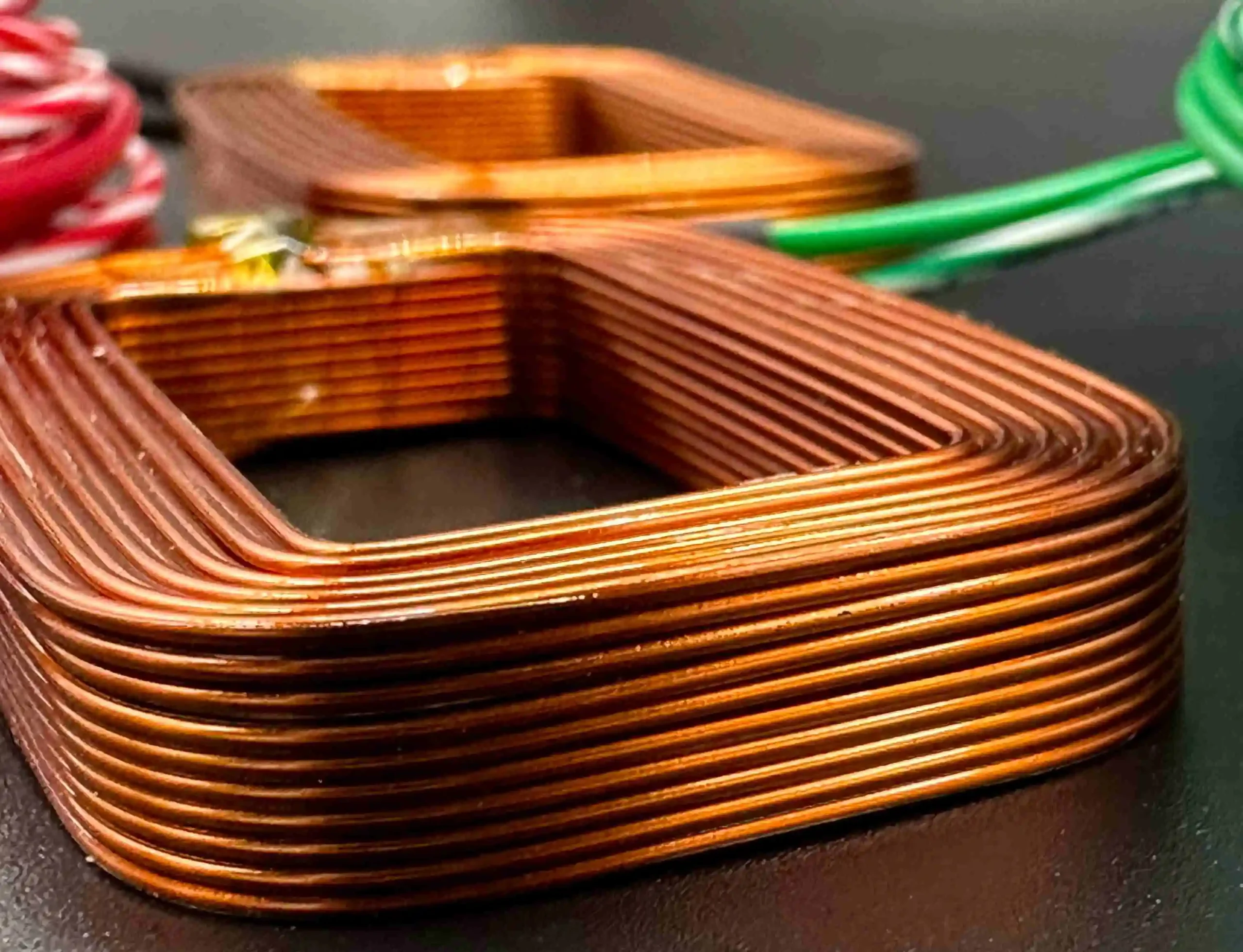
Orthocyclic winding involves a more structured technique, where the wire is wound in a precise, parallel arrangement, creating uniform layers.
This structure enhances the coil’s efficiency by reducing resistance and maintaining a consistent magnetic field.
- Advantages: This technique reduces resistance, increases efficiency, and produces a consistent magnetic field, ideal for applications requiring high performance.
- Drawbacks: Orthocyclic winding is more time-consuming and often requires more materials, leading to higher costs.
- Applications: Used in high-performance transformers and precision inductors, particularly where efficiency and magnetic stability are critical.
3. Helical Coil Winding

Helical winding creates a cylindrical shape by winding the wire in a spiral pattern around a core.
This method is ideal for components that require high magnetic flux concentration.
- Advantages: Helical winding is compact and supports a concentrated magnetic flux, making it efficient for certain shapes and uses.
- Drawbacks: Limited to specific cylindrical shapes and may need more material compared to some other methods.
- Applications: Commonly used in solenoids, antennas, and devices requiring concentrated magnetic flux.
4. Jumble Coil Winding (Wild Winding)

In jumble winding, also known as wild winding, the wire is wound in a random, overlapping manner, creating dense layers.
This method provides a greater surface area, which is beneficial for heat dissipation in high-power applications.
- Advantages: Jumble winding can handle high power and dissipate heat effectively due to its larger surface area.
- Drawbacks: The random pattern may lead to inconsistent performance in certain applications.
- Applications: Frequently used in high-power transformers and high-frequency inductors where thermal management is important.
5. Toroidal Coil Winding

In toroidal winding, the wire is wound around a doughnut-shaped core, creating a closed magnetic loop.
This unique shape minimizes magnetic losses and interference, making it suitable for sensitive applications.
- Advantages: Toroidal winding reduces magnetic losses and minimizes electromagnetic interference, contributing to higher performance in specific settings.
- Drawbacks: This method is complex and challenging to manufacture, often leading to higher production costs.
- Applications: Commonly used in low-noise transformers and sensitive electronic circuits where stable and interference-free performance is crucial.
Factors to Consider When Choosing a Winding Method
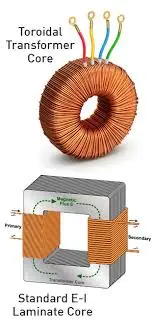
Choosing the right coil winding method depends on several key factors that impact performance, efficiency, and cost:
Size and Shape
Match the winding method to the core’s geometry—use helical for cylindrical shapes and toroidal for ring-shaped designs.Performance Requirements
For high precision and consistent magnetic fields, go with orthocyclic winding; for basic applications, random winding may suffice.Thermal Management
In high-power setups, opt for winding styles like jumble winding that enhance surface area for better heat dissipation.Cost Efficiency
Random winding is cost-effective and quick to produce, while precision windings like orthocyclic are more expensive but offer better performance.
Conclusion

In summary, selecting the right coil winding type is crucial for optimizing performance, efficiency, and durability across various electrical applications.
Each winding type, from random to toroidal, meets specific needs in industries ranging from consumer electronics to power distribution.
For expert guidance on choosing the best winding method for your application, consult with a professional or manufacturer.
Making the right choice will ensure reliability, efficiency, and enhanced lifespan for your electrical components.
FAQs
What is coil winding?
Coil winding is the process of wrapping conductive wire—usually copper—around a core, bobbin, or toroid to create electromagnetic coils used in motors, transformers, and alternators.
It’s key in generating magnetic fields or capturing electromagnetic energy.
What is winding technology?
Winding technology refers to the advanced processes and machinery used to produce precise, high-performance coil windings in electric motors. It’s crucial in industries like automotive and industrial automation, ensuring motor efficiency, reliability, and durability.
What is the difference between helical and spiral winding?
Actually, helical and spiral winding are often the same thing. These windings are typically used in low-voltage, high-current transformers.
They come in variations like single helical, double helical, and disc-helical, and are designed to handle high currents with fewer turns.
 English
  Spanish
  Russian
  Italian
  German
  Chinese