


Transformers play a vital role in electrical systems. Whether stepping voltage up or down, they help deliver power safely and efficiently. But not all transformers are built the same. Two common types you’ll come across are toroidal transformers and standard E-I (laminated core) transformers.

Before we compare them, let’s take a moment to understand what each one actually is.
What Is a Toroidal Transformer?

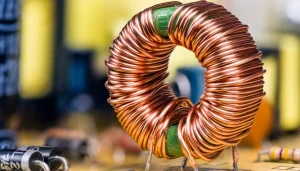
A toroidal transformer uses a core shaped like a ring—or a donut. The copper wire is wound directly around this circular core, creating a compact, symmetrical design. Because the magnetic path is continuous, these transformers are highly efficient, generate very low electromagnetic interference (EMI), and operate quietly. They’re often used in audio gear, medical equipment, and other sensitive electronics.
What Is a Standard Transformer (E-I Core)?

A standard transformer, also called an E-I transformer, uses a laminated steel core made up of stacked sheets shaped like the letters “E” and “I.” The copper windings are wrapped on a plastic or metal bobbin and then fitted onto the core. This design is easier and cheaper to manufacture, making it a popular choice for industrial equipment, power supplies, and cost-sensitive projects.
Quick Comparison
Core Structure & Construction Differences

The core is where toroidal and standard transformers really differ.
A toroidal transformer has a smooth, circular ring core with no sharp corners or air gaps. Copper windings are wrapped directly around the core, creating a tight, efficient magnetic path. This design reduces energy loss and keeps the transformer compact—but it takes more time and care to manufacture.
A standard transformer, also called an E-I core transformer, uses thin steel sheets stacked in “E” and “I” shapes. The coils are wound on a bobbin and then attached to the laminated core. This setup is easier and cheaper to produce, but the extra gaps and corners lead to higher energy loss.
In short:
Toroidal: seamless core, direct winding, high efficiency
E-I: stacked layers, bobbin-wound, lower cost
Efficiency & Losses

When it comes to energy efficiency, toroidal transformers have the upper hand.
Toroidal transformers typically reach 90–95% efficiency—or even higher—thanks to their closed-loop core design. The smooth magnetic path and tight windings result in fewer core and copper losses. That means less heat, lower energy waste, and quieter operation.
Standard E-I transformers, on the other hand, often have efficiency rates below 90%. The stacked, laminated core creates a less direct magnetic path, with more air gaps and corners. This leads to higher stray losses, more heat, and a bit more vibration or hum.
So if energy savings, heat reduction, or noise control matter to you, toroidal wins this round.
Size, Weight & Mounting

Another key difference is how much space each transformer takes up—and how they’re installed.
Toroidal transformers are known for being compact and lightweight. Thanks to their efficient core shape, they can be up to 50% smaller and lighter than standard transformers with the same power rating. Installation is also easier—they usually mount with a single center bolt, saving time and space in tight enclosures.
Standard E-I transformers are larger and bulkier. Their laminated core design takes up more room, and they’re usually heavier. Mounting often requires multiple bolts or brackets, which adds complexity, especially in compact systems.
If size and weight are concerns—like in audio gear or compact electronics—toroidal is the smarter fit.
Magnetic Field & EMI Considerations

Magnetic interference is a big deal in sensitive electronics—and this is where design makes a difference.
Toroidal transformers naturally produce a much lower external magnetic field—about 10% of what a standard E-I core emits. That’s thanks to their closed, circular core, which keeps the magnetic field tightly contained. Less stray field means less electromagnetic interference (EMI), making toroidal transformers ideal for audio, medical, and precision devices.
Standard E-I transformers, with their open, laminated cores, allow more stray magnetic flux to leak out. This can cause more EMI in nearby components. However, in some cases, their structure can actually help filter high-frequency noise from the power line—something toroids aren’t always great at.
So, if your design is EMI-sensitive, toroidal is typically the better choice.
Acoustic Noise & Vibration

Noise matters—especially in audio equipment, medical devices, or quiet environments.
Toroidal transformers are known for running very quietly. Their round, compact shape allows for even compression of the windings, which helps reduce mechanical vibration. With no loose laminations or exposed edges, toroids produce minimal hum, making them a favorite in sound-sensitive applications.
Standard E-I transformers, on the other hand, can produce a noticeable buzz or hum. This comes from magnetostriction—a natural vibration in the laminated steel core as it reacts to the magnetic field. It’s not a problem in most industrial settings, but it can be distracting in quiet spaces.
If silence is golden in your application, toroidal is the clear winner.
Inrush Current & Power Rating Limits

Not all transformers handle power the same way—especially during startup.
Toroidal transformers have no air gap in their core, which means they draw a higher inrush current the moment they’re switched on. This sudden surge can trip breakers or stress components if not managed properly. Because of this, toroidal transformers are usually kept below 10 to 25 kVA in most applications.
Standard E-I transformers have built-in air gaps in their laminated core. These gaps help reduce inrush current, making them more stable at startup. They’re also commonly used in higher power ratings, where managing inrush is critical.
So, for higher loads or simpler startups, E-I cores offer more flexibility.
Cost & Manufacturing Considerations

Cost is a major factor when choosing a transformer—especially for large projects or product lines.
Toroidal transformers are more expensive to produce. Their windings must be carefully wrapped around a circular core, often by hand or with specialized machines. This labor-intensive process, combined with lower production volumes, leads to a higher unit cost.
Standard E-I transformers are cheaper to make. Their laminated cores can be mass-produced using stamped steel sheets, and the windings are easily placed on bobbins. This makes them ideal for high-volume, cost-sensitive applications, where price per VA (volt-amp) matters.
In short: toroids cost more but offer performance; E-I cores are more budget-friendly.
Applications & Suitability

Choosing the right transformer often comes down to where—and how—it will be used.
Toroidal transformers shine in high-sensitivity applications. Their low noise, compact size, and minimal EMI make them perfect for:
High-end audio equipment
Test and measurement tools
Compact or portable electronics
Anywhere space is tight and noise control matters, toroids are the go-to choice.
Standard E-I transformers are built for rugged, general-purpose use. They’re common in:
Industrial machinery
Utility systems
HVAC and lighting
Budget-friendly consumer electronics
They handle higher power loads, are easier to produce in bulk, and work well in less sensitive environments.
In short: go toroidal for precision, and go E-I for power and price.
How to Choose the Right Transformer

Not sure which transformer to pick? It depends on what matters most in your application. Here’s a quick guide:
Go with a toroidal transformer if you need:
- Quiet operation (e.g., audio, medical)
- Minimal electromagnetic interference (EMI)
- Compact size and lighter weight
- Higher efficiency in a small footprint
Choose a standard E-I transformer if you need:
- A more budget-friendly solution
- High power handling
- Simpler or rugged designs (e.g., industrial machines)
- Lower sensitivity to noise or EMI
Still unsure? Think about your project’s environment, space constraints, and power demands. If performance and silence matter most, toroidal is worth the extra cost. If it’s about cost, durability, or high-power needs, E-I is a smart choice.
Conclusion

Toroidal and standard transformers each serve different needs. Toroids offer compact size, low noise, and high efficiency, while E-I cores provide durability and affordability for high-power or budget-sensitive applications. Choosing the right one depends on your project’s size, sensitivity, and cost goals.
Need help selecting the best transformer for your design? Contact our team for expert advice, product options, or a custom quote. We’ll help you find the right fit—fast, reliable, and cost-effective.
FAQs
1. Are toroidal transformers safer than standard transformers?
Both types are safe when properly designed and used. However, toroidal transformers emit less stray magnetic field, which can reduce interference with nearby sensitive electronics. For medical or audio applications, this makes toroids a preferred choice.
2. Can toroidal transformers be used in outdoor or harsh environments?
Toroidal transformers are generally better suited for indoor use or enclosed systems. Their open winding design is more sensitive to moisture and debris. For rugged, outdoor, or industrial settings, potted E-I transformers are usually more durable and protected.
3. Why do toroidal transformers have higher inrush current?
Toroidal cores have no air gap, which allows magnetic flux to build up rapidly at startup. This causes a brief surge of current. While not dangerous, it may require circuit breakers or soft-start designs to manage inrush.

 English
  Spanish
  Russian
  Italian
  German
  Chinese