


Guangri has built a strong reputation in the coil winding industry, offering advanced solutions for manufacturers of transformers, inductors, and other precision electronics. Among its leading models is the JGC-2015PQL PLC coil winding machine, designed to deliver both accuracy and efficiency in modern coil production.
Unlike older manual or semi-automatic systems, this machine leverages PLC (Programmable Logic Controller) technology to streamline every step of the winding process. With automated parameter settings, recipe storage, and real-time control, it ensures coils are produced consistently, even in high-volume runs.

The benefits go beyond speed. Automation reduces operator error, enhances repeatability, and protects wire integrity, making it ideal for industries where precision and reliability are non-negotiable. Whether for transformer coils or specialized electronic applications, the JGC-2015PQL helps manufacturers meet today’s demanding standards with confidence.
Safety & Startup Basics
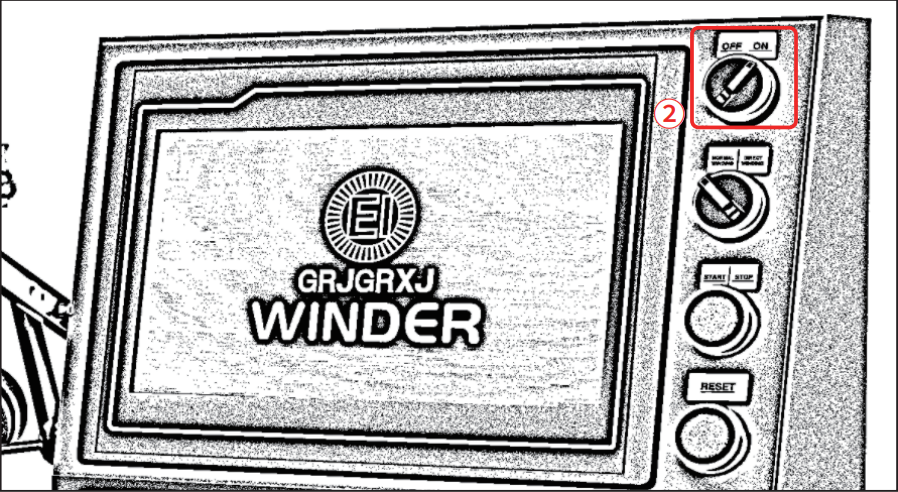
Before running the JGC-2015PQL, safety always comes first. The machine is equipped with an emergency stop button, which must be released before any operation can begin. After that, pressing the power-on button in the control panel brings the system online and transitions the operator into the main interface.
Once powered, the PLC screen displays the key operating windows and status indicators. At this stage, it’s critical to follow standard safety checks: ensure all guards are in place, verify wire and core positioning, and confirm the workspace is free from obstructions. These steps prevent accidents and protect both the machine and the operator.
By starting each shift with a consistent routine—emergency stop release, controlled power-up, and system readiness checks—you create a safer environment and set the foundation for smooth winding operations.
Key Parameters Setup
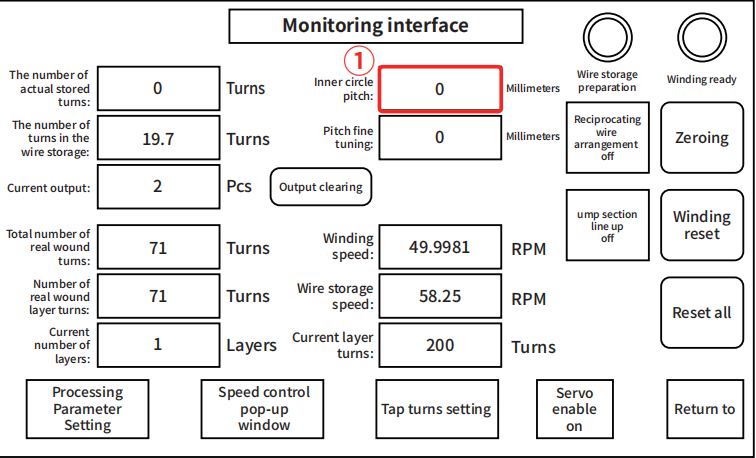
Once the machine is powered on and safe to use, the next step is setting up the winding parameters. These values guide the JGC-2015PQL to produce accurate and repeatable coils.
The first input is the inner circle pitch—the spacing between each turn of the winding. This figure controls how tightly or loosely the wire is laid, directly influencing coil density and performance.
Next, you’ll enter coil-specific specifications depending on the design:
Rectangular coils → input both the thickness and height of the core.
Toroidal coils → enter the outer and inner diameter to match the core’s geometry.
Finally, input the wire storage ring diameter. This measurement allows the system to calculate the required number of storage turns, ensuring the coil is wound continuously without running short of wire.
By carefully setting these parameters, operators ensure the machine runs smoothly, reduces waste, and delivers coils that meet design requirements every time.
Storage & Winding Calculation

After setting the key parameters, the JGC-2015PQL automatically helps operators calculate the winding sequence. The goal is to balance total turns required with the number of turns stored in the wire storage ring.
The process starts by entering the planned number of winding turns. The system then uses the core thickness, core height, and wire storage ring diameter to compute how many storage turns are needed for continuous winding.
In practice, there may be slight deviations between the calculated values and real coil behavior. The operator can fine-tune the stored turns to match actual needs. This flexibility ensures smooth wire delivery, prevents shortages during winding, and keeps layer consistency.
By automating these calculations, the machine saves setup time while ensuring coils are wound with accuracy and repeatability—essential for transformer and electronic coil production.
Saving & Managing Recipes
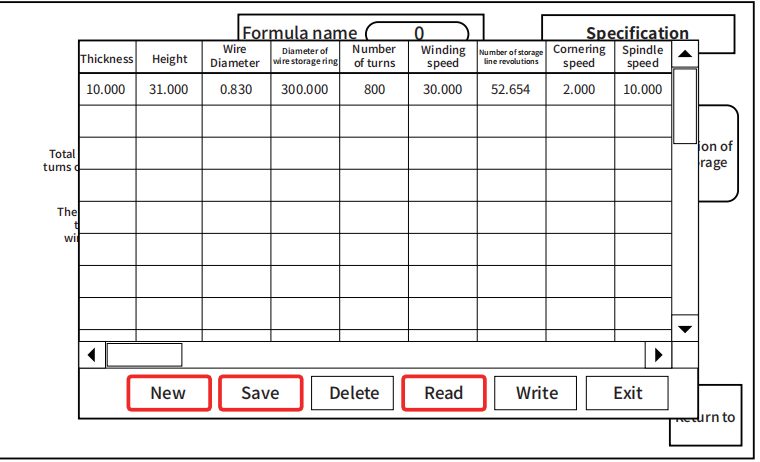
One of the most powerful features of the JGC-2015PQL PLC coil winding machine is its ability to store and manage recipes. This function helps operators avoid re-entering parameters every time a new coil type is produced.
Using the New–Read–Save functions, you can create, load, and update coil specifications. Each recipe should have a unique name that reflects the coil’s dimensions or type—for example, “Toroid-45mm-Cu0.8” or “Rect-Core-Thin-200T.” Clear naming makes it easy for any operator to identify the right setup quickly.
Proper recipe management is more than just convenience—it directly improves efficiency and repeatability. With recipes stored in memory, changeovers between different coil designs take only minutes instead of hours. This reduces downtime, increases throughput, and minimizes the risk of input errors.
By maintaining a well-organized recipe library, manufacturers can achieve consistent quality across batches while staying flexible for custom or short-run orders.
Speed & Wire Arrangement Control
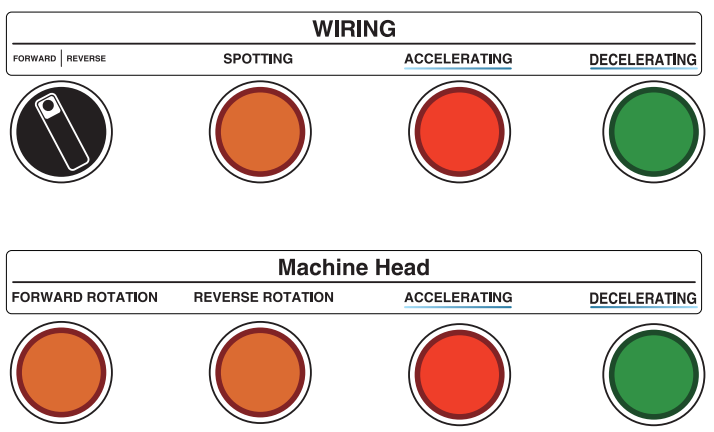
Controlling speed is at the heart of precise coil winding. On the JGC-2015PQL, operators can adjust both head speed and wire arrangement speed to match the coil design.
The system offers two ways to fine-tune speed:
Red/Green Buttons – These allow quick acceleration or deceleration during winding, perfect for real-time adjustments on the shop floor.
Pop-Up Windows – For more precision, operators can input exact speed values through the control interface.
Balancing head and arrangement speed ensures wires are laid smoothly and evenly, preventing overlaps, gaps, or tension spikes that compromise coil quality.
Reset & Recalibration
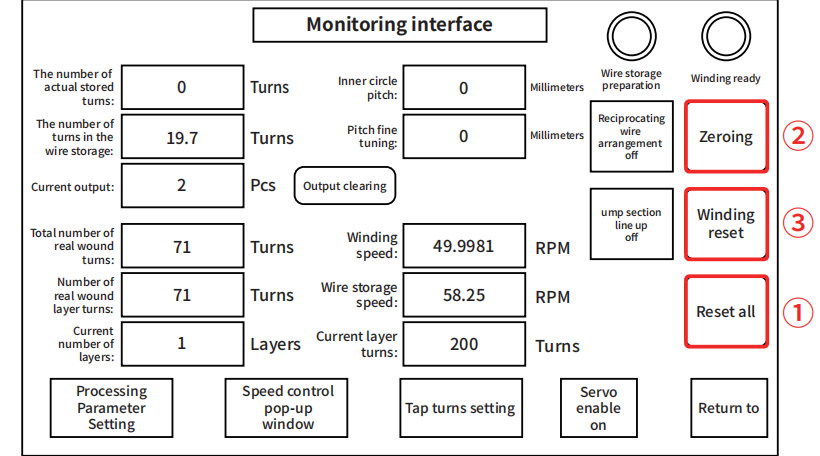
Before starting a new product run, it’s essential to clear old data. The JGC-2015PQL offers three reset functions to keep operations error-free:
Zeroing – Recalculates stored turns when reloading wire.
Winding Reset – Clears winding data for a fresh start.
Reset All – Wipes all stored values to fully prepare for a new product.
Additionally, the Output Clearing function allows recalculations if the total turns or yield data need resetting mid-process. Proper use of these resets prevents errors, avoids cross-product contamination, and maintains accurate production records.
Winding Control Features 
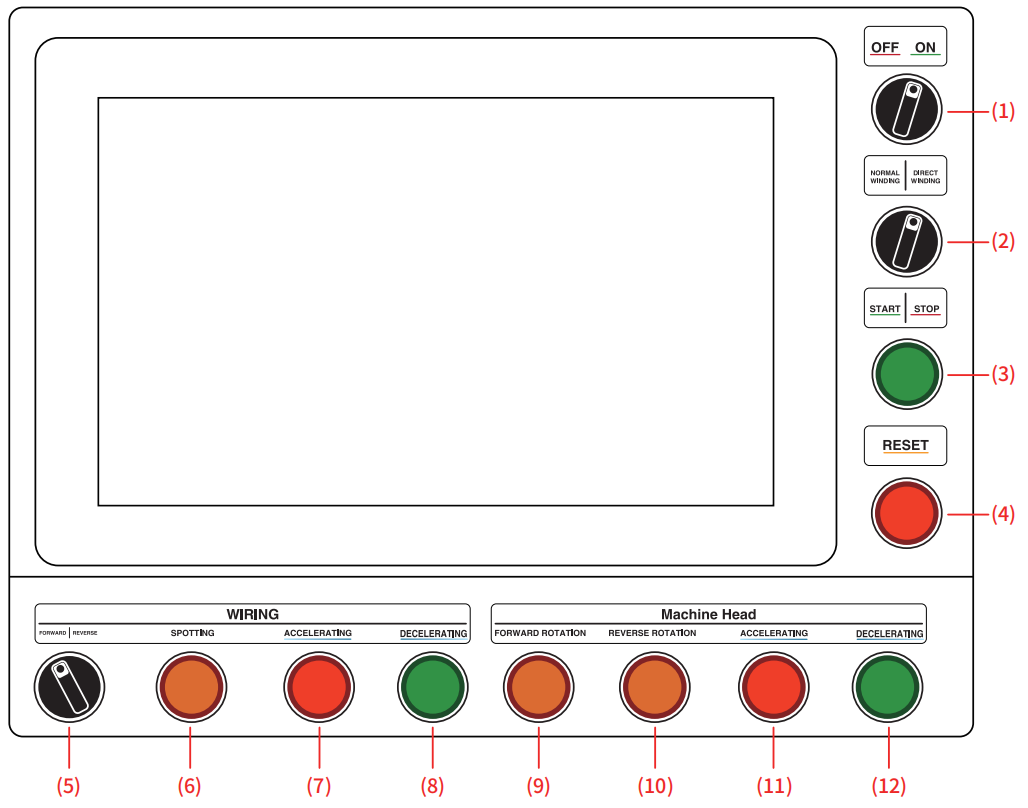
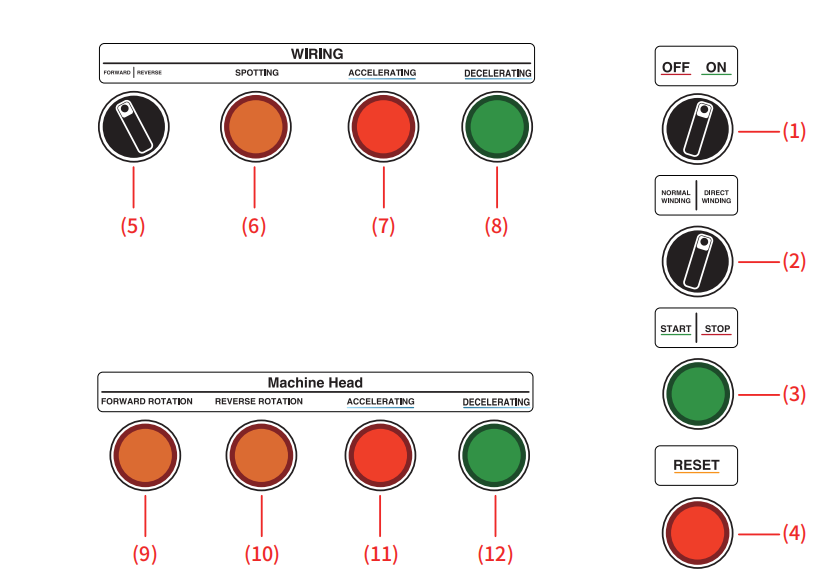
The JGC-2015PQL PLC coil winding machine is equipped with 12 control buttons, allowing operators to manage different coil winding functions quickly and accurately.
Start / Stop – start or stop the coil winding process at any time.
Direction Control – change the winding direction whenever required.
Tap Functions – temporarily pause winding or reverse the head tap for easier operation.
Acceleration & Deceleration – adjust winding speed in real time for better control when handling delicate winding wire.
For rectangular core winding, the pause-and-resume function is especially useful. It allows the winding head to pause briefly at corners while the wire keeps moving, helping achieve smoother coil winding around sharp edges and corners.
Meanwhile, the Direct Winding function allows operators to skip wire storage and start coil winding directly. This helps save setup time and is especially useful for repeat jobs or specific winding applications.
Best Practices
Perform Trial Runs – Before starting a new coil specification, perform a test run to identify potential issues early.
Keep Guides & Tensioners Clean – Regular cleaning helps maintain winding accuracy and reduces the risk of wire breaks.
Save Parameters with Clear Recipe Names –Well-organized recipe management enables faster changeovers and improves production traceability.
Following these coil winding best practices helps improve coil quality, extend machine service life, and increase overall production efficiency.

 English
  Spanish
  Russian
  Italian
  German
  Chinese