


When it comes to building a reliable transformer, coil shape is more than just a design choice—it plays a key role in how efficiently and safely the unit performs. Two of the most common shapes used in transformer coils are round and rectangular. While they may seem similar on the surface, their internal structure and behavior under stress can vary dramatically.

Whether you’re working on a compact low-voltage project or a high-powered industrial application, the coil’s geometry affects cooling, durability, fault resistance, and space usage. That’s why understanding the difference between these two coil types is essential for making the right decision.
In this article, we’ll break down the benefits, drawbacks, and ideal uses for round and rectangular transformer coils, and guide you through choosing the best fit for your needs.
Round Transformer Coils

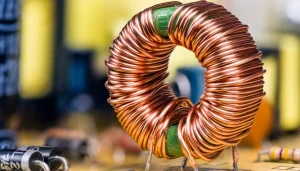
Round coils, also known as cylindrical coils, are built in a spiral or circular shape around a central core. This symmetrical design gives them several performance advantages—especially in demanding power environments.
Superior mechanical strength: Their shape naturally resists radial forces, allowing the coil to maintain its structure even under short-circuit stress or high-load fluctuations.
Efficient cooling: Round coils offer better airflow and surface exposure, making heat dissipation more effective. This is crucial in high-load systems where thermal buildup can impact reliability.
High fault tolerance: The geometry of round coils ensures uniform stress absorption, which helps protect the transformer during through-faults or overload conditions.
Durable and reliable: With fewer weak points and better structural integrity, these coils are ideal for long-term industrial and grid applications.
Common uses: You’ll find round coils in high-voltage transformers, heavy machinery, substations, and medical equipment where stability, power capacity, and safety are top priorities.
Rectangular Transformer Coils

Rectangular coils—also called layer or pancake coils—feature a flat, four-sided design that’s commonly used in transformers where space-saving and cost-efficiency are key.
Space-efficient shape: Their flat profile makes them ideal for compact installations where space is limited, such as in buildings with tight electrical rooms or retrofit projects.
Easy to manufacture: Compared to round coils, rectangular designs are typically quicker and cheaper to produce, making them a budget-friendly option for low to mid-range transformers.
Highly customizable: Their geometry allows for flexible configurations, so engineers can design coils that fit unique transformer layouts or unusual enclosures.
Best for lower voltage applications: Rectangular coils work well in low-voltage settings where mechanical stress is minimal, such as in commercial or light industrial systems.
Less resilient under fault conditions: These coils don’t handle radial forces as well as round coils and may lose their shape during short circuits—so they’re not ideal for high-stress environments.
Cooling Performance Comparison

When it comes to keeping transformers cool, round coils take the lead. Their cylindrical shape promotes better airflow around the windings, making it easier for heat to escape. This design naturally supports uniform heat dissipation, which helps the transformer stay efficient even under heavy load.
In contrast, rectangular coils have tighter corners and flatter profiles that can trap heat, especially in compact spaces. While still functional, their cooling is generally less efficient, and additional design steps may be needed to prevent overheating in demanding applications.
Mechanical Strength Comparison

In high-stress environments, mechanical resilience matters—and this is where round coils shine. Their circular shape distributes radial forces evenly, helping them maintain their form even during short-circuit events or system faults. This makes them incredibly reliable for critical power systems.
Rectangular coils, on the other hand, are more prone to buckling under pressure. Their flat sides absorb radial forces unevenly, which can lead to deformation or internal damage during faults—especially if not braced properly. While suitable for low-stress applications, they require extra care when used in demanding setups.
Application Suitability Comparison

Choosing between round and rectangular coils often comes down to space constraints and performance expectations. Here’s a simple breakdown:
High-voltage systems (like substations or industrial power plants) demand coils that can handle stress and heat. Round coils are the clear choice here.
Compact electrical rooms or retrofitted buildings may require more custom layouts, where rectangular coils fit better without compromising the enclosure.
In medical or precision industrial equipment, where quiet operation and fault resilience are key, round coils deliver consistent performance.
For smaller transformers—like those in commercial panels—rectangular coils offer a space-saving, cost-effective solution.
FAQs
1. Which coil is better for short-circuit performance?
Round coils perform better under short-circuit conditions because they maintain their shape and distribute stress more evenly. Rectangular coils may deform during faults, especially without proper bracing.
2. Do round coils cool better than rectangular ones?
Absolutely. The circular shape of round coils improves airflow and heat dissipation, which helps maintain performance during continuous operation or heavy loads.
3. Can rectangular coils be used in high-voltage systems?
They can be, but round coils are preferred due to their superior fault tolerance and thermal performance in high-voltage environments.
Conclusion

Round and rectangular coils each serve a purpose. Round coils offer better mechanical strength and cooling, while rectangular coils shine in space-saving designs. Choosing the right one depends on your transformer’s voltage, size constraints, and reliability needs.
Need help picking the right coil for your transformer? Contact our experts today—we’ll help you find the ideal solution for your application.

 English
  Spanish
  Russian
  Italian
  German
  Chinese