winding machine application - Energy Storage
Energy Storage
Winding Machines for the Aerospace and Defense Industry
Aerospace Industry
Car assembly on production line at Winding Machines for the Automotive Industry
Automotive Industry
winding machine application - Electrical and Electronics
Electrical and Electronics
Winding Machine for Communication Equipment
Communication Equipment
winding machine application - Consumer Electronics
Consumer Electronics
Winding Machines for Household Appliances
Household Appliances
winding machine application - Industrial Automation and Robotics
Industrial Automation
Winding Machine for the Lighting Industry
Lighting Industry
winding machine application - Renewable Energy Industry
Renewable Energy Industry
A man operating a wire making machine at GuangRi
Why Choose Us
A man operating a machine that produces a red wire This image showcases the Transformer Winding Machine and its technology
Winding Technology
A man in a suit holding a small coil symbolizing Development Engineering for Different Industries
Development & Engineering
Partner Development Programs A business environment where a diverse group is observing a handshake between two people implying a successful agreement or partnership
Partner Support
A company team building event on the beach showing a group of people posing for a photo
GuangRi Gallery

Explore the Alternator Stator: Function & Maintenance

  • Guangri
  • Blog
  • Explore the Alternator Stator: Function & Maintenance
Learn what an alternator stator is, how it works, its key components, types, and how it differs from the rotor. A complete guide for auto and power systems.

Table of Contents

An alternator is essential for converting mechanical energy into electrical energy in power systems.

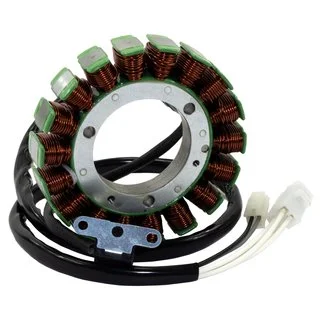
Coiled alternator stator with copper windings

At its core is the stator—the stationary part responsible for generating AC voltage through electromagnetic induction.

What Is an Alternator Stator?
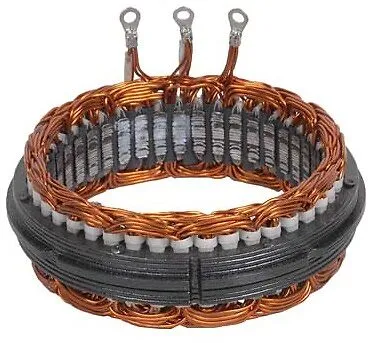
Copper wound stator core for alternator systems

The stator is the stationary part of an alternator, and it plays a vital role in generating electricity.

As the rotor spins inside it, the stator’s windings interact with the magnetic field to produce AC power.

Depending on the application, stators come in a few different types:

  • Laminated iron-core stator – Commonly used in automotive alternators.

  • PCB stator – Ideal for lightweight or compact motors like those in drones.

  • Hairpin winding stator – Popular in high-efficiency electric vehicle (EV) motors.

How Does the Alternator Stator Work
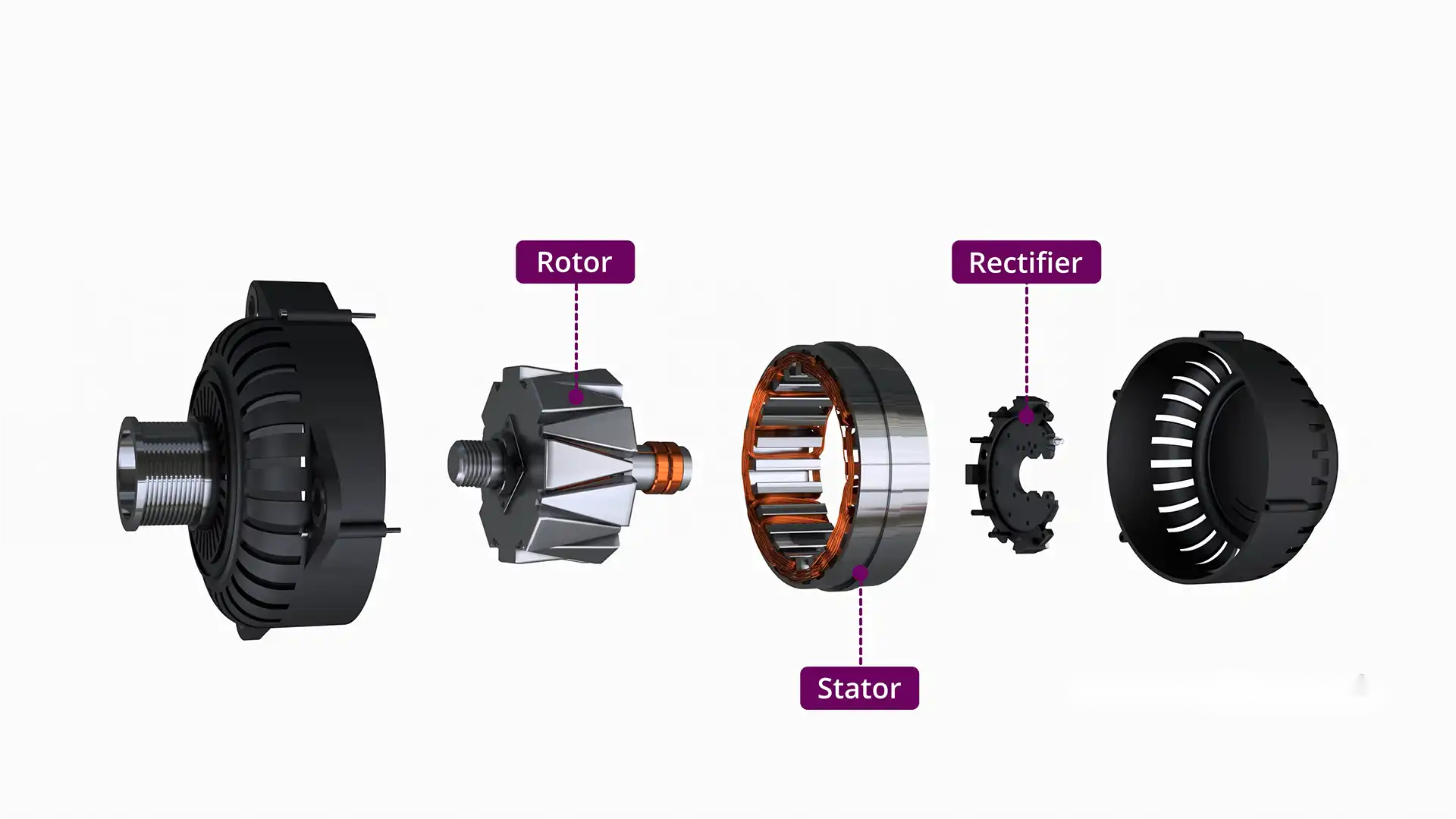
Exploded alternator diagram with labeled components

As the rotor spins inside the stator, its magnetic field cuts across the stator windings—this movement, explained by Faraday’s Law, induces AC voltage.

The stator generates three-phase AC power, which is later rectified into DC to charge batteries and run electronics.

Key Components of the Stator
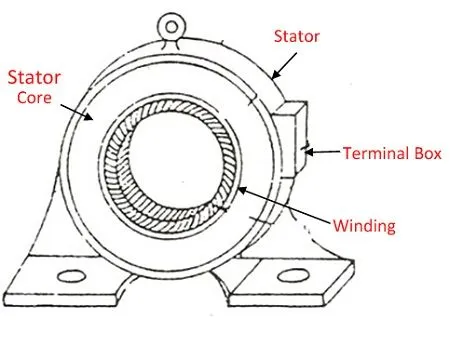
Labeled stator showing core winding and terminal box

An alternator stator might look simple, but it’s made up of several critical components that work together to generate power efficiently.

Here’s what’s inside:

  • Stator Core – Made of laminated steel to minimize eddy current losses.

  • Coil Windings – Usually copper wires that produce electricity when exposed to a magnetic field.

  • Insulation – Keeps the windings safely separated, preventing shorts or grounding issues.

  • Housing – The structure that holds and protects the entire stator assembly.

Stator vs Rotor: What’s the Difference?

Opened motor showing rotor and stator side by side

The stator is stationary and holds the windings that produce output voltage.

The rotor rotates within it and creates a moving magnetic field. Together, they generate electricity.
FeatureStatorRotor
PositionStationaryRotates inside stator
FunctionHolds windings, produces voltageGenerates magnetic field
Role in OutputReceives induced voltageCreates rotating field

Conclusion

Repair and replacement options for alternator stators with damaged coils and wiring

The stator plays a vital role in how alternators generate electricity efficiently. Its core, windings, and insulation all directly impact performance and reliability.

Have questions about alternator stators or need expert support? Contact us today—we’re here to help you choose the right solution with confidence.

FAQs

Where is the alternator stator found?

The alternator stator is located inside the alternator housing, encircling the rotor. It remains stationary while the rotor spins within it, facilitating the generation of electrical energy.

Is a stator the same as an alternator?

No, a stator is not the same as an alternator. The stator is a component of the alternator; specifically, it is the stationary part that, together with the rotating rotor, generates electricity.

What is a stator in an alternator?

In an alternator, the stator is the stationary component composed of coil windings. As the rotor spins inside the stator, its magnetic field induces an alternating current (AC) in these windings, which is then converted to direct current (DC) to power the vehicle’s electrical systems.

Leave a Reply

Your email address will not be published. Required fields are marked *

Lasted Articles for You
en_USEnglish

Get in Touch for Technical Support

***We value your privacy and are committed to safeguarding your personal information with the utmost care.