


Stator winding is a crucial component in motors, responsible for generating a rotating magnetic field that drives the rotor.

The type of stator winding significantly impacts motor efficiency, torque, and overall performance.
What Is Stator Winding?
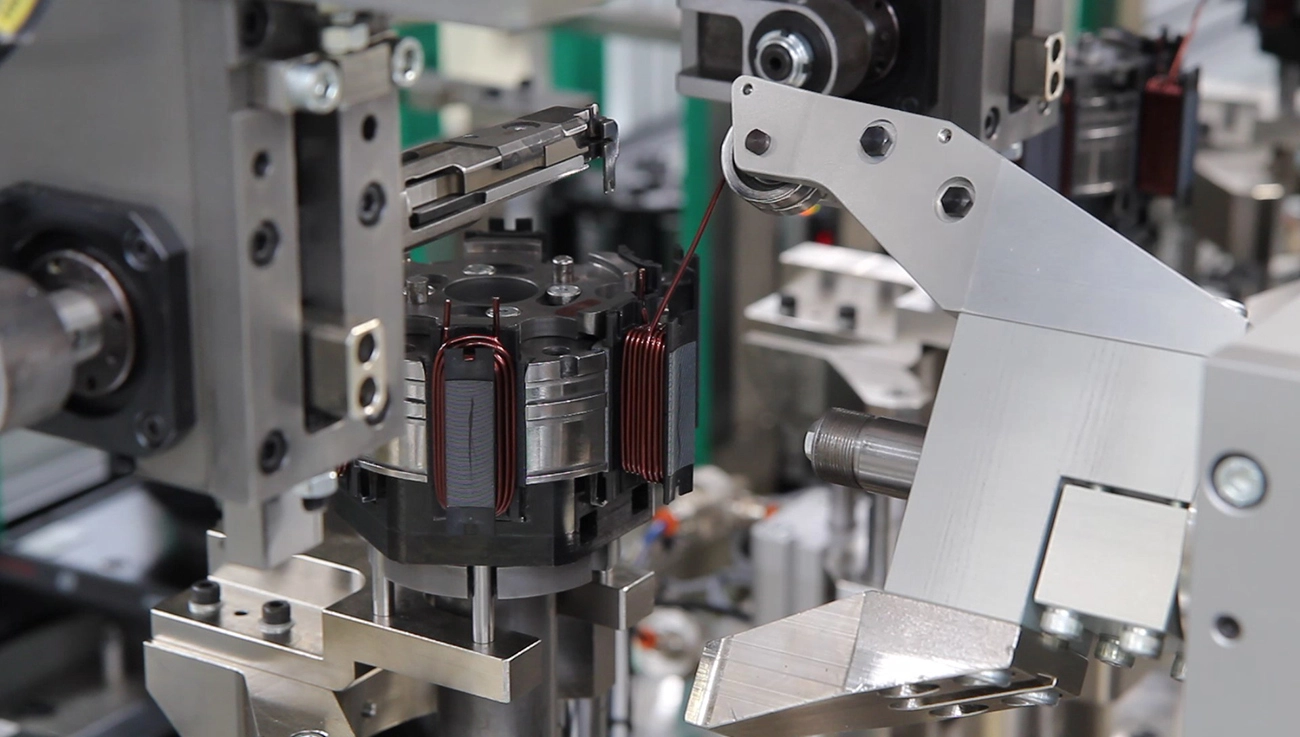
Stator winding refers to the arrangement of electrical coils in the stator of a motor, which are responsible for generating a rotating magnetic field.
This field interacts with the rotor, creating torque to drive the motor.
Key components of a stator winding system include copper or aluminum wire, insulation materials, and a well-structured coil arrangement to optimize performance and durability.
Types of Stator Windings

Stator windings play a key role in generating the rotating magnetic field in motors.
They come in various designs depending on the motor’s application and efficiency requirements.
Concentrated Winding
Coils are concentrated on the same side of the stator for low-voltage, high-current applications.Distributed Winding
Coils are distributed across multiple iron cores to reduce magnetic leakage and increase efficiency.Single-Layer Winding
Each slot contains one coil, making it simpler but less efficient for high-power applications.Double-Layer Winding
Two coils per slot enhance performance with more parallel branches, suitable for high-power motors.Flat-Wire Winding
Uses flat wire to improve space utilization and reduce copper losses, enhancing motor efficiency.
How Stator Windings Work

Stator windings use electromagnetic induction to generate a rotating magnetic field, which interacts with the rotor to produce torque.
The design of the winding, including coil turns, wire thickness, and insulation, directly impacts motor performance by affecting efficiency, cooling, and motor lifespan.
Stator Winding Techniques

The method of stator winding plays a crucial role in the motor’s performance and efficiency.
Various techniques are used depending on the motor’s power, size, and application.
Flyer Winding
A fast and efficient technique ideal for mass production, providing consistent winding quality.Needle Winding
Allows for precise, multi-layer coil placement, ensuring higher motor stability and performance.Resin-Impregnated Winding
Enhances insulation, heat resistance, and overall durability, improving the motor’s longevity and reliability.Hairpin and I-Pin Winding
Advanced flat-wire techniques that reduce copper losses and provide compact, high-efficiency motors.


FAQs About Stator Windings
What is the purpose of a stator?
The stator generates a magnetic field that drives the rotating armature in motors, or converts mechanical energy into electrical energy in generators. It plays a vital role in producing power and guiding the system’s performance.
How many windings are in a stator?
A stator typically uses three-phase windings, which are arranged to create a rotating magnetic field, essential for both electric motors and generators.
What is the voltage of a stator winding?
In a star connection, each winding receives 230 volts, while in a delta connection, each winding receives 415 volts. The choice of configuration depends on the application and the distance over which power is transmitted.
 English
  Spanish
  Russian
  Italian
  German
  Chinese
One Response
Your writing is a true testament to your expertise and dedication to your craft. I’m continually impressed by the depth of your knowledge and the clarity of your explanations. Keep up the phenomenal work!