


Every transformer experiences energy losses during operation, and understanding these losses is essential to improving efficiency and performance. One of the most significant is 銅損, which occurs in the transformer windings due to the electrical resistance of the winding conductors.
When current flows through transformer windings, electrical resistance generates heat, resulting in 銅損. This heat reduces transformer efficiency and places additional stress on the insulation and other components, potentially shortening the transformer’s service life over time.

由於需求 節能係統 continues to grow, reducing transformer copper losses has become increasingly important. Whether designing new equipment or maintaining existing infrastructure, minimizing these losses can help lower energy costs, improve 可靠性, and support 永續性 in modern power systems.
什麼是銅損?
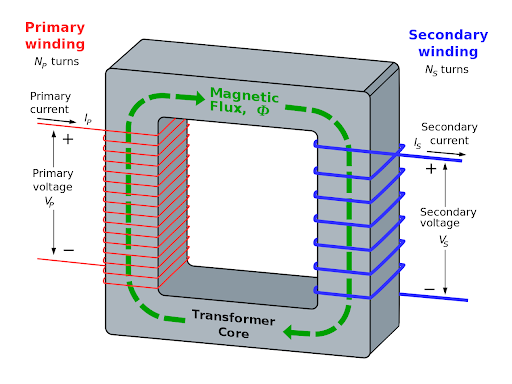
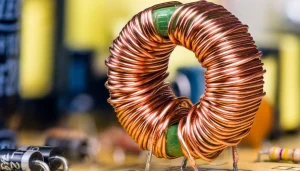
銅損, also known as I²R損失, occur in a 變壓器繞組 when current flows through them under load. As the current encounters electrical resistance in the winding conductors, heat is generated in accordance with Joule’s law.
Unlike no-load losses, copper losses depend on the load current. As the current flowing through the windings increases, more heat is generated and more electrical energy is dissipated as heat.
Both the 初級和次級繞組 contribute to transformer copper losses. The total copper loss is calculated using the following formula:
P = I²R
where I represents the current and R represents the winding resistance.
不像 core (iron) losses, which occur even when the transformer is operating without a load, copper losses depend on the load current. As current increases, copper losses rise in proportion to the square of the current. Therefore, minimizing copper losses is essential for maintaining transformer efficiency, particularly under high-load conditions.
為什麼會發生銅損?

Copper losses in transformers result from several physical and electrical factors related to 繞線設計, conductor materials, and operating conditions. The main causes include:
繞組中的歐姆電阻
All conductors have electrical resistance, including highly conductive materials such as 銅. As current flows through the windings, this resistance converts part of the electrical energy into heat.電流強度(I²關係)
Copper losses increase with the square of the current, as described by the formula P = I²R. Doubling the current increases copper losses fourfold, making them significantly higher under heavy-load conditions.繞組幾何形狀與線圈層數
Additional coil layers and longer wire paths increase the total winding resistance. An inefficient winding layout can also hinder heat dissipation, further increasing 銅損.溫度效應
As temperature increases, the electrical resistance of copper rises. Transformers operating at higher temperatures therefore experience greater 銅損, which can contribute to further heat generation.開關頻率和趨膚效應
In high-frequency transformers, the 趨膚效應 causes current to concentrate near the conductor’s surface. This reduces the effective cross-sectional area available for current flow, increasing AC resistance and associated losses.諧波與鄰近效應
Harmonic currents, often associated with non-linear loads, and the 鄰近效應, caused by interactions between nearby conductors, can increase effective winding resistance and contribute to additional losses.
Understanding these factors is an important first step toward reducing transformer copper losses and designing more efficient, durable transformers.
公式和測量

計算 銅損 在變壓器中,我們使用基於 焦耳定律:
P = I² × R
在哪裡:
磷 = 功率損耗(瓦特)
我 = 流過繞組的電流(安培)
R = 繞組電阻(歐姆)
對於同時具有 初級和次級繞組,總銅損為:
Pc = Ip² × Rp + Is² × Rs
在哪裡:
葉 和 是 = 初級和次級繞組中的電流
反應 和 盧比 = 初級和次級繞組的電阻
這個公式表明 即使電流稍微增加,也會導致功率損耗急遽上升,因為電流是平方的。這就是為什麼重載條件需要格外注意。
到 測量銅損,工程師經常執行 短路測試,其中次級短路和減少 電壓 應用於初級以測量負載條件下的電流和損耗。
透過應用該公式和測試,我們可以有效地評估、預測和優化變壓器的負載性能。
對變壓器效率的影響

變壓器 銅 損失 reduce energy efficiency by converting part of the input power into heat rather than useful output. Because these losses increase with the square of the load current, they become particularly significant under heavy-load conditions.
Heat generated by 銅損 increases the transformer’s operating temperature, making effective cooling essential to prevent overheating. Without proper thermal management, prolonged heat exposure can degrade 繞組絕緣, 減少 transformer performance, and potentially lead to premature failure.
Over time, temperature fluctuations and excessive current can shorten a transformer’s service life and reduce its reliability. Energy wasted through 銅損 also increases operating costs, particularly in industrial applications where transformers run continuously.
Reducing copper losses is not only about improving transformer efficiency but also about enhancing equipment durability, maintaining safety, and lowering costs throughout the transformer’s service life.
如何減少銅損

Reducing 銅損 is essential for improving transformer efficiency, extending service life, and lowering operating costs. Two key approaches are 變壓器設計 and operational management.
設計策略
Increase conductor cross-sectional area: Larger conductors reduce electrical resistance and help dissipate heat.
Select high-conductivity materials: Materials such as 純銅 和 銅箔 have low resistivity, helping reduce I²R losses.
優化繞組佈局: A well-designed winding layout promotes 均勻電流分佈, helping limit localized heating and skin effect issues.
營運策略
Avoid overloading or underloading: Transformers are designed to operate within their rated load range, while operating outside this range can increase losses.
Maintain effective cooling: Cooling systems help keep winding temperatures under control, limiting increases in electrical resistance.
Use harmonic filters or low-THD equipment: Harmonic currents can increase copper losses, so filtering harmonics helps reduce their impact on transformer performance.
Together, these design and operational measures provide a practical approach to reducing transformer copper losses, minimizing energy waste, and maintaining efficient operation.
銅損與鐵損
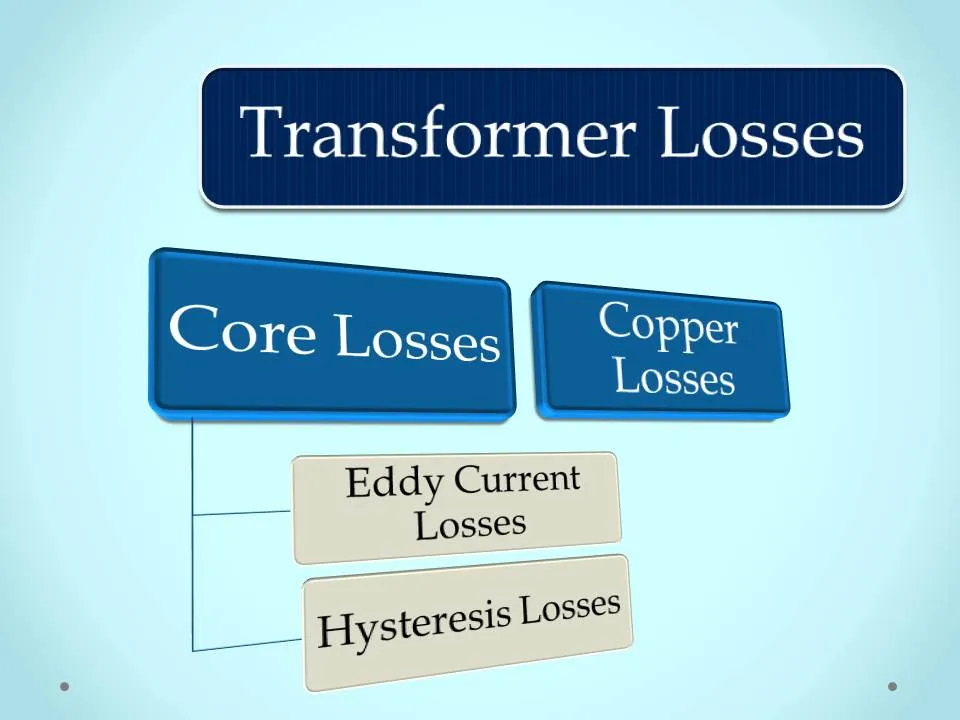
To better understand transformer efficiency, it is important to distinguish between 銅損 和 iron losses, the two main types of transformer losses. Their key differences are outlined below.
減少損失的趨勢

作為 變壓器技術的發展, manufacturers and engineers are adopting more effective approaches to reducing energy losses, particularly 銅損. Key trends include:
非晶態金屬磁芯+低電阻繞組: Combining these technologies helps reduce both copper losses and iron losses, improving efficiency, particularly in distribution transformers.
數位仿真工具: Software-based 熱點分析 and thermal modeling help predict where losses and overheating may occur, supporting better winding and cooling designs.
智慧電網負載平衡: With real-time data and AI, smart grids optimize transformer loading, preventing overloads that can sharply increase 銅損.
高頻變壓器中的利茲線: Used in EV chargers, UPS systems, 和 醫療器材, 利茲線 helps reduce the skin effect and proximity effect, minimizing 銅損 in high-frequency applications.
These developments reflect the industry’s ongoing focus on improving 能源效率, reliability, and environmental sustainability across power infrastructure.
常見問題解答
1. 銅損是恆定的嗎?
No. 銅損 depend on the load and increase with the square of the current.
2.鋁繞組的銅損是否較高?
是的。鋁有 更高的電阻 than copper, which can result in greater winding losses under the same current conditions.
3. 銅損可以消除嗎?
No. They cannot be eliminated entirely, but they can be 最小化 through thoughtful transformer design and proper load management.

 Chinese
 English
 Spanish
 Russian
 Italian
 German
一則回覆
感謝您分享這篇富有洞察力的文章!我發現這些資訊非常實用,發人深省。您的寫作風格引人入勝,讓這個主題更容易理解。期待閱讀您更多文章!