


Calculating transformer winding turns is key to building efficient and reliable transformers.
It all comes down to how voltage relates to the number of coil turns.
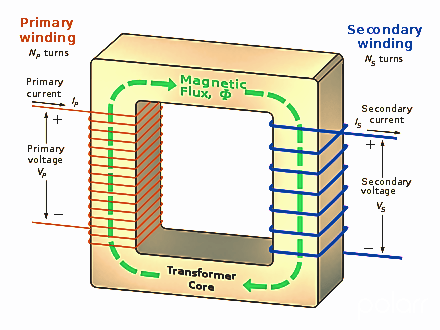
By getting this right, engineers can improve performance, reduce energy loss, and ensure the transformer meets its voltage requirements in real-world applications.
Understanding Transformer Turns Ratio

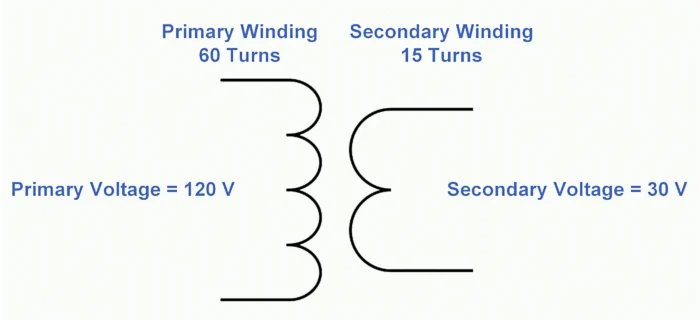
The turns ratio of a transformer is the ratio between the number of wire turns on the primary winding and the secondary winding.
This ratio directly affects how voltage is stepped up or stepped down. For example, a 2:1 turns ratio means the output (secondary) voltage is half of the input (primary) voltage. Conversely, a 1:2 ratio doubles the voltage.
Formula for Calculating Winding Turns
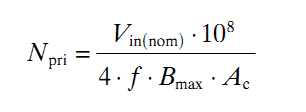
When designing a transformer, calculating the correct number of winding turns is key to ensuring safe and efficient operation.
The formula most commonly used is:
N = (V × 10⁸) / (4.44 × f × B × A)
Where:
N = Number of turns
V = Voltage (in volts)
f = Frequency (in Hz)
B = Maximum flux density (in Tesla)
A = Core cross-sectional area (in cm²)
This equation ensures that your transformer delivers the correct voltage output without overloading the core.
It balances electrical load with physical core capacity, helping you avoid issues like core saturation or energy loss.
Whether you’re designing for a power supply or industrial system, this formula gives you a solid foundation for precise and efficient winding.
Factors Influencing Winding Turns Calculation

When calculating transformer winding turns, several key factors come into play:
Core Material: Materials like silicon steel or ferrite have different magnetic properties, which affect how much flux the core can handle.
Operating Frequency: Higher frequencies reduce the required number of turns but can introduce challenges like increased core loss or EMI.
Voltage Requirements: Your desired input and output voltages directly dictate the turns ratio, which guides your winding calculations.
Core Size and Shape: A larger or specially shaped core offers more space for windings, influencing the number of turns you can practically fit.
Taking these elements into account ensures your transformer performs reliably, stays energy-efficient, and matches the application’s design needs.
Practical Example
Let’s walk through a simple example to see how winding turns are calculated.
Say you’re designing a transformer with the following specs:
Primary Voltage (V): 230V
Frequency (f): 50Hz
Flux Density (B): 1.2 Tesla
Core Area (A): 25 cm²
Using the formula:
N = (V × 10⁸) / (4.44 × f × B × A)
Substitute the values:
N = (230 × 10⁸) / (4.44 × 50 × 1.2 × 25)
N ≈ 170 turns
So, you’d need approximately 170 turns on the primary winding.
Once you have this, you can calculate the secondary turns using the turns ratio.
This step helps ensure your transformer delivers the right output voltage while maintaining performance and efficiency.
Common Mistakes to Avoid

When calculating transformer winding turns, watch out for these common pitfalls:
Ignoring core saturation, which leads to overheating and inefficiency
Overlooking temperature effects on wire resistance
Using mismatched units, causing inaccurate results
Forgetting insulation needs, risking short circuits or failure
Avoiding these helps ensure a safe, efficient design.
Conclusion
Calculating winding turns accurately ensures your transformer delivers reliable, efficient performance. It reduces energy loss and prevents costly issues like overheating.
Need expert help with transformer design or custom winding calculations? Contact us today—we’re here to support your next project from concept to completion!
FAQs About Transformer Winding Turns
What is the formula of transformer winding?
The basic formula is Vs/Vp = Ns/Np, where Vs and Vp are secondary and primary voltages, and Ns and Np are the number of turns on each coil.
What is transformer winding rule?
The winding rule follows Faraday’s Law: voltage is proportional to the number of turns. So, the voltage ratio equals the turns ratio in an ideal transformer.



 English
  Spanish
  Russian
  Italian
  German
  Chinese