winding machine application - Energy Storage
Energy Storage
Winding Machines for the Aerospace and Defense Industry
Aerospace Industry
Car assembly on production line at Winding Machines for the Automotive Industry
Automotive Industry
winding machine application - Electrical and Electronics
Electrical and Electronics
Winding Machine for Communication Equipment
Communication Equipment
winding machine application - Consumer Electronics
Consumer Electronics
Winding Machines for Household Appliances
Household Appliances
winding machine application - Industrial Automation and Robotics
Industrial Automation
Winding Machine for the Lighting Industry
Lighting Industry
winding machine application - Renewable Energy Industry
Renewable Energy Industry
A man operating a wire making machine at GuangRi
Why Choose Us
A man operating a machine that produces a red wire This image showcases the Transformer Winding Machine and its technology
Winding Technology
A man in a suit holding a small coil symbolizing Development Engineering for Different Industries
Development & Engineering
Partner Development Programs A business environment where a diverse group is observing a handshake between two people implying a successful agreement or partnership
Partner Support
A company team building event on the beach showing a group of people posing for a photo
GuangRi Gallery

Coil Winding Machines Market Growth

Explore the global coil winding machines market, projected to grow at 7.9% CAGR from 2024 to 2034. Key drivers, trends, and leading players analyzed.

Table of Contents

Coil winding machines are designed to wind wire into precise coils for use in motors, transformers, and electronic components.

They play an important role in industries such as automotive manufacturing, energy, and electronics, where accurate and consistent coil winding is essential.

Automated needle winding machine coils copper wire

The global coil winding machine market is projected to grow from USD 4.06 billion in 2024 to USD 8.72 billion by 2034, representing a compound annual growth rate (CAGR) of 7.9%.

What Are Coil Winding Machines?

Coil Winding Machines

Coil winding machines are used to produce wire coils for motors, transformers, and inductors. Key components typically include a wire guide, spindle, and programmable controller.

Based on their level of automation, coil winding machines fall into three main categories: manual machines for basic winding tasks, semi-automatic machines for applications requiring moderate precision, and fully automatic machines for high-speed, high-precision industrial production.

Market Size and Growth Forecast (2024–2034)

Global coil winding machine market summary chart 2022 data

The global coil winding machine market was valued at USD 4.06 billion in 2024 and is projected to reach USD 8.72 billion by 2034, representing a CAGR of 7.9%.

Certain segments, such as electrical coil winding, are expected to grow at an even faster rate, with a CAGR of up to 9.7%.

Between 2019 and 2023, the market expanded at a more moderate rate of approximately 3.6%, reflecting the post-pandemic recovery and the early stages of electric vehicle (EV) and renewable energy adoption.

The market outlook has since strengthened, driven by growing demand from industries such as electric vehicles, renewable energy systems, aerospace, and smart electronics.

Several market reports also forecast substantial growth:

  • One projection estimates that the market will reach USD 2.06 billion by 2030, with a CAGR of 8.7%.
  • Another forecasts growth to USD 3.8 billion by 2033, at a CAGR of 5.2%.

Differences between these forecasts reflect variations in market scope and the segments covered. Nevertheless, the overall trend is clear: coil winding technology is gaining global momentum.

Key Market Drivers

Electrification of Vehicles

Copper coil winding in EV motor using full pitch

Electric vehicles depend on high-precision coils for their motors and battery systems.

As global electric vehicle (EV) adoption continues to grow, demand for coil winding machines is also increasing.

Government investment is further supporting this transition. For example, the U.S. has committed USD 7.5 billion to developing a nationwide EV charging network, helping drive growth across the broader EV supply chain.

Renewable Energy Expansion

Wind turbines in a corn field harnessing renewable energy amidst a picturesque agricultural landscape

Coil winding machines play an important role in manufacturing components for wind turbines and solar inverters.

As countries continue to expand their renewable energy infrastructure, demand for transformers and power generators is also increasing, driving the need for efficient, automated coil production.

Industry 4.0 and Smart Manufacturing

Modern medical operating room equipped with a robotic arm and various surgical equipment

Smart factories are increasingly integrating AI, CNC systems, and robotics into coil winding processes to improve production efficiency.

These technologies support real-time monitoring and predictive maintenance, allowing manufacturers to reduce labor costs, minimize errors, and increase production speed while maintaining product quality and operational reliability.

Miniaturization and High Precision Needs

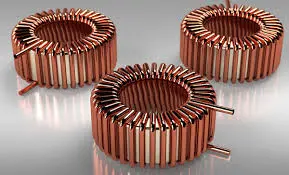
Various inductors and transformers used in electrical and electronic applications

As wearable devices, IoT products, and telecommunications equipment become increasingly compact, demand for micro-transformers and high-precision coils continues to grow.

Modern coil winding machines provide the tight tolerances and precise wire handling required to manufacture coils for today’s compact, high-performance electronic devices.

Market Segmentation

By Machine Type

Industrial toroidal winding machine illustrating benefits and limitations of various winding types

Coil winding machines are available in manual, semi-automatic, and fully automatic models. Fully automatic machines accounted for 55% of the market in 2024, making them the leading segment.

For more specialized applications, ring winding machines and precision winders provide greater winding control. They are well suited to advanced applications in the defense, telecommunications, and high-frequency electronics sectors.

5.2 By Coil Type

Recent advancements in coil winding for motor manufacturing technology

Coil winding machines are used to manufacture various types of coils, including motor coils, transformer coils, and inductors.

Demand for solenoidal coils and other specialty coils is also growing, particularly in the medical device, aerospace, and telecommunications industries, where compact designs and high-performance winding configurations are essential.

5.3 By Industry

Automotive assembly line with winding machines producing vehicle components

Major end users include the automotive industry, particularly manufacturers of EV motors, and the electronics industry, where precision-wound coils are essential.

The renewable energy, aerospace and defense, and medical equipment industries also rely on a wide range of advanced coil technologies.

In addition, the textile and construction industries use specialized coils for various applications.

5.4 By Technology

CNC machine milling a cylindrical metal workpiece with precision

Coil winding machines have evolved from conventional models to more advanced systems, including CNC-controlled machines, robotic platforms, and AI-enabled smart winding systems.

These technologies offer greater speed, precision, and flexibility to meet the needs of industries seeking real-time data monitoring, remote control, and zero-defect production.

5.5 By End User

Key end users include OEMs (original equipment manufacturers) and aftermarket suppliers.

R&D laboratories use manual and semi-automatic coil winding machines for prototyping, while service providers rely on them for equipment upgrades and repairs.

Each user group has distinct requirements, influencing demand for different machine capacities and customized features.

Regional Market Insights

Regional coil winding market share percentages on a world map

Demand for coil winding machines is increasing worldwide, although market growth rates and key drivers differ from one region to another.

The following overview highlights how regional developments are shaping the market:

  • Asia-Pacific (China, India, Japan, and South Korea)
    The fastest-growing regional market, driven by rapid industrialization, expanding EV production, and investment in energy infrastructure.
    For example, India’s target of installing 175 GW of renewable energy capacity is supporting demand for transformers and coils.

  • North America
    Market growth is supported by advances in electric vehicles, aerospace technology, and increased investment in the defense sector. The shift toward smart manufacturing is also encouraging the adoption of CNC and robotic coil winding machines.

  • Europe
    Countries such as Germany and France are at the forefront of industrial automation and sustainability initiatives. Demand for precision engineering and commitments to renewable energy remain important market drivers.

  • Latin America and Middle East
    These regions are experiencing steady, moderate growth. Infrastructure modernization and energy reform projects are creating new opportunities for coil winding applications.

Challenges in the Market

Automated machine winding copper coils on stator slots

Coil winding machines, particularly fully automatic models, require a significant initial investment.

Other challenges include a shortage of skilled operators, increasing demands for precision manufacturing, and ongoing global supply chain disruptions that can delay component availability.

Trends and Innovations

Individual working on coil production equipment

The industry is shifting toward modular, customizable coil winding machines, with greater integration of AI-based diagnostics and IoT monitoring.

At the same time, demand is growing for eco-friendly, low-waste systems and machines designed for specialized coil production in niche markets such as defense and telecommunications.

Future Outlook (2025–2034)

Hybrid stators featuring copper windings in advanced motor system design

The coil winding machine market is expected to see strong growth, supported by increasing EV adoption, expanding renewable energy projects, and the shift toward smart manufacturing.

Key developments are likely to include rising demand for high-speed, high-precision winding machines, greater regional production to reduce supply chain risks, and increased R&D investment in micro-coil and hybrid winding technologies.

Conclusion

A JG 1640 Desktop Toroidal Transformer Winding Machine creating wire

The coil winding machine market is expected to continue growing across industries such as electric vehicles, energy, and electronics. Advances in automation, winding precision, and sustainable manufacturing will play an important role in shaping the market’s leading solutions.

Looking to upgrade your production capabilities? Contact our team to discuss coil winding solutions tailored to your industry’s requirements.

Leave a Reply

Your email address will not be published. Required fields are marked *

Lasted Articles for You
en_USEnglish

Get in Touch for Technical Support

***We value your privacy and are committed to safeguarding your personal information with the utmost care.