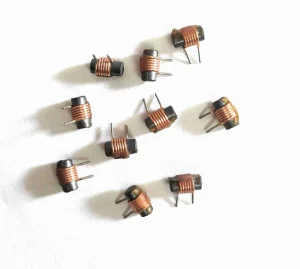
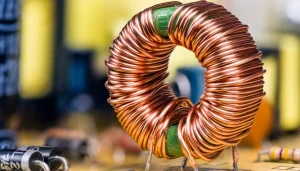
winding machine application - Energy Storage
Energy Storage
Winding Machines for the Aerospace and Defense Industry
Aerospace Industry
Car assembly on production line at Winding Machines for the Automotive Industry
Automotive Industry
winding machine application - Electrical and Electronics
Electrical and Electronics
Winding Machine for Communication Equipment
Communication Equipment
winding machine application - Consumer Electronics
Consumer Electronics
Winding Machines for Household Appliances
Household Appliances
winding machine application - Industrial Automation and Robotics
Industrial Automation
Winding Machine for the Lighting Industry
Lighting Industry
winding machine application - Renewable Energy Industry
Renewable Energy Industry
A man operating a wire making machine at GuangRi
Why Choose Us
A man operating a machine that produces a red wire This image showcases the Transformer Winding Machine and its technology
Winding Technology
A man in a suit holding a small coil symbolizing Development Engineering for Different Industries
Development & Engineering
Partner Development Programs A business environment where a diverse group is observing a handshake between two people implying a successful agreement or partnership
Partner Support
A company team building event on the beach showing a group of people posing for a photo
GuangRi Gallery

What Does a Stator Do in Motors & Generators

Learn what a stator does, how it works, and its role in electric motors, generators, and motorcycles. Discover how this component powers essential systems.

Table of Contents

The stator is a stationary yet powerful component found in electric motors, generators, and powersports engines.

Opened motor showing rotor and stator side by side

It plays a key role in either producing or converting electricity—depending on the system.

How a Stator Works

Diagram showing how a stator generates electricity

A stator works based on Faraday’s Law of Electromagnetic Induction, which says that electricity is generated when a magnetic field moves across coils of wire.

In simple terms, as a magnet rotates inside or around the stator’s windings, it produces alternating current (AC).

This AC is then converted into direct current (DC) by a regulator/rectifier, which powers the electrical systems and keeps the battery charged.

When paired with a rotor, the stator becomes the heart of an alternator, transforming mechanical motion into electrical power or vice versa.

This process keeps everything—from motorcycles to industrial machines—up and running.

Stator in Electric Motors

A close up view of concentrated windings in an electric motors stator assembly

The stator in electric motors produces a rotating magnetic field using copper windings and laminated iron cores.

This field drives the rotor, creating mechanical motion.

Found in fans, appliances, EVs, and industrial machines, modern versions may use PCB stators or hairpin windings for better space efficiency and power output.

Stator in Generators

Stator assembly inside generator core

In generators, the stator converts mechanical motion into AC electricity by capturing the changing magnetic field from the spinning rotor.

Used in wind turbines, hydro plants, and generators, stators often feature multi-phase windings to ensure steady, high-output power for industrial and renewable applications.

Stator in Powersports & Motorcycles

Motorcycle stator coil with wiring harness

The stator generates AC power inside the engine case, working with a flywheel to run lights, ignition, and fuel systems.

A rectifier/regulator converts this to DC to charge the battery.

Faulty stators cause dim lights, misfires, or drained batteries. They’re vital for motorcycles, ATVs, UTVs, and other small-engine vehicles.

Conclusion

Alternator diagram showing stator rotor battery

The stator plays a key role in powering and maintaining the function of motors, generators, and vehicle systems.

From energy conversion to battery charging, its performance is essential.

Need help diagnosing or replacing your stator? Contact us today for expert support and reliable replacement parts.

Leave a Reply

Your email address will not be published. Required fields are marked *

Lasted Articles for You
en_USEnglish

Get in Touch for Technical Support

***We value your privacy and are committed to safeguarding your personal information with the utmost care.