


Power transformers are essential for modern electricity distribution.

They convert voltage levels to safely and efficiently transmit power over long distances, ensuring reliable energy delivery from generation sources to homes and industries.
What Is a Power Transformer?

A power transformer is a static electrical device that transfers power between circuits using electromagnetic induction.
Its main job is to step up or step down voltage levels for efficient transmission or safe distribution of electricity.
Main Components of a Power Transformer:
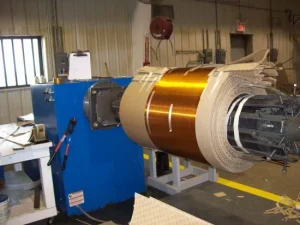
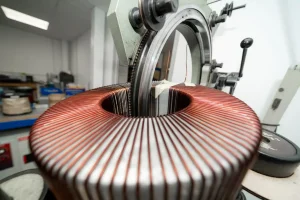
Primary Winding: Receives the incoming voltage.
Secondary Winding: Delivers the transformed output voltage.
Magnetic Core: Directs the magnetic flux between the windings.
Tank & Cooling System: Filled with insulating oil to cool and protect internal parts.
Optional Parts: Tap changers, bushings, and breathers for voltage adjustment and ventilation.
Ready to dive into the types of transformers next?
Types of Transformers
Power Transformers

Power transformers are designed for high-voltage, high-capacity transmission.
They’re typically used in utility grids to transfer energy over long distances efficiently.
Distribution Transformers

These lower-capacity transformers deliver electricity locally, stepping down voltage for homes, commercial buildings, or small industrial setups.
Instrument Transformers

Instrument transformers include current transformers (CTs) and potential transformers (PTs), mainly used for monitoring, protection, and control in high-voltage systems.
Isolation Transformers

Used to separate two circuits electrically, isolation transformers improve safety and reduce noise or interference while still transferring power.
Step-Up vs Step-Down Transformers

Step-up transformers increase voltage for transmission, while step-down transformers decrease it for safe usage in homes, devices, or machinery.
How Does a Power Transformer Work?

Power transformers operate on the principle of electromagnetic induction, where a changing magnetic field induces voltage between two coils.
Here’s how it works step by step:
AC flows through the primary winding, creating a fluctuating magnetic field around it.
This magnetic field travels through the laminated iron core, which helps guide and concentrate the magnetic flux efficiently.
The secondary winding, wound on the same core, picks up this magnetic flux.
Through mutual induction, voltage is generated in the secondary coil without any direct electrical connection.
The turns ratio (the number of coils in each winding) determines if the voltage is stepped up or down—more turns in the secondary means higher output voltage, and fewer means lower.
Laminated cores are crucial because they reduce eddy current losses, improving transformer efficiency.
This simple yet powerful mechanism enables safe, reliable voltage transformation for everything from high-voltage grids to your home appliances.
Common Voltage Ranges

Power transformers operate across a range of voltages based on the needs of the electrical system:
110kV–220kV: Common in regional networks and industrial distribution setups.
420kV–500kV: Used for long-distance, high-capacity transmission with reduced power loss.
750kV+: Ideal for ultra-high voltage transmission across countries or continents.
These voltage levels are chosen to maximize transmission efficiency, minimize energy losses, and meet system-specific demands.
Key Applications of Power Transformers

Power transformers are vital across various sectors, from national grids to everyday appliances:
Substations: Step voltage up for transmission or down for safe local distribution.
Power Plants: Convert generated voltage to transmission levels efficiently.
Mining & Heavy Industry: Deliver isolated, explosion-proof power underground.
Residential Distribution: Pole- and pad-mounted transformers reduce voltage for home use.
Electronics & Appliances: Compact transformers manage voltage in TVs, microwaves, and more.
Each application ensures safe, efficient energy flow tailored to the system’s unique requirements.
Conclusion

 English
  Spanish
  Russian
  Italian
  German
  Chinese