


UL and CE compliance are safety and quality standards that confirm a toroidal transformer meets strict electrical, thermal, and durability requirements. UL certification involves independent testing for U.S. and Canadian markets, while CE marking shows conformity with EU health, safety, and environmental directives.
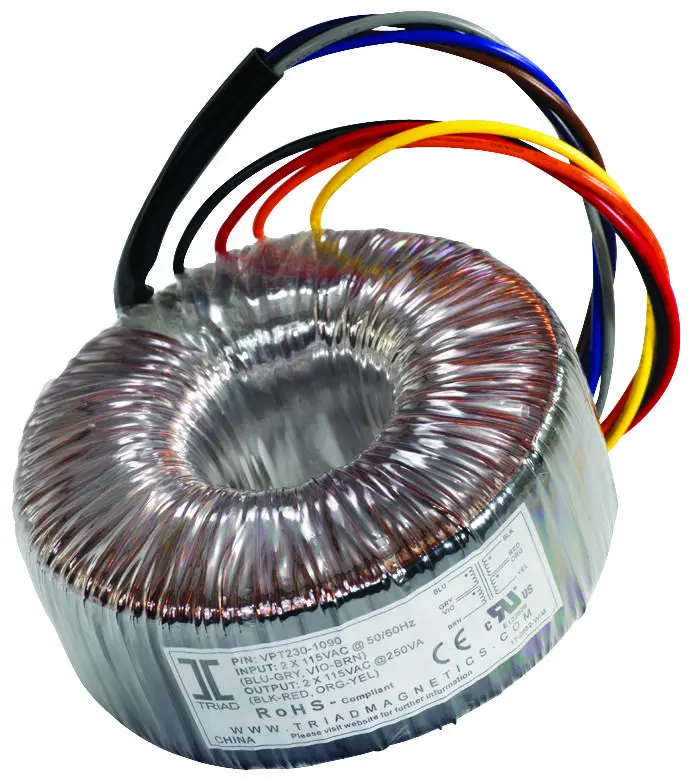
For manufacturers and OEMs, having both marks ensures global market access, smooth regulatory approval, and reduced retesting costs. Dual compliance is more than a label—it’s a guarantee of safety, reliability, and consistent performance across diverse applications worldwide.
UL vs CE: What’s the Difference?

CE marking is a manufacturer’s self-declaration that a product meets European Union health, safety, and environmental requirements. It’s essentially a passport for selling products in the EU, showing compliance with relevant directives—but the manufacturer is responsible for testing and documentation.
UL Listing, on the other hand, is a third-party certification process under U.S. and Canadian safety standards. It involves independent laboratory testing, ongoing factory inspections, and strict documentation control. Unlike CE’s self-certification model, UL carries ongoing audit oversight, ensuring products consistently meet stringent safety and performance benchmarks. For toroidal transformers, this means UL approval offers an added layer of verified trust beyond CE compliance.
Why UL and CE Matter for Toroidal Transformers

Before diving into the specifics, it’s important to note that UL and CE marks aren’t just labels—they are proof that a toroidal transformer is designed, built, and tested to meet strict safety and performance benchmarks.
Validate Safety & Performance – Both marks confirm electrical safety, thermal resilience, and fire durability, ensuring transformers can handle demanding applications without compromising reliability.
Reduce Time & Cost for OEMs – Certified products let manufacturers and industries like medical and telecom skip redundant testing, saving weeks of lead time and thousands in lab costs.
Enable Global Market Access – Dual UL and CE compliance ensures smooth entry into both North American and European markets without regulatory delays.
Assure Standards Compatibility – Certifications align with stringent system-level standards, including LVD, EMC, IEC 60601 for medical devices, and IEC 62368 for ICT equipment.
Maintain Quality Consistency – UL’s ongoing factory audits and CE’s conformity checks help guarantee consistent product quality batch after batch.
By achieving both UL and CE, toroidal transformers gain a universal stamp of trust—making them a safer, faster choice for projects that span multiple regions.
Related Regulatory Requirements Beyond UL & CE

While UL and CE form the backbone of electrical safety compliance, toroidal transformers often need to meet additional regulatory standards to ensure they are safe, durable, and globally accepted.
Environmental Compliance
RoHS (Restriction of Hazardous Substances) – Limits lead, mercury, cadmium, and other hazardous materials in components.
REACH (Registration, Evaluation, Authorisation, and Restriction of Chemicals) – Ensures traceability and safe use of chemicals in materials, protecting both end users and the environment.
Thermal Safety Standards
Compliance with IEC 60085 insulation classes ensures the transformer’s materials can handle rated temperatures without premature breakdown.
Verified temperature-rise specifications confirm safe operation under maximum load, reducing risk of overheating and insulation failure.
Optional but Valuable Tests
EMC (Electromagnetic Compatibility) – Ensures the transformer operates without causing or being affected by interference, vital for sensitive electronics.
Flammability Testing – Rates materials for fire resistance, an important factor for medical, industrial, and IT applications where safety margins are tight.
These extra layers of compliance not only improve safety and reliability but also make toroidal transformers more market-ready for industries with strict procurement requirements.
What Procurement Teams Should Verify

When sourcing toroidal transformers, a thorough compliance check saves time, cost, and potential rework down the road. Here’s what every procurement team should prioritize:
1. Confirm Core Certifications
Verify the UL file number in the UL database to ensure the product is truly listed and tested.
Review the CE Declaration of Conformity, confirming it matches the correct product model and directive requirements.
Request third-party test reports for electrical, thermal, and safety compliance — these add credibility beyond self-declarations.
2. Check Compliance With Key Standards
Ensure the insulation and thermal design meets UL 506 or IEC 61558.
Confirm compliance with EMC standards like EN 55032 to prevent interference issues.
Review insulation coordination per IEC 60664, especially for high-voltage or sensitive electronics applications.
3. Demand Traceable Documentation
Maintain a complete compliance file with traceable component datasheets, production records, and safety test certificates.
Where possible, leverage pre-certified transformer platforms — this can significantly reduce redesign, retesting, and re-certification cycles for new projects.
By making these checks routine, procurement teams can confidently source toroidal transformers that meet both technical and regulatory requirements, while also streamlining product launches for global markets.
Key Takeaways for OEMs & Suppliers

When it comes to toroidal transformers, achieving both UL and CE compliance isn’t just about ticking boxes—it’s about unlocking faster market access and long-term reliability.
Dual UL and CE Compliance
Cuts down on market entry delays by removing the need for separate re-testing in North America and the EU. This accelerates approvals and reduces certification costs.Safety, Reliability, and Documentation Integrity
Guarantees the transformer meets stringent electrical safety, thermal resilience, and fire resistance requirements, with traceable certification records for audits.Supports Modular Integration & Faster Development
Pre-certified designs integrate smoothly into system-level assemblies, allowing OEMs to shorten development cycles, simplify compliance paperwork, and stay audit-ready.
By prioritizing dual compliance early in design, suppliers and OEMs can streamline product launches, improve customer trust, and maintain a competitive edge in regulated markets.
Ready to Ensure Your Toroidal Transformers Pass UL & CE?

Getting compliance right the first time saves months of delays and thousands in extra costs. We specialize in UL and CE-certified toroidal transformers built for demanding industries, including medical, industrial, and ICT applications.
Let’s talk about your project today. Whether you need a compliant design from scratch or want to optimize your current transformer for dual certification, our engineering team can help you meet safety standards, pass audits, and accelerate your time to market.
Contact us now to discuss your requirements and get a tailored compliance plan.
FAQs
1. What is the rating of a toroidal transformer?
A toroidal transformer’s rating refers to its maximum capacity—typically expressed in volt-amperes (VA or kVA). It specifies the highest power the transformer can handle without exceeding safe temperature or insulation limits.
2. What are the disadvantages of toroidal transformers?
While efficient and compact, toroidal transformers come with trade-offs: they are more expensive due to complex winding, limited to lower power capacities, and have higher inrush current on startup.
3. What is the difference between toroidal and EI-core transformers?
Toroidal transformers use a donut-shaped core for higher efficiency, smaller size, less hum, and lower electromagnetic interference (EMI).
EI-core transformers use a laminated rectangular core; they are cheaper, easier to manufacture in high power, and more robust under varying load conditions.
4. How to choose a toroidal transformer?
Pick a transformer that matches your input/output voltage, size, and power (VA) demand. Balance efficiency, inrush current, insulation class, and physical fit. Make sure it has proper certification and mounting options for your setup.

 English
  Spanish
  Russian
  Italian
  German
  Chinese