


In electric motors, обмотки двигателя play a central role in operation. They generate the магнитное поле that drives the motor’s rotation, directly affecting its выходной крутящий момент, operating efficiency, and ability to manage нагревать во время эксплуатации.

Among the different types of motor windings, обмотки статора deserve particular attention. They do more than carry electrical current; they play a key role in determining how a motor operates. Whether in high-speed industrial motors or compact EV drives, the choice of статор метод намотки can significantly affect motor performance, manufacturing costs, and operational reliability.
This guide covers the most common классификации обмоток двигателей и seven key stator winding methods, highlighting their defining features to help you identify the right winding design for each application.
Формы обмотки статора и создание магнитных полюсов

Понимание того, как магнитные полюса form within the stator provides insight into the operating characteristics of different motor types.
The stator winding layout determines the number of magnetic poles generated and influences how efficiently the motor converts electrical energy into mechanical motion.
Выступающий полюс (концентрированные полюса)
Each coil produces one magnetic pole. The coils are connected in обратная серия (head-to-head) to create alternating magnetic polarities. This winding arrangement is commonly used in DC motors and synchronous motors.
Невыступающий полюс
Each coil produces two magnetic poles. The coils are connected in форвардная серия (tail-to-tail), with the current flowing in the same direction. This winding arrangement is well suited to двигатели переменного тока, where a more uniform magnetic field is required.
Семь распространенных методов намотки статора

When designing electric motors, методы намотки статора play an important role in determining efficiency, torque, и в целом motor size. Below are seven common stator winding techniques, each suited to different motor designs and performance requirements.
Однослойная намотка
Commonly used in small motors, this method places one coil side in each slot. It offers a простой, экономичный дизайн and is suitable for applications where space is not a major constraint.Двухслойная намотка
Often found in larger or higher-power motors, this method places two coil sides in each slot, one above the other. This arrangement helps improve power density and efficiency.Концентрированная обмотка
В этом методе, катушки are wound around individual stator teeth. The design features shorter end turns and can help reduce copper losses. It is commonly used in motors with меньше полюсов.Распределенная обмотка
This method distributes coils across multiple stator teeth to create a more uniform magnetic field и уменьшать гармоники. It is commonly used in высокоскоростные двигатели and precision motor applications.Внутренняя (с заглубленными зубьями) обмотка
Этот метод разработан для установки в пазы статора. экономия места и идеально подходит для большие машины которым требуется надежная мощность без громоздких габаритов.Бесщелевая намотка
Полностью устраняет пазы статора, что приводит к сверхплавное вращение и минимальное заедание—часто используется в медицинские и аэрокосмические приводы.Тороидальная обмотка
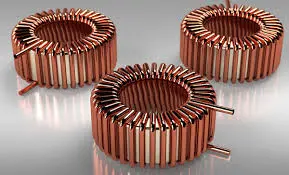
In this method, the coil is wound into a непрерывный ring shape, which can improve охлаждение and reduce потери энергии. It is suitable for специализированный приложения that require compact and efficient motor designs.
Часто задаваемые вопросы
1. Когда следует использовать двухслойную намотку?
Двухслойные обмотки are well suited to larger motors that require higher performance, greater power density, and more parallel winding branches.
2. Почему стоит выбрать тороидальную обмотку вместо традиционных типов?
Тороидальные обмотки can help reduce energy losses and heat buildup. Their design supports лучшее охлаждение и выше эффективность, making them suitable for compact motors and specialized applications.
3. Лучше ли обмотки без пазов, чем внутренние обмотки?
Это зависит от приложения. Slotless windings уменьшать крутящий момент and allow smoother motor operation, making them suitable for medical equipment and high-precision motors. By comparison, interior windings make efficient use of space and are suited to large-scale machines.
Заключение


 Russian
 English
 Spanish
 Italian
 German
 Chinese