


Para high-frequency transformers, especially those operating above 50 kHz, la forma en que se diseñan los devanados plays a critical role in overall performance. At higher frequencies, conventional design approaches become less effective because the devanado del transformador layout directly influences power losses, heat generation, electromagnetic interference, and overall efficiency.
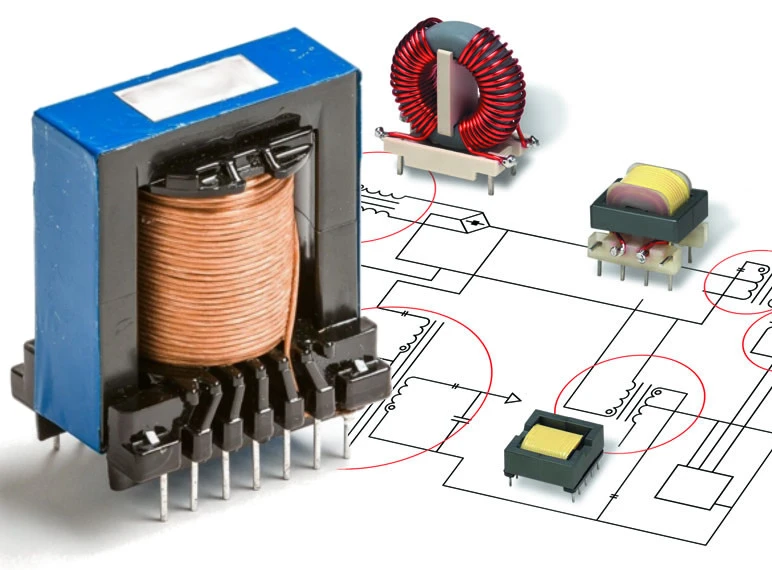
Eficaz devanado del transformador design helps reduce Resistencia de CA, control efectos sobre la piel y la proximidad, minimize inductancia de fuga, y mantener interferencia electromagnetica (EMI) within acceptable limits. Whether the application involves a compact SMPS or a custom power module, properly designed devanados del transformador are essential for reliable performance, long service life, and compliance with electrical requirements.
In this article, we’ll cover the key winding considerations for high-frequency transformadores, using practical design principles and clear explanations to help engineers better understand the factors that affect efficiency and performance.
Efectos en la piel y la proximidad
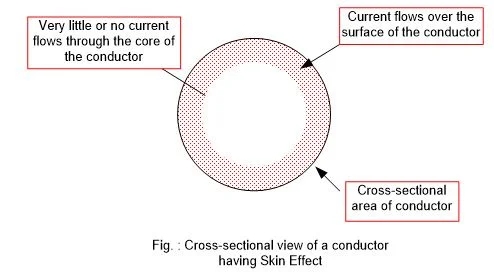
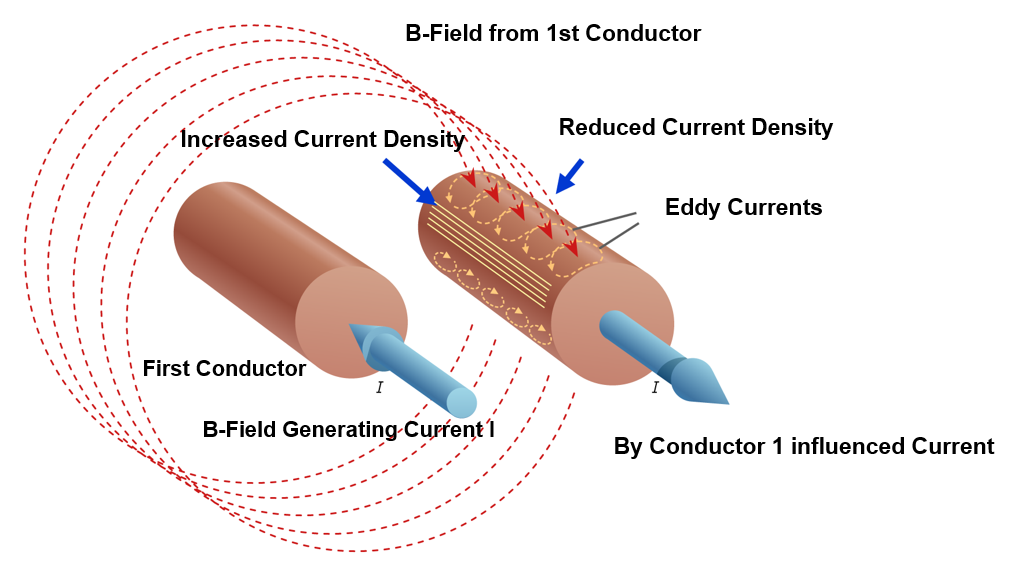
At high frequencies, current no longer flows evenly through the conductor. Instead, it becomes concentrated near the wire surface, a phenomenon known as the efecto piel. As frequency rises, the effective current-carrying area decreases, increasing Resistencia de CA and generating more heat within the devanado del transformador.
Next comes the efecto de proximidad. When conductors are positioned close together, their magnetic fields alter the current distribution and force it into narrower paths. This further increases Resistencia de CA and reduces devanado del transformador eficiencia.
Combined with the skin effect, the proximity effect becomes a major source of winding loss in high-frequency transformers. For this reason, selecting the right wire type and winding layout is essential for reducing losses and improving overall performance.
Selección del tipo y tamaño del cable

Cómo elegir el tipo de cable adecuado is essential for reducing losses in high-frequency devanados del transformador.
Entre las opciones disponibles, alambre litz is widely used because it consists of many thin, individually insulated strands woven together to distribute current more evenly. This design helps reduce both piel y efectos de proximidad, making it especially effective in high-frequency applications up to about 1 MHz.
However, alambre litz has practical limits. Above about 1 MHz, strand diameter becomes increasingly important. To remain effective, each strand should generally be menos del doble de la profundidad de la piel at the target operating frequency.
For very high frequencies or higher-current devanado del transformador applications, alternatives such as bobinados de láminas, conductores tubulares, y Cables Roebel may provide better current handling while improving magnetic field distribution and thermal performance.
Ultimately, the best conductor depends on the operating frequency, current level, and winding geometry, but the goal remains the same: reduce losses and improve the efficiency of devanados del transformador.
Topologías de bobinado para reducir pérdidas
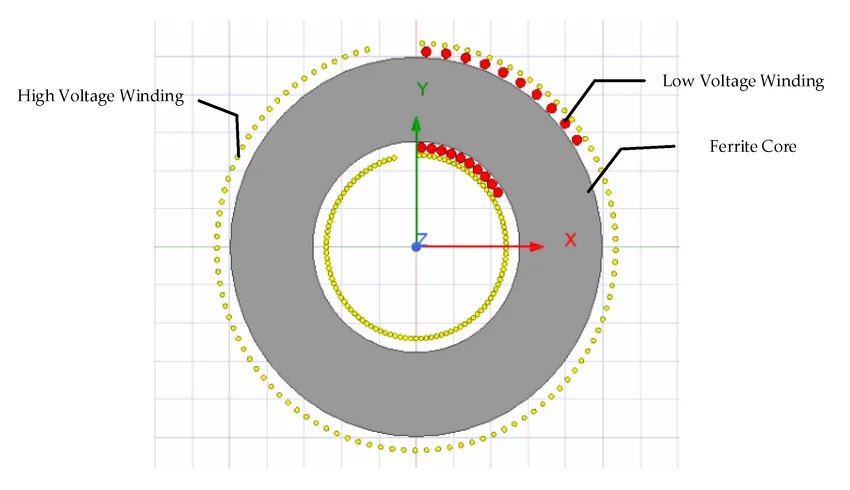
The arrangement of devanados del transformador has a significant impact on overall performance. An optimized winding layout can help reduce Resistencia de CA, límite parasitic effects, and improve heat management.
Por ejemplo, paralleled and interleaved windings distribute current more evenly and help reduce the proximity effect. By alternating primary and secondary winding layers, magnetic coupling is improved, which can lower losses and increase efficiency.
Bobinado de cesta (o dispersión) separates conductors rather than placing them closely side by side. This layout helps reduce parasitic capacitance and proximity-effect losses, making it useful in high-frequency devanado del transformador designs.
Similarly, sandwich and helical structures can improve current distribution and maintain a more balanced magnetic field. This helps reduce leakage flux and improve the efficiency of devanados del transformador.
Each winding layout involves trade-offs, but a well-designed topology can significantly reduce electrical losses and improve overall transformer performance.
Manejo de parásitos y fugas
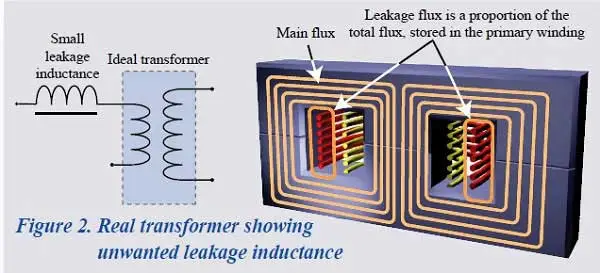
High-frequency transformers commonly face two winding-related challenges: inductancia de fuga y capacitancia parásita. If not properly controlled, both can reduce the performance and efficiency of devanados del transformador.
Inductancia de fuga occurs when part of the magnetic flux does not link the primary and secondary windings. While some designs use it intentionally, excessive leakage inductance can slow switching performance and create voltage spikes. Techniques such as interleaved windings y capas de fuga can help balance magnetic coupling, insulation, and overall devanado del transformador actuación.
Capacitancia parásita develops between closely spaced winding layers and can contribute to autorresonancia and EMI problems in high-frequency transformers. Using espaciado cuidadoso de las capas, suitable insulation, and patrones de bobinado de cestas can help reduce this unwanted effect.
Managing these parasitic effects requires a balanced devanado del transformador design that limits electrical losses and interference without compromising efficiency, insulation performance, or safety.
Aislamiento y factor de relleno

A well-designed devanado del transformador layout must balance electrical performance, available space, and safety. The factor de llenado indicates how efficiently the wire occupies the winding window, with higher values allowing more conductor to fit within the same space.
In comparison, bobinado ortocíclico arranges wires in a uniform pattern and can achieve a fill factor of up to 90%, mientras bobinado aleatorio typically reaches around 75%. A higher fill factor generally means more copper and less unused space, helping improve the efficiency and compactness of devanados del transformador.
As winding density increases, aislamiento becomes even more important. Proper aislamiento de capas y espaciamiento dieléctrico are essential for preventing short circuits, particularly in high-voltage devanado del transformador designs. The choice of insulation material, thickness, and placement all affect long-term safety and reliability.
A well-designed devanado del transformador should therefore balance high copper utilization with effective insulation, helping maintain both electrical performance and dependable protection.
Restricciones térmicas y mecánicas
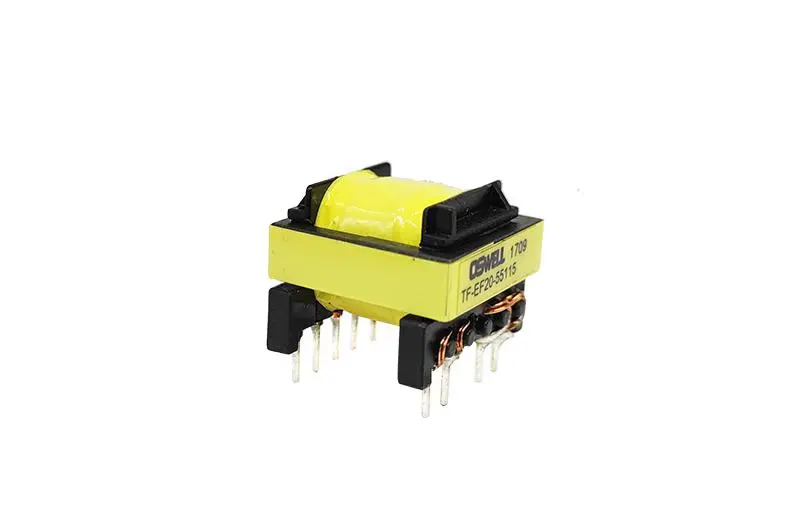 High-frequency transformers can generate significant heat, especially when densidad de corriente becomes too high. To reduce the risk of overheating, current density should generally remain within a safe range of about 4–10 A/mm², depending on the cooling method and overall devanado del transformador diseño.
In addition, effective enfriamiento through airflow, heatsinks, or proper spacing helps control winding temperature, maintain stable performance, and extend the service life of high-frequency devanados del transformador.
Mechanical stability is equally important for reliable devanado del transformador performance. Windings must withstand vibración, expansión térmica, y manejo del estrés during operation and assembly. If the windings become loose or shift over time, insulation damage and changes in electrical performance may occur.
For this reason, a robust mechanical design helps keep devanados del transformador securely in place, supporting consistent efficiency, long-term reliability, and stable operation under real-world conditions.
Integración en el flujo de trabajo de diseño
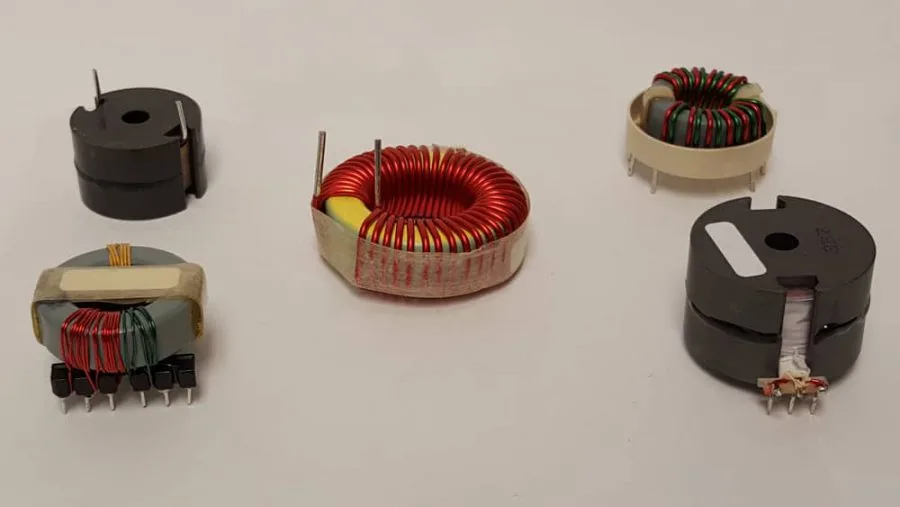
Eficaz devanado del transformador design is an proceso iterativo, since each design decision can influence the next. Careful planning is therefore essential for balancing electrical performance, efficiency, and manufacturability.
The process typically begins with selección de núcleos based on operating frequency and power requirements, followed by calculating the appropriate recuento de turnos for voltage and magnetic flux. Next, the geometría de bobinado is refined to balance efficiency, available space, and cooling. Finally, parasitic effects such as leakage inductance and capacitance should be evaluated to ensure stable and reliable devanado del transformador actuación.
For better results, análisis de elementos finitos (FEM) tools can be used to evaluate Resistencia de CA, densidad de corriente, distribución del campo magnético, and other key parameters. This helps identify potential devanado del transformador issues before moving to the prototype stage.
In practice, effective devanado del transformador design combines engineering analysis with practical experience. Integrating these steps early can reduce development time, lower costs, and minimize troubleshooting later.
Prácticas avanzadas y tendencias emergentes
As high-frequency applications continue to advance, devanado del transformador techniques are also evolving, with new conductor designs and winding layouts helping improve efficiency and power density.
One example is Cables Roebel, which use transposed strands to reduce Pérdidas de CA in strong parallel magnetic fields. This makes them well suited for high-current or compact devanado del transformador applications where efficient current distribution is essential.
Bobinados de láminas helicoidales y compuestas are also becoming more common in advanced devanado del transformador designs. These structures help improve magnetic field uniformity, reduce hotspots, and support more consistent performance at higher operating frequencies.
Another important consideration is corrientes circulantes in parallel strands, which can create additional heat and current imbalance. Proper strand transposition and spacing can help reduce these unwanted effects.
Although these techniques are not required for every design, they can provide clear benefits in efficiency, thermal stability, and EMI control for demanding high-frequency devanados del transformador.
Conclusión
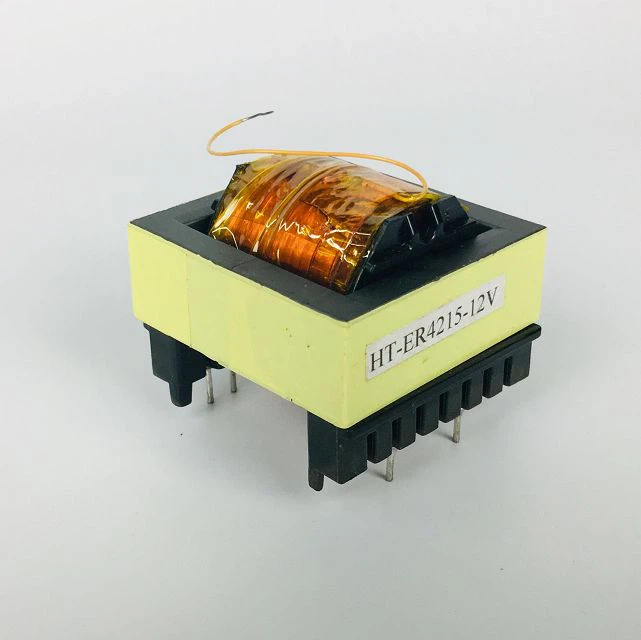
High-frequency transformer performance depends greatly on effective devanado del transformador design. From conductor selection and winding geometry to parasitic effects, each factor can influence efficiency, thermal behavior, and long-term reliability. Applying the right design principles helps reduce losses and maintain stable transformer performance.
For support with your devanado del transformador diseño, Contacta con nuestro equipo for expert guidance, custom solutions, and simulation insights tailored to your specific application.
Preguntas frecuentes sobre el devanado de transformadores de alta frecuencia
1. ¿Cuál es el rango de frecuencia ideal para utilizar el alambre Litz?
alambre litz is generally most effective between 10 kHz and 1 MHz, where skin and proximity effects become more significant. Above 1 MHz, strand diameter and construction must be carefully optimized to control AC losses in high-frequency devanados del transformador.
2. ¿Cómo calculo el número de vueltas de un transformador de alta frecuencia?
A common starting formula for high-frequency devanado del transformador design is:
Vueltas = (Vin × 10⁸) / (4 × Bmax × Ac × f)
where Vin is the input voltage, Bmax is the maximum flux density, Ac is the core area, and f is the operating frequency. The final turn count may need adjustment for voltage drop and regulation requirements.
3. ¿Puedo utilizar cable estándar en lugar de Litz para diseños de bajo consumo?
Yes. For low-current applications operating at relatively low frequencies, standard magnet wire may be suitable for devanados del transformador. However, as frequency rises above roughly 100–200 kHz, increasing AC losses should be considered when selecting the conductor.

 Spanish
 English
 Russian
 Italian
 German
 Chinese
Un comentario
¡Gracias por compartir este artículo tan revelador! La información me resultó muy útil y me hizo reflexionar. Tu estilo de redacción es atractivo y me permitió comprender el tema con mayor facilidad. ¡Espero leer más publicaciones tuyas!