


Transformer Winding: Definition & Core Concepts
Explore transformer winding, its types, working principles, and applications. Learn how windings impact voltage regulation, efficiency, and energy transfer.


From the simplest to the most complex, winding machines play a crucial role in the optimum functioning of household appliances. They wind wires into coils, creating electromagnets that generate the power to drive motors, compressors, and other essential components.
Not only this, the consistent quality and accuracy of machine-wound coils lead to fewer malfunctions and breakdowns, extending the lifespan of your appliances.
What more can they do, and which machines are apt for it? We will find out more about this in this article.

On the basis of the desired application and the type of material to be used, winding machines are of various types. A few notable examples include:

Motor coil winding machines are used to manufacture premium coils that have been found to be applicable to generators, transformers, and electric motors of household appliances. These machines are of two types: manual and automatic. While the former provides accuracy, the latter has won accolades for improving the efficiency and productivity of the machine.
Multi-axis motor winding machines, rotary motor winding machines, flyer motor winding machines, and production lines are just a few examples.
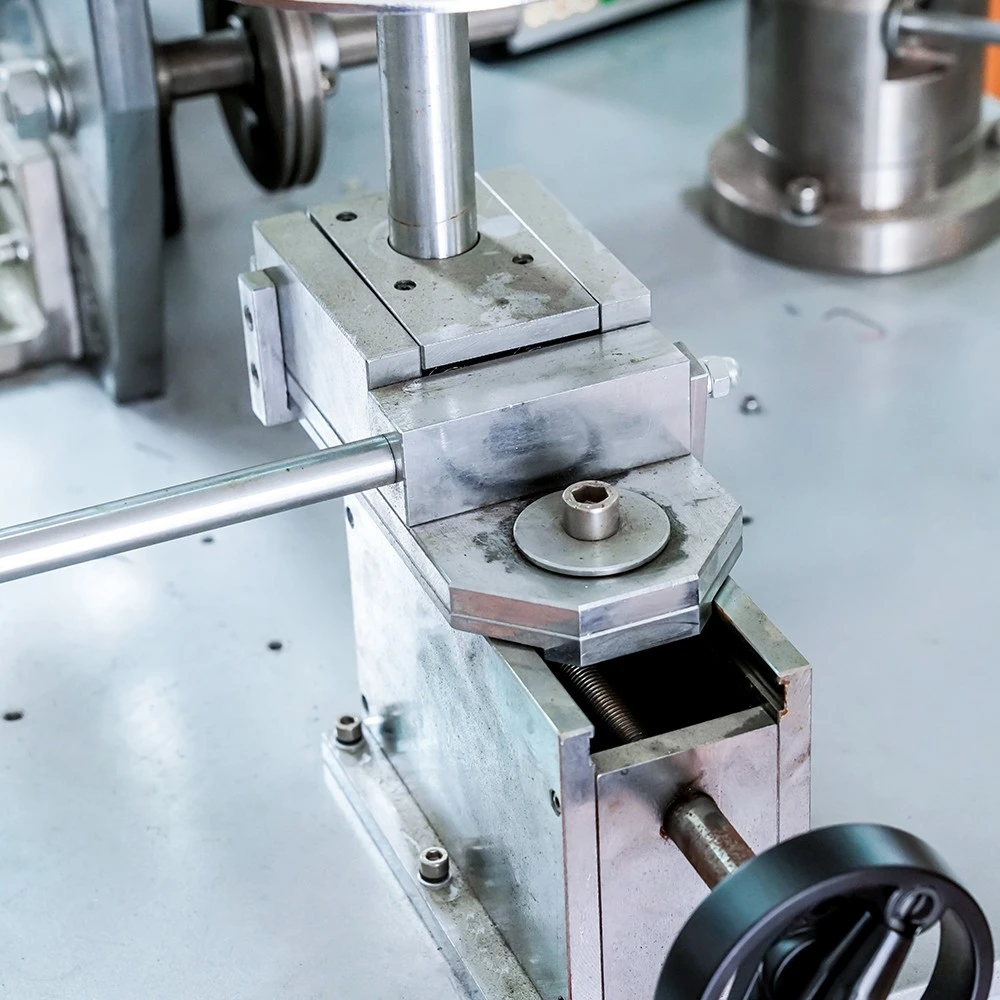
Widely used for manufacturing transformers with varied VA/MVA ratings. Transformers, as we know, are the main components of electrical circuits as they help increase or decrease the voltage. Different types of transformer winding machines are employed in the process to ascertain the correct VA/MVA rating. Depending on the type of winding machine to be manufactured, transformer winding machines can be of four types: Manual Transformer Winding Machines, Programmable Transformer Winding Machines, and Automatic Transformer Winding Machines.
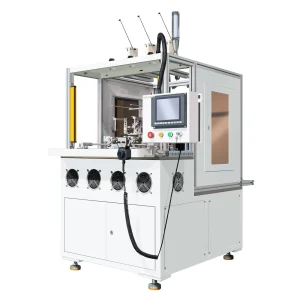
These machines can wind stator coils of generators, electric motors, and other rotating equipment. They have also found applications in coil windings of ceiling fans. Equipped with an advanced control system, it can set wire tension, winding speed, winding direction, and number of turns, making the job easy. The result is a consistent coil that performs precisely when used for the intended purpose.
Some noteworthy examples are Portable Generator alternators, Automobile Magneto, BLDC stations, etc.
Almost all household appliances, such as washing machines and refrigerators to blenders and vacuum cleaners, rely on electric motors for operation. These motors are designed with intricate coils of wires wound around a core. These machines help in achieving the required accuracy, speed, and consistency in this process.
As the name suggests, transformers are used to change the electricity voltage. This ability makes them suitable for use in household appliances, as they contain coils of tightly wound wires. Winding machines help design the exact number of turns along with proper insulation, making them safer and more efficient.
Various household appliances, such as door locks, valves, and dishwashers, use solenoids extensively. These are electromagnets with a coil wrapped around the core. To help build them, winding machines create coils on the basis of the specific application with the required number of turns.
They are found in household appliances’ motor controllers, power supplies, and various other electronic components. Inductors and chokes are passive electronic components that control the current flow in circuits. They must be precisely constructed for optimal performance, and winding machines ensure this.
Some household appliances, like ovens and toasters, utilize heating elements made of nichrome wire or other resistive materials. A winding machine can be used to generate efficient heat. It will wind these heating elements onto ceramic cores or other supports.
Ovens and washing machines use timers to control operation cycles. These timers often rely on small electromagnets that are activated by the winding and unwinding of a coil. To guarantee precise timing, you need a consistent and accurate winding that only a winding machine can ensure.
Let’s talk about a few household appliances whose components are created using winding machines to give an idea of what these machines can do.
Induction cooktops: Induction cooktops use electromagnetic fields to heat cookware directly. The complex wire coils beneath the cooktop surface that generate these fields are made with a winding machine, and these ensure efficient heat transfer and precise control.
Microwave motion sensors: These sensors utilize wound antennas that detect changes in the electromagnetic field caused by movement, activating the cooking cycle, or lighting.
Gas leak detectors: Specialized coils in these detectors are coated with materials sensitive to specific gases. A leak causes a change in the coil’s conductivity, alerting you to the danger.
Toasters: Similar to Nichrome heating elements in other appliances, winding machines create the coils in toaster elements, ensuring even browning and consistent toast textures.
Coffee machines: The heating elements in coffee makers are often intricate coils made of nichrome wire. Winding machines ensure these elements heat up evenly and generate the perfect temperature for brewing.
Transformers for LED drivers: Modern LEDs require specific voltage levels to operate well. With the help of winding machines, miniature transformers can be created. This function helps in converting household voltage to the precise levels needed for LED efficiency and brightness.
Fluorescent bulbs: The electrodes inside fluorescent bulbs are intricate wire coils coated with special chemicals. Winding machines precisely shape and position these coils, ensuring efficient electron emission and proper light generation.
Speakers: The voice coils inside the speakers are aluminum, copper, or copper-clad aluminum wires wound around a bobbin. These assemblies help convert electrical signals into sound vibrations. These coils must have the right resistance (wire tension), mass (turns), and geometry (layering configuration) for accurate audio reproduction, and you need a winding machine for that.
Record player cartridges: Moving magnet phono cartridges rely on tiny, precisely wound coils to pick up the vibrations from vinyl records. The accuracy of these coils determines the fidelity and detail of the sound reproduction.
Hair styling tools: Curling irons and straighteners use heating elements with carefully wound coils. These are the reasons you achieve the desired styling temperature.
Electric toothbrushes: The vibrating motors in electric toothbrushes contain small, tightly wound coils. Winding machines ensure these coils generate the right amount of vibration for effective plaque removal without being too harsh on your teeth.
Doorbell transformers: The low voltage that powers your doorbell chime comes from a small transformer. This has coils wound accurately to that step-down-the-line voltage.
Alarm systems: Magnetic reed switches used in door and window sensors rely on small wound coils to detect magnetic field changes when a door or window opens, triggering the alarm.
Radio antennas: Radio signals are picked up by the intricate windings of an antenna, allowing you to tune into your favorite stations.
Electric blankets and mattress pads: Warmth in these cozy comforts comes from heating elements made from Nichrome wire, precisely wound by machines to provide even heat distribution.
Humidifiers and vaporizers: The misting mechanism in these appliances often relies on a vibrating diaphragm powered by tiny, wound coils.
Mosquito repellents: Some mosquito repellents use electromagnetic waves to deter insects. The coils inside these devices are wound to generate the specific frequencies that repel mosquitoes.
Electric razors: The shaving heads of electric razors often contain tiny coils that vibrate the blades. Winding machines ensure these coils generate the right frequency and amplitude for a close shave without irritation.
Household appliances benefit from winding machines in many ways:
High tension forces and moving parts of a winding machine can lead to injuries and accidents. To avert this, safety measures must be undertaken. These help save both operators and the machine.
Household appliances are poised to see stupendous growth in the coming years. The sector is estimated to grow to about 410.66 million by 2027. Winding machines will play a key role in this sector’s growth and development, with faster churn and efficient and long-lasting appliances.
This is partly due to the innovations taking place in the sector. Some examples include:
Artificial intelligence and big data have transformed how different industries work today. The winding industry, too, is making use of this sophisticated technology to improve its efficiency and production volume. An example of this is using computer vision technology powered by AI to examine, cut, and wind the processes of silicone, hydraulic, poly tubes, and other such products.
Another example is found in induction motors, which are used extensively in household appliances. These devices face faults such as electrical faults, mechanical faults, and environmental faults. Of all the faults, electrical faults are the most common ones. As this can affect the life of the motor, these must be detected as soon as possible. An AI-based fault estimation is found to be useful in this regard.
With an aim to improve the flexibility and quality of electric motors, machine learning is now being used. For this, linear winding machines are designed with smart sensors, and this is proving to be useful. ML can be utilized for quality prediction, anomaly detection, and process control.
Winding machines have made a big difference in how household appliances are made. They’ve made production faster and improved the quality of the final products. Looking ahead, it’s clear that these machines will keep playing a crucial role in making better and more advanced household appliances. The speed and precision of modern winding machines are key factors in creating appliances that meet the changing needs of people everywhere.


Explore transformer winding, its types, working principles, and applications. Learn how windings impact voltage regulation, efficiency, and energy transfer.

Compare toroidal and E-I transformers by efficiency, noise, size, cost, EMI, inrush current, and applications to find the right choice.

Master coil winding machine operation with practical tips on setup, tension control, programming, safety, maintenance, and precise, efficient winding.
A guide to leading transformer winding machine manufacturers worldwide, comparing their specialties and solutions to help you find the right production partner.

A concise guide to concentrated vs distributed windings, covering structure, EMF, efficiency, losses, and key applications.

Top coil winding machine manufacturers in India offer CNC, toroidal, and SPM solutions for transformer and motor industries worldwide.
 English
  Spanish
  Russian
  Italian
  German
  Chinese