


When comparing CNC coil winding and programmable winding, it helps to start with clear definitions. Both are designed to wind wire with precision, but they differ in how they control motion and how much flexibility they give manufacturers.
CNC Coil Winding

CNC (Computer Numerical Control) coil winding machines use multi-axis servo control and execute G-code/M-code instructions, just like a CNC mill or lathe. This allows coordinated movement of the spindle, traverse, and tension systems with extremely fine accuracy. The result is precise interpolation, consistent layer builds, and repeatable winding—even for complex coil patterns.
Best suited for: high-volume runs, coils requiring orthocyclic winding, medical and aerospace components, or any application where tight tolerances and repeatability matter.
Programmable Winding (PLC/MCU Control)

Programmable winding machines are powered by a PLC (programmable logic controller) or microcontroller. Instead of G-code, the operator sets step-based instructions like the number of turns, winding speed, dwell time, and pitch. The system then executes these steps in sequence.
Best suited for: standard coils with moderate complexity, prototyping, and cost-sensitive production where flexibility is more important than micron-level precision.
Control Architecture & Motion
CNC coil winding machines rely on a CNC controller paired with servo drives in a closed-loop system. This setup synchronizes multiple axes at once—spindle, traverse, and payoff—making it possible to execute complex motion profiles with high precision. The result? Smooth contouring, stable torque, and consistent winding speed even under demanding patterns.
On the other hand, programmable winding machines use a PLC or microcontroller. These work with stepper motors or servos, following programmed sequences step by step. While simpler, they don’t always achieve the same level of axis synchronization as CNC systems, making them better for straightforward coil geometries.
Takeaway: CNC excels in multi-axis coordination, while programmable winding is more about cost-efficient, sequential control.
Accuracy, Speed & Repeatability

CNC coil winders are built for tight traverse accuracy and smooth acceleration profiles. This makes them perfect for orthocyclic layers, multi-section coils, and repeatable fill factors where every turn counts. You can expect consistent results across long production runs, which is why CNC is favored for aerospace, medical, and high-frequency coils.
Programmable winding machines, by contrast, handle basic winding patterns reliably, but their accuracy is limited by mechanical design and step resolution. They’re effective for general-purpose coils but may struggle with ultra-precise layer alignment.
Takeaway: CNC wins in precision and repeatability; programmable is dependable for simpler tasks.
Tension Control & Winding Quality

Both CNC and programmable winders can include tension control systems, but CNC machines more often feature closed-loop setups with load cells. This ensures stable tension across the entire process, which helps maintain coil density and protects the enamel coating from micro-cracks.
For less critical applications, machines may rely on dancer arms, felt pads, or magnetic powder brakes. These systems don’t provide feedback but are adequate for standard coils where cost control is more important than absolute precision.
Takeaway: If your coils demand high-quality, defect-free winding, CNC with closed-loop tension is the safer choice. Programmable winders can still produce solid results but usually require more operator oversight.
Automation Options
One of the biggest differences between CNC and programmable winding machines is how far they can take automation.
CNC coil winding lines are designed for high-volume, continuous production. They often include multi-spindle setups, robotic load and unload stations, inline cutters and tapers, and even MES (Manufacturing Execution System) integration for traceability. These features allow “lights-out production,” where machines can run with minimal human intervention while maintaining tight quality control.
By contrast, programmable winding machines focus on economical semi-automatic workflows. They usually feature recipe storage, keypad or PC-based setup, and easy adjustments for operators. While they don’t automate everything, they strike a balance between control and cost efficiency, making them ideal for small to mid-volume production.
Vision & Inline Quality Assurance
Both CNC and programmable winders can benefit from inline vision systems. Cameras monitor the winding process in real time, detecting issues like gaps, crossovers, or misaligned layers. When defects are spotted, the system can trigger alarms or reject faulty coils, improving yield and reducing rework. This adds another layer of quality control to keep production consistent.
Toroidal & Specialty Winding

JG 6504 Desktop Toroidal Transformer Winding Machine
When it comes to toroidal winding, PLC-based programmable machines are the most common. They’re well-suited for handling circular winding patterns and can store multiple programs for different coil types.
However, if you need maximum pitch and lead control or faster winding speeds, a CNC toroidal winder is the better choice. CNC ensures higher precision for complex geometries, making it the go-to for specialized or high-performance toroidal coils.
Cost & Complexity

From a cost perspective, programmable winding machines have the advantage. They come with a lower capital expense (capex), are easier to train operators on, and require less maintenance.
CNC machines, while more expensive, pay off in the long run. They deliver higher throughput, better precision, and lower scrap rates—especially important for industries like EVs, aerospace, or medical devices where quality cannot be compromised.
When to Choose Which
Selecting between a CNC coil winding machine and a programmable winder depends on your production needs, tolerance requirements, and budget. Let’s break it down in simple terms.
When to Choose CNC
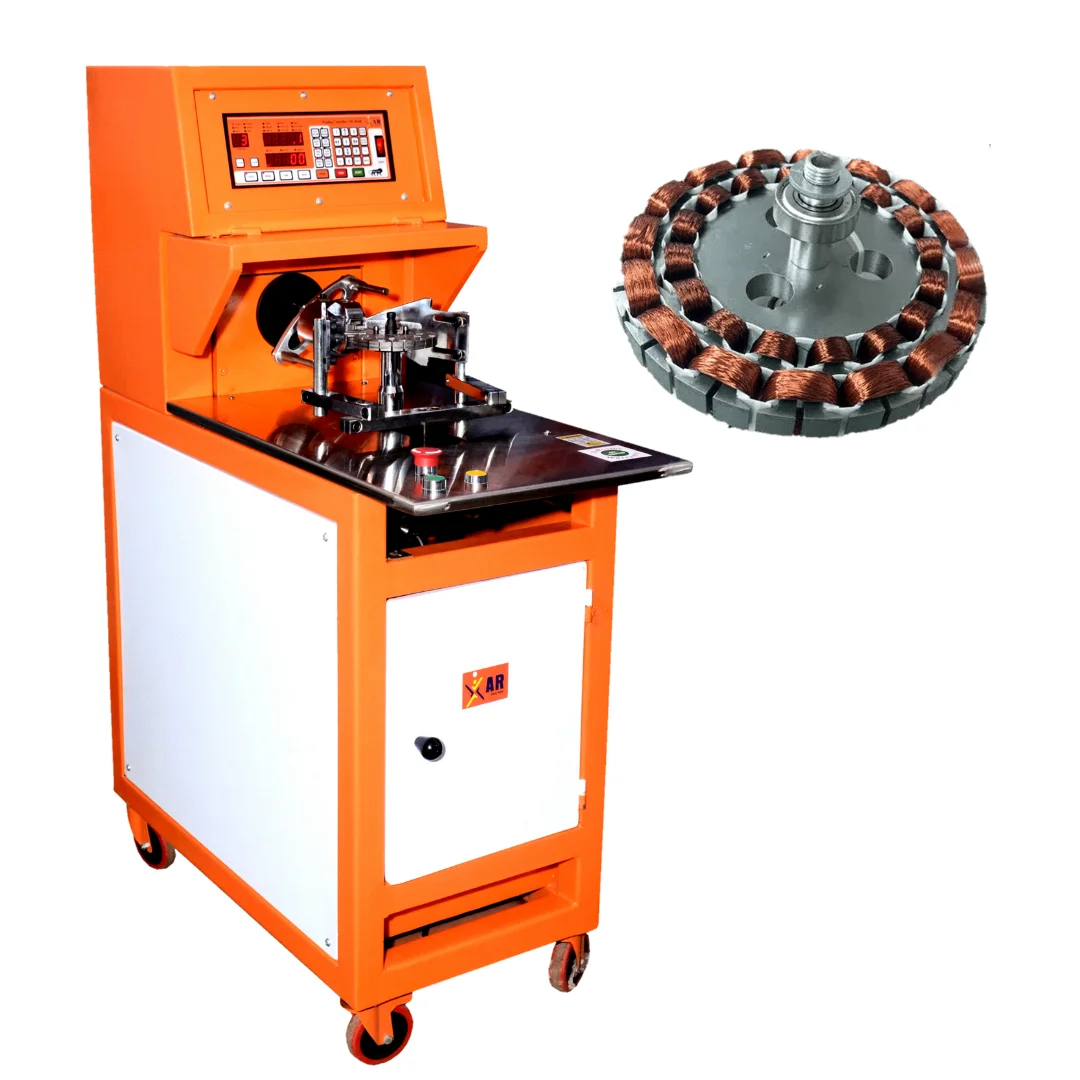
A CNC coil winding machine is the right pick if your application demands:
Tight tolerances where every layer must align perfectly.
Multi-axis coordination across spindle, traverse, and payoff systems.
Orthocyclic winding patterns that maximize packing density and efficiency.
Closed-loop control for both tension and vision-based quality checks.
Multi-spindle, high-volume production, especially in industries like EV batteries, aerospace, or medical devices.
In short: Go CNC when precision and repeatability are non-negotiable.
When to Choose Programmable

A programmable winding machine is more practical if your production needs are straightforward and cost-sensitive. It’s best for:
Standard coils that don’t require micron-level accuracy.
Frequent changeovers, where flexibility and setup speed are important.
Budget-sensitive production cells, especially for small or mid-volume runs.
Toroidal winders with repeatable recipes, where stored programs can quickly adapt to common coil patterns.
In short: Go programmable when flexibility, speed of change, and cost control matter most.
Selection Checklist

Before investing in a coil winding machine—whether CNC or programmable—it’s important to match the machine’s strengths with your production needs. Here are the key factors to check:
Coil geometry & wire range – Can the machine handle the diameters, shapes, and materials you work with (from fine copper wire to heavy-duty coils)?
Target takt time – Define how many coils you need per shift or day. This helps size the machine’s speed and throughput.
Traverse accuracy – Look for precision in wire placement to ensure consistent layer density and shape.
Tension method – Decide between open-loop (simple, lower cost) or closed-loop (load cell, real-time feedback) control depending on quality requirements.
Audits & traceability – Some industries (medical, aerospace, EV) require digital logs, MES integration, or vision-based defect tracking.
Available skills – Match machine complexity with your operator’s expertise—CNC may need more training, while programmable is more beginner-friendly.
Upgrade path – Consider whether you can add extras later, such as vision inspection, closed-loop tension, or automation modules.
Pro tip: Think long-term—buying a scalable system often saves more than replacing machines later.
Implementation Tips

Getting the right machine isn’t just about specs—it’s about how it performs with your actual coils. Here’s how to test before you commit:
Request sample runs using your cores and wires. This shows real-world performance rather than catalog promises.
Capture data during tests: look at tension plots, scrap rates, and cycle time to see if the machine meets your production needs.
Plan for maintenance from day one. Ask vendors about spare parts, support response times, and recommended service schedules.
Evaluate training and support—good documentation and after-sales service can make a huge difference in uptime.
Ready to Take the Next Step?

Choosing the right coil winding machine is a big decision, but you don’t have to make it alone. Our team can help you match the perfect machine to your coil geometry, production goals, and budget.
Whether you need a CNC system for high precision or a programmable machine for flexibility, we’ll guide you through the options and provide expert advice tailored to your needs.
Contact us today to get a personalized consultation, request sample runs, or receive a detailed quotation. Let’s build a solution that keeps your production efficient, accurate, and future-ready.
FAQs
1. What are the different types of coil winding?
Common coil winding types include:
Layer winding – turns laid neatly in layers.
Helical winding – single layer, like a spring.
Orthocyclic winding – compact, overlapping turns for high density.
Random (wild) winding – wire wound loosely without strict order.
Toroidal winding – wound around a doughnut-shaped core.
2. What is the difference between coil and winding?
A coil is the final wound component of wire (like in transformers or motors).
Winding is the process or arrangement of wrapping wire around a core or bobbin to create the coil.
3. What is CNC winding?
CNC winding is coil winding controlled by computer numerical control. Multi-axis servos follow programmed G-code to precisely control spindle, traverse, and tension. It allows highly accurate, repeatable coils—ideal for complex or high-volume production.
4. What are coil windings?
Coil windings are insulated wire turns wound around a core to form inductors, transformers, or motor coils. Their arrangement defines electrical properties like resistance, inductance, and efficiency.

 English
  Spanish
  Russian
  Italian
  German
  Chinese