


Electric motor insulation is crucial for maintaining performance, safety, and reliability.

Whether repairing or rewinding, proper insulation prevents damage, enhances efficiency, and extends the motor’s lifespan, ensuring it runs smoothly for longer.
What Is Motor Winding Insulation?
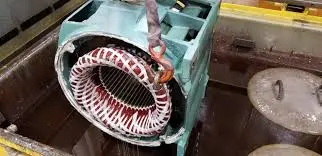
Motor winding insulation is what keeps electric motors safe, cool, and running efficiently.
It separates copper windings from the core, blocks electrical shorts, manages heat, resists dirt and moisture, and holds everything securely in place where it matters most.
Insulation Methods: VPI vs. Dip and Bake
Vacuum Pressure Impregnation (VPI)

VPI is a modern method where epoxy resin is vacuum-infused into motor windings.
It creates a void-free, durable insulation, offering excellent heat dissipation and mechanical strength, resulting in longer-lasting, efficient motor performance.
Dip and Bake

Dip and bake is a traditional method where windings are dipped in varnish and baked in an oven.
While cost-effective, it may leave air gaps and is less efficient at heat dissipation, leading to a shorter motor lifespan.
VPI vs. Dip and Bake Comparison Table
Conclusion

Motor winding insulation protects your motor from heat, damage, and electrical failure—especially when done with high-performance methods like VPI.
For reliable, long-lasting results, contact us today.
Our experts deliver precision insulation services that keep your motors running stronger, safer, and longer.
FAQs
What insulation is used on motor windings?
Class F insulation is commonly used in modern motor windings due to its ability to handle high temperatures. With today’s designs, motors can achieve a Class B temperature rise, ensuring efficiency and durability in various applications.
What grade insulation is used for motor windings?
Motor windings typically use insulation from Class B, Class F, and Class H. These insulation classes are designed to withstand different heat levels, ensuring the motor operates efficiently under varying conditions and extends its lifespan.

 English
  Spanish
  Russian
  Italian
  German
  Chinese
2 Responses
Hello can you make motor winding insulators from nomex?
Hello,
Thank you for your inquiry.
For further discussion, please contact us through our official email or WhatsApp. Our team will be happy to assist you.
📧 Email: guangri_electronic@gr-winding.com
📱 WhatsApp: +852 5576 7571
We look forward to hearing from you!