


How a Coil Winding Machine Works

At its core, a 線圈繞線機 is designed to wind wire into precise coils for transformers, motors, inductors, and other electronic components. It places wire evenly around a bobbin or core while maintaining controlled tension, ensuring stable performance and long-term reliability.
Accurate winding helps reduce electrical losses, improve coil consistency, and enhance product quality. Today, different types of 線圈繞線機 are available to meet various coil shapes, materials, and manufacturing requirements.
繞線機的類型
飛梭捲繞機 – A wire guide rotates around a fixed bobbin to create precise 線圈繞製. They are widely used for 引擎 和 變壓器繞組.
Lathe (shaft) winders – The bobbin rotates while the wire guide moves back and forth to build even coil layers. They are ideal for standard cylindrical coils.
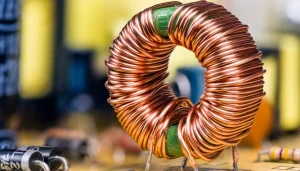
環形繞線機 – A wire shuttle passes through 環形磁芯. reating accurate windings for 環形變壓器 和 電感器. They are ideal for compact, high-效率 designs.
橫動捲繞機 – A precision wire guide controls wire placement across the core. They are commonly used for fine wire winding 和 正交環繞制 with a high 填充因子.
這些 線圈繞線機 types form the foundation of modern 線圈繞製技術. Their continued development has led to today’s CNC 和可編程 systems,, delivering higher precision, better efficiency, and more flexible production.
From Manual Winding to Flyer Winders

The earliest 線圈繞線機 were simple and mostly manual. Operators guided the wire by hand while turning the bobbin with a crank or basic motor. Some machines included mechanical turn counters, but winding accuracy still relied on the operator’s skill and experience.
飛梭捲繞機 were an early step toward automated 線圈繞製. Instead of rotating the bobbin, the wire guide (flyer) moved around a fixed core, making 繞線 faster and more consistent for 變壓器 和 馬達線圈. However, the process still depended on operator skill, so winding accuracy could vary.
Although these early coil winding methods were a major step forward, they still had several limitations:
精度低 – Uneven wire layering often reduced 線圈性能 and consistency
操作員相關的質量 – Coil quality relied on operator skill, making consistent production difficult.
生產力低下 – Manual wire guiding limited production speed and was unsuitable for large-scale manufacturing.
As a result, these challenges drove the development of more accurate 線圈繞線機. This led to 半自動 systems and later CNC-controlled machines, delivering higher precision and better production efficiency.
Programmable Winding (1970s–1990s)

到了20世紀末, 線圈繞製技術 advanced rapidly with 步進馬達, PLC, and early microcontrollers. These innovations allowed winding recipes to store settings such as 轉彎, 瀝青, dwell, 和 traverse patterns, making 線圈繞製 more accurate and automated. This progress also paved the way for 半自動 and later CNC-controlled machines.
With these improvements, 線圈繞線機 could repeat the same winding cycle with greater consistency instead of relying only on operator skill. 電子張緊器 replaced traditional friction pads, providing better wire tension control. This change improved productivity, produced more consistent 線圈, and reduced material waste compared with manual or flyer winding methods.
The CNC Era (2000s–Present)

在21世紀初, CNC(電腦數控) brought a major upgrade to coil winding.Multi-axis servo drives synchronized the 主軸, traverse, 和 payoff units for precise wire placement. This enabled 正交環繞制 with minimal gaps, helping produce compact, high-density coils with greater accuracy and consistency.
As technology advanced, this level of CNC control made it possible to produce multi-section coils, 環形線圈, and other specialty windings that were once difficult to manufacture. It also increased production efficiency, reduced scrap, and delivered excellent repeatability, making CNC線圈繞線機 the preferred choice for EV motors, 航太, 和 medical electronics.
Evolution of Wire Tension Control

Wire tension control became more advanced as 線圈繞線機 improved. Early machines used friction pads or dancer arms, but these systems could easily lose accuracy over time. Modern machines use 稱重感測器閉環回饋 to monitor 線張力 in real time and automatically adjust braking or feed torque for more stable, consistent winding.
With these refined tension features, advanced wire tension control provides better wire protection, higher coil density, and consistent repeatability in every production run. Combined with CNC precision, it helps produce coils that are more 耐用的 和 electrically efficient.
Toroidal Winding Technology

作為 coil technology advanced, 環形繞線機 were developed for 環形磁芯 that traditional flyer or lathe winders could not handle. Early machines used shuttle systems to feed the wire through the core. This method worked well but offered relatively slow winding speed.
Over time, 環形繞線機 evolved into programmable 和 CNC-controlled systems, offering more accurate pitch control, automatic taping以及更高 生產速度. Today, they are widely used in 變壓器, EV power systems, 音響設備, 和 醫療器材, where compact, low-noise 線圈 至關重要。
工業4.0集成
Building on these advances, the latest 線圈繞線機 have entered the Industry 4.0 era with smarter production features, including:
MES連接 for seamless factory integration
Digital recipe management and production logs for consistent 線圈繞製
遠端監控和診斷 to reduce downtime and improve efficiency
Real-time analytics help operators detect defects early and adjust machine settings quickly. This improves production yield, supports full production traceability, and keeps 線圈繞製 more consistent.
未來展望
Looking ahead, 線圈繞線機 will become smarter, faster, and more sustainable with technologies such as:
人工智慧視覺系統 to predict and 防止缺陷 在它們發生之前。
數位孿生 to simulate 線圈繞製 patterns, speed up setup, and reduce trial runs.
協作機器人 to automate loading and unloading for higher productivity.
Energy-efficient drives and lower scrap to reduce waste and improve energy efficiency.
These innovations will help 線圈繞線機 meet the growing needs of modern industries, including 再生能源, 電動車(EV), and advanced manufacturing.
準備升級您的線圈繞組了嗎?

The development of 線圈繞線機 has transformed the industry, from manual flyer winders to CNC系統 和 Industry 4.0 systems. Whether you need higher winding accuracy, greater productivity, or smarter automation, choosing the right 線圈繞線機 can make a big difference.
立即聯絡我們 today for expert advice, reliable 線圈繞線機 solutions, and options tailored to your manufacturing needs. Let’s improve production efficiency, reduce scrap, and build a smarter, more reliable production line together.

 Chinese
  English
  Spanish
  Russian
  Italian
  German