


Harmonics in electrical systems distort waveforms and can seriously affect transformer efficiency and lifespan.

In this guide, we’ll cover what causes harmonics, how they impact transformers, and key design solutions to handle them.
What Are Harmonics?

Harmonics are unwanted frequency components that are integer multiples of the fundamental frequency—like the 3rd (180 Hz) or 5th (300 Hz) in a 60 Hz system.
These distort the smooth AC sine wave, causing noise, resonance, overheating, and power losses that can degrade transformer performance and efficiency.
What Causes Harmonics in Electrical Systems?
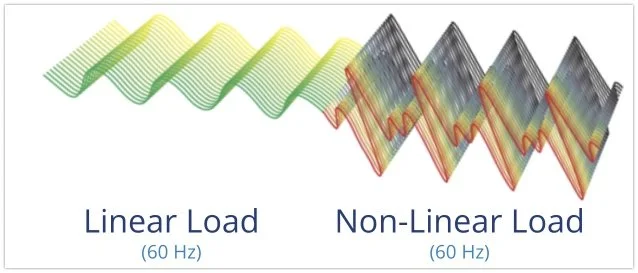
Harmonics are primarily caused by non-linear loads, which include devices like computers, variable frequency drives (VFDs), and fluorescent lights.
These devices consume power in irregular bursts, generating harmonic distortion.
Modern high-efficiency equipment, such as wind turbines and solar panels, also contributes to harmonics due to their intermittent operation and energy consumption patterns.
Transformer Design Considerations for Harmonics

Harmonics can cause excessive heat, increased losses, and reduced lifespan in transformers, making harmonic-conscious design essential for system reliability and efficiency.
K-Factor Transformers: Built to withstand harmonic distortion with reinforced insulation and oversized neutrals.
Zigzag Transformers: Reduce triplen harmonics by redirecting them within internal windings.
Passive Harmonic Filters: Divert harmonic currents and prevent them from reaching critical equipment.
THD and Crest Factor: Crucial metrics for evaluating harmonic levels and adjusting transformer design.
Derating or Oversizing: Necessary when THD exceeds 5% to ensure safe and efficient transformer operation.
Conclusion

Harmonics can lead to overheating, increased losses, and reduced transformer efficiency. Using proper transformer types like K-rated or Zigzag models is essential for mitigation.
Need help with harmonics in your system? Contact us for expert guidance and transformer solutions tailored to your power quality needs.
 English
  Spanish
  Russian
  Italian
  German
  Chinese