Aplicación de la máquina bobinadora - Almacenamiento de energía
Almacen de energia
Máquinas bobinadoras para la industria aeroespacial y de defensa
Industria aeroespacial
Montaje de automóviles en la línea de producción de máquinas bobinadoras para la industria automotriz
Industria automotriz
Aplicación de máquinas bobinadoras - Electricidad y Electrónica
Electricidad y Electrónica
Máquina bobinadora para equipos de comunicación
Equipos de comunicacion
Aplicación de máquina bobinadora - Electrónica de consumo
Electrónica de consumo
Máquinas bobinadoras para electrodomésticos
Electrodomésticos
Aplicación de máquinas bobinadoras - Automatización Industrial y Robótica
Automatización industrial
Máquina bobinadora para la industria de la iluminación
Industria de la iluminación
Aplicación de máquinas bobinadoras - Industria de energías renovables
Industria de energías renovables
Un hombre operando una máquina para fabricar alambre en GuangRi
Por qué elegirnos
Un hombre operando una máquina que produce un cable rojo. Esta imagen muestra la máquina bobinadora de transformadores y su tecnología.
Tecnología de bobinado
Un hombre con traje sostiene una pequeña bobina que simboliza la ingeniería de desarrollo para diferentes industrias.
Desarrollo e ingeniería
Programas de desarrollo de socios Un entorno empresarial donde un grupo diverso observa un apretón de manos entre dos personas que implica un acuerdo o asociación exitoso.
Soporte para socios
Un evento de team building de empresa en la playa que muestra a un grupo de personas posando para una foto.
Galería GuangRi

How to Set Up a Toroidal Taper Faster

Learn safe startup, parameter setup, auto and pedal modes, taping calculations, and maintenance for fast, smooth, repeatable Toroidal Taping Machine operation.

Tabla de contenido

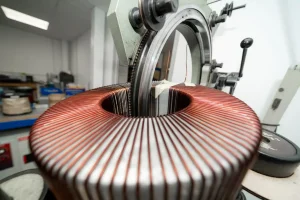
Una máquina de encintado/bobinado toroidal construye y termina bobinas en forma de anilloCarga alambre o cinta aislante en una lanzadera (o cargador), gira el núcleo toroidal, y establece cada turno con control tono, velocidad y tensiónVerá estas máquinas en talleres de transformadores, conjuntos de energía para vehículos eléctricos, fuentes de alimentación de audio, dispositivos médicos y en cualquier lugar donde Baja fuga, bajo ruido Se fabrican piezas toroidales.
In addition, when equipped with a taping head, the machine wraps papel/poliéster/kaptón tapes evenly around the core. This improves insulation and mechanical strength while ensuring a clean, uniform, and repeatable taping process.
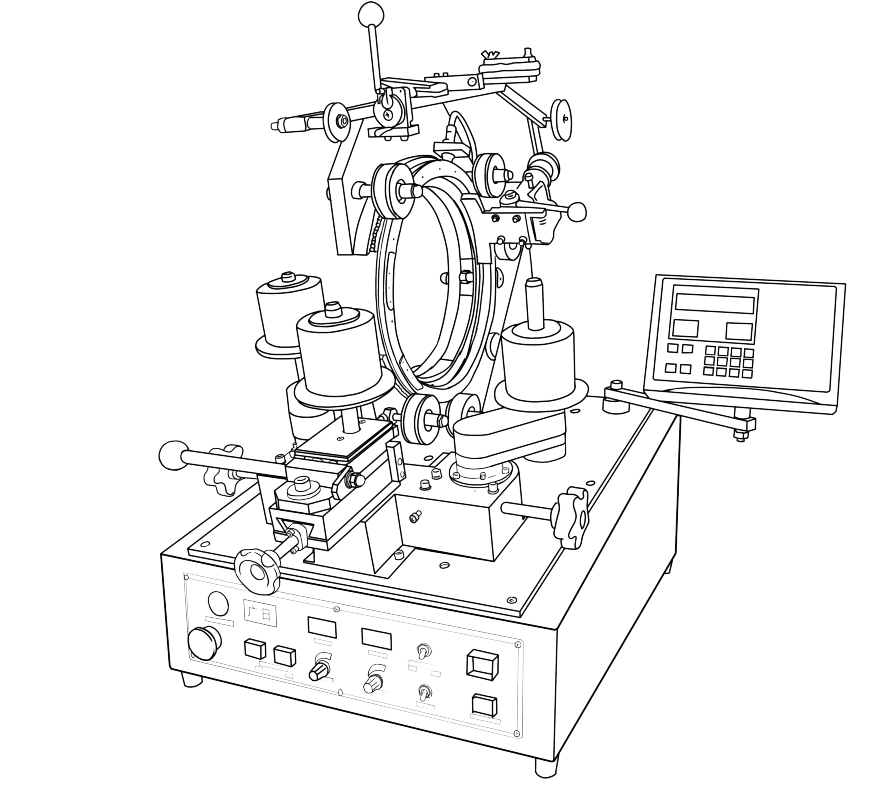
Máquina de encintado toroidal con panel de control de bobinado

This guide covers Guangri’s PLC-controlled models, incluido el JGC series. With a durable design and a smart PLC controller, operators can save recipes, switch between auto y pedal modes, and achieve consistent production across every shift.

Power & Safety Setup

Before starting any devanado o taping operation, always put seguridad first. First, install the machine in a clean, well-ventilated area with a temperature of 13–35°C, low vibration, and no corrosive fumes. In addition, ensure proper grounding and use the correct circuit breaker for the fuente de alimentación. These simple checks help prevent electrical hazards and protect both the operator and the equipment.

How to Power On Your Máquina bobinadora de bobinas:

  1. Suelte el Parada de emergencia (E-stop).

  2. Dale la vuelta a la interruptor de encendido en la base.

  3. El controller will boot into Estado de espera. El Indicador “Listo/Esperando” lights up when it’s ready. If it’s off, the machine is in Estado de configuración, meaning parameters can still be adjusted.

Pro tip: Before loading a core, always double-check the grounding connection and confirm the E-stop reset is properly released. This helps avoid startup faults and ensures a smooth machine start-up process.

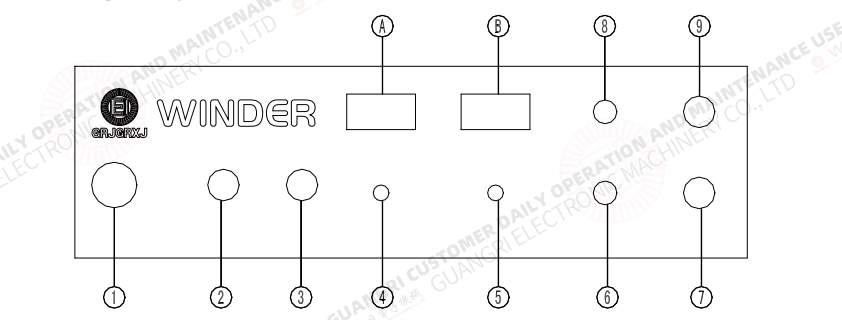
Front Panel Controls

Controles e indicadores del panel frontal del enrollador Guangri

El Guangri controller front panel is the main control center of the tape machine, handling all key operations:

  • Nueve teclas de función on the tape machine handle power, start/stop, reset, manual jog, direction control, and auto/manual mode selection.

  • Two adjustment knobscontrol speed (winding/taping RPM) and pitch (spacing between turns or tape wraps).

  • El direction switch controls rotation direction, setting CW (sentido horario) o CCW (sentido contrario a las agujas del reloj).

  • El mode switch toggles between Modo manual (slow jog and setup adjustments) and Modo automático (bobinado/encintado continuo).

Operation Flow of the Máquina bobinadora de cinta

  • Tecla de inicio/parada: arms the system and starts the cycle

  • Tecla de reinicio: clears errors or gets ready for the next job

  • Modo manual: used for setup, coil positioning, or trial runs

  • Modo automático: enables repeatable, hands-free winding/taping with stored programs.

You can also run via foot pedal mode or switch to full Auto-start (machine ramps up and down automatically).

Rear Panel Switches
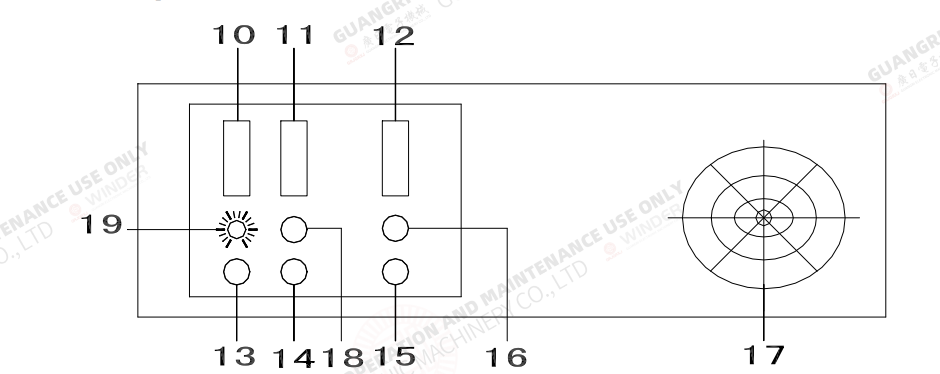
Tomas e interruptores del panel posterior de la máquina bobinadora

El base and rear control panels house all connections and deeper configuration settings:

  • Zócalos de base connect the controller, foot pedal, sensors, and—on taping machines—the auto-scissors, also including fuse access and main power input.

  • El mode selector switch lets you choose Modo pedal (pedal controls speed/stop) or Inicio automático (automatic acceleration/deceleration by controller).

  • El grounding terminal must always be securely connected before operation.

En el controller rear panel, you’ll find several machine configuration switches:

  • Tipo de máquina cambiar: selects toroidal, belt/slider, gear head, or taping models.

  • Interruptor de rotación: sets single or double-direction rotation when reversals are required.

  • Interruptor del transductor: matches the correct sensor type(e.g., JG = 7PA, JGC = 7NA). an incorrect setting will prevent the counter from working.

  • Interruptor de dirección de arranque del núcleo:sets the starting direction for fan-shaped windings in Modo automático.

Important: Set all rear-panel switches before the first power-up to ensure the controller recognizes the correct machine configuration.

Controller Programming Overview

Programación de la interfaz del controlador con teclas de visualización

Ae t thheart of Guangri’s toroidal taping and winding machines is the panel del controlador, donde los operadores configuran y gestionan cada trabajo. El panel utiliza cuatro ventanas de visualización clave:

  • Ventana de especificaciones – stores job numbers and allows quick saving or recalling of coil specifications.

  • Ventana del programa – sets the working sequence, such as Load → Wind, with support for additional tap steps.

  • Ventana de tiempos – defines how many times each step repeats, reducing the need for repeated programming.

  • Gira la ventana – sets precise turns for loading, winding, slowdown, and reversal in fan-shaped windings.

The machine operates through three control states:

  • Estado de configuración – where parameters are entered and adjusted.

  • Estado listo – once settings are confirmed, the machine is ready to run.

  • Estado de la revisión – meanwhile, stored parameters can be checked before pressing Comenzar.

In addition, the Setting, Enter, Return, and Review keys guide operators through parameter input and confirmation, ensuring a smooth, consistent, and reliable workflow.

Auto & Pedal Control Modes

Además, la Guangri machine offers flexible control, allowing smooth switching between pedal operation y Modo de inicio automático.

  • Modo pedal: The operator controls speed and start/stop using the foot pedal—ideal for setup and manual machine control.

  • Modo de inicio automático:Set via the rear switch on the base, the machine automatically ramps up to preset speed and smoothly slows down at the end without pedal input.

Notably, the enlace proporcional between the main drive y rotation drive is a key feature of the Guangri machine. It keeps paso de alambre accurate at any velocidad de bobinado, asegurando consistent spacing y tighter control across different bobinas.

Head-Type Setup & Winding

Diferente winding heads need slightly different handling; the Guangri machine supports multiple head designs:

  • Cabezal deslizante – First load the core, then adjust the resorte de fricción y almohadilla de presión to set proper tensión del cable; ensure the slider moves smoothly without blocking the wire.

  • Cabezal de cinturón – Secure the wire end, then fine-tune grip using the tornillo tensor de la correa. Keep the free wire end stable under the core before winding.

  • Cabezal de engranaje – Set the freno to the correct tension before loading. Align the magazine y slider properly, and make sure the wire passes through the ranura guía without slipping.

  • Cabezal de encintado – Route the tape through the pressure clip y electric scissors before feeding it into the magazine. Once running, the machine applies tape automatically and the scissors cut it at the end.
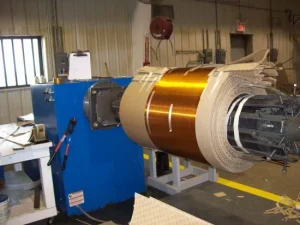
Overall, each head type has its own setup details, but all share the same goal: maintaining stable tension control and ensuring precise winding or taping accuracy

Taping Calculations & Setup

Additionally, understanding a few basic taping calculations helps achieve accurate and repeatable results. The key formulas are:

  • Vueltas de cinta = circunferencia del núcleo ÷ (ancho de la cinta – superposición)

  • Giros de carga = vueltas de cinta × (longitud de una vuelta ÷ circunferencia del cargador)

These calculations ensure proper tape overlap, helping maintain consistent Espesor del aislamiento and full coverage on every layer.

Ejemplo de configuración:

  1. Medir la core outer diameter to determine the circumference

  2. Select the tape width and desired overlap (e.g., 2 mm).

  3. Calculate the required tape-turns using the formula.

  4. Enter the load-turns value into the controller.

  5. Ejecutar una dry test cycle to verify settings before production.

By following these steps, you can reduce trial-and-error while maintaining consistent taping quality and material efficiency.

Essential Switch Setup

Most importantly, before the first power-up, make sure all front and rear panel switches are set correctly. Missing this step may lead to counting errors, incorrect settings, or machine startup issues.

  • Modo: select Auto o Pedal operation based on your workflow.

  • Tipo de máquina: choose the correct devanado, taping, or head configuration.

  • Rotación: set CW (sentido horario) o CCW (sentido contrario a las agujas del reloj) dirección.

  • Tipo de sensor: match 7PA o 7NA to the machine model, as an incorrect setting will prevent the counter from registering.

As a result, these basic settings help the controller recognize the correct hardware configuration and ensure accurate winding or taping operation according to the programmed settings.

Operating Workflow

Cada winding or taping job follows a clear and structured process to ensure accurate and consistent results:

  1. Configuración de carga: Open the shuttle o magazine and secure the core in place.

  2. Ajuste del rodillo: Set the polyurethane rollers for proper grip and smooth operation.

  3. Enhebrado: Route the wire or tape through the guides, pads, and tensioners correctly.

  4. Iniciar proceso: Prensa Comenzar to begin. In Modo automático, the machine reaches the preset speed automatically; in Modo pedal, speed and movement are controlled manually.

  5. Monitor: Adjust the velocidad y pitch knobs as needed to fine-tune spacing during production.

  6. Valores de registro: Save the velocidad y pitch values for quicker and more consistent future setups.

Therefore, this production workflow helps maintain consistent control de calidad and reduces costly scrap material when switching between different productos.

Maintenance Guide

To keep your toroidal winding and taping machine in top condition, only basic regular maintenance checks are needed. Start by greasing and cleaning all rotating parts and gears at scheduled intervals to ensure smooth motion and reduce wear.

Next, make sure the ventilation paths y cooling fans are clean and unobstructed, as dust buildup can cause overheating and shorten component lifespan. Also, verify proper grounding and confirm that breakers are correctly rated and functioning to ensure stable operation and operator safety.

Overall, just a few minutes of mantenimiento preventivo today can save significant falta del tiempo and repair costs in the future.

Troubleshooting Overview

Here is a simple troubleshooting guide operators can follow when machine issues occur:

  • No se encienden los LED → Check the power connection and main fuse of the machine system.

  • El motor no arranca → Verify the foot pedal function and ensure the speed knob is not set to zero.

  • El contador no se registra → Adjust the transducer gap or confirm the correct type (7PA vs 7NA) is selected.

  • Motor de rotación en ralentí → Inspect and adjust the drive belt for proper tension and contact.

In most cases, machine issues come from basic fuerza, sensor, o setup problems—so always check these first before contacting service support.

Mejores prácticas

For smoother machine operation and fewer unexpected issues, follow these proven best practices:

  • Hacer un ensayo: Mark the core and run without material to confirm and lock pitch settings before actual winding operation.

  • Guardar tarjetas de trabajo: Store paso, velocidad, and program values under unique recipe names for faster repeat setups.

  • Registrar datos clave: Record tape/wire usage, cycle time, and defect rates to optimize process performance and ramp timing.

  • Estandarizar configuraciones: Prepare reference brake and pressure settings for common core sizes to improve changeover speed and consistency.

In summary, by combining mantenimiento preventivo with smart data logging, you can reduce tiempo de inactividad de la máquina while extending the service life of your Bobinadoras Guangri.

¿Está listo para llevar su producción de bobinas al siguiente nivel?

En Guangri, we don’t just manufacture machines—we deliver tailored production solutions for your specific manufacturing needs. Whether you’re building your first toroidal taping line or upgrading for higher eficiencia de producción, our team provides full support, including training, personalización, y Servicio postventa.

Reach out to us today to request operation files, detailed manuals, or a personalized consultation. Let’s make your proceso de bobinado smarter, faster, and more reliable.

Contáctanos ahora y descubra por qué fabricantes de todo el mundo confían en Guangri para sus máquinas de bobinado y encintado de precisión.

Preguntas frecuentes

Q1: What makes a Guangri toroidal taping machine different?

A1:Guangri toroidal taping machines combinar Control PLC con Auto y Pedal modes, helping simplify setup while improving winding consistency and production efficiency.

Q2: How can I tell if the machine is ready to run?

A2: Simply check the Ready indicator on the controller. When the light is on, all parameters have been confirmed and the machine is ready to start in Pedal o Modo automático.

Q3: Is it easy to switch between Manual and Auto modes?

A3: Yes. Use the front-panel mode switch to change between Manual y Auto operation. Auto mode starts smoothly, while Manual mode provides direct operator control.

Q4: What if the controller is not counting turns?

A4: In most cases, the sensor setting o transducer gap needs adjustment. Check the selected sensor type and verify the spacing is set correctly.

Q5: How often should the machine be maintained?

A5: Perform regular machine maintenance, including cleaning and lubricating moving parts, checking fans and grounding, and inspecting belts or brakes to help prevent downtime.

P6: ¿Necesito programar el controlador para cada nuevo trabajo?

A6: Yes, but each coil program can be saved as a unique recipe. This allows faster setup and more efficient repeat production when running similar jobs.

Deja una respuesta

Tu dirección de correo electrónico no será publicada. Los campos obligatorios están marcados con *

Artículos duraderos para usted
Bobinadora PLC Guangri con pantalla

Ultimate JGC-2015PQL PLC Coil Winding Guide

Guía paso a paso para el bobinado de bobinas con PLC para Guangri JGC-2015PQL. Abarca la configuración, la introducción de parámetros, el control de velocidad y la operación segura para una producción precisa de bobinas.

es_ESSpanish

Póngase en contacto para obtener soporte técnico

***Valoramos su privacidad y estamos comprometidos a salvaguardar su información personal con el máximo cuidado.