


bobinado plays a vital role in the production of motores, transformadores, y inductores—essential components used across a wide range of dispositivos electronicos.

Elegir lo correcto material de bobinado afecta directamente conductividad eléctrica, rendimiento térmico, durabilidad, and overall cost.
Common Coil Winding Materials
Cobre

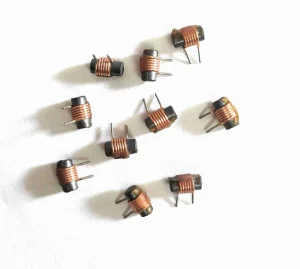
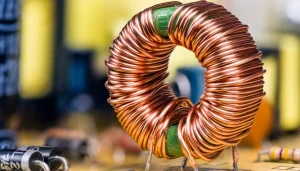
It is the most commonly used material de bobinado en transformadores, motores, and a wide range of dispositivos electronicos.
Aluminio

Aluminio is a lightweight and cost-effective material de bobinado, commonly used in larger coil applications como transformadores y speakers.
However, although aluminio has lower conductividad eléctrica than copper, it remains a practical choice when reducción de peso y cost control are priorities. Proper handling and termination are important to ensure reliable performance.
Plata

Plata offers the highest conductividad eléctrica of any metal, making it an excellent choice for high-precision electrónica and demanding aplicaciones aeroespaciales.
Due to its high cost and sensibilidad a la oxidación, plata is rarely used in standard production. Still, it is essential in specialized high-performance applications requiring maximum conductividad
Oro
Oro offers excellent Resistencia a la corrosión and high ductility, making it a premium choice for reliable microelectronics applications.
Additionally, its high costo y peso restrict oro to the most demanding high-reliability applications only.
Aluminio revestido de cobre (CCA)

CCA (Copper-Clad Aluminum) features a lightweight aluminum core con un capa exterior de cobre, providing strong high-frequency conductividad thanks to the efecto piel.
Aleaciones de alta resistencia

Estos materiales de bobinado provide improved mechanical strength, haciéndolos adecuados para vibration-heavy environments como aeroespacial y sistemas automotrices.
Alloys such as HTW, XHTW, y mezclas de cobre y níquel deliver higher durabilidad, helping alambre enrollado perform reliably in applications where standard wire may fail.
Specialty Coil Winding Materials

Mientras cobre y aluminio are the main coil winding materials, certain niche aplicaciones requerir specialty materials with unique performance properties.
Manganina: Provides stable resistencia, with strong heat and corrosion resistance for reliable coil applications
Níquel-cromo (nicrom):Suitable for high-temperature environments and heating elements
Kanthal(FeCrAl alloy): Offers excellent resistencia al calor and long-term durabilidad
Titanio: Lightweight, highly corrosion-resistant, and strong in mechanical performance
Carbón: Lightweight, highly corrosion-resistant, and strong in mechanical performance
Níquel: Low-resistance material that heats quickly, used in controlled heating applications
Selecting the Right Coil Material

The best material de bobinado depends on several key factors, including electrical performance, thermal requirements, estrés mecánico, Condiciones de funcionamiento, y en general cost considerations.
A balanced approach is important—cobre is often preferred for high-reliability applications, mientras aluminio y CCA are well suited for cost-sensitive o lightweight designs.
Para peak-performance circuits, plata o oro is used despite their higher cost, delivering maximum conductividad eléctrica y fiabilidad in demanding applications..
Material Applications Overview

Here are typical coil winding material applications by type:
Cobre:Se utiliza en motores, solenoides, transformadores, y PCB coils
Aluminio: Common in Sistemas HVAC, loudspeakers, y industrial coils
CCA(Copper-Clad Aluminum): Applied in coaxial cables y telecom windings
Plata/Oro:Se utiliza en aeroespacial, RF systems, y medical electronics
Nicromo/Kanthal: Ideal for heaters y resistive elements


 Spanish
  English
  Russian
  Italian
  German
  Chinese