


Avvolgimento della bobina plays a vital role in the production of motori, trasformatori, E induttori—essential components used across a wide range of dispositivi elettronici.

Scegliere il giusto materiale di avvolgimento della bobina colpisce direttamente conduttività elettrica, prestazioni termiche, durata, and overall cost.
Common Coil Winding Materials
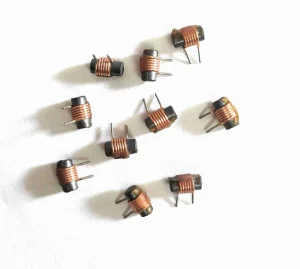
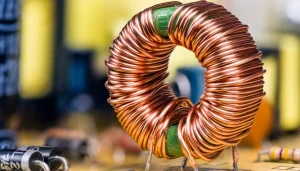
Rame

It is the most commonly used materiale di avvolgimento In trasformatori, motori, and a wide range of dispositivi elettronici.
Alluminio

Alluminio is a lightweight and cost-effective materiale di avvolgimento, commonly used in larger coil applications ad esempio trasformatori E speakers.
However, although alluminio has lower conduttività elettrica than copper, it remains a practical choice when riduzione del peso E cost control are priorities. Proper handling and termination are important to ensure reliable performance.
Argento

Argento offers the highest conduttività elettrica of any metal, making it an excellent choice for high-precision elettronica and demanding applicazioni aerospaziali.
Due to its high cost and sensibilità all'ossidazione, argento is rarely used in standard production. Still, it is essential in specialized high-performance applications requiring maximum conduttività
Oro
Oro offers excellent resistenza alla corrosione and high ductility, making it a premium choice for reliable microelectronics applications.
Additionally, its high costo E peso restrict oro to the most demanding high-reliability applications only.
Alluminio rivestito di rame (CCA)

CCA (Copper-Clad Aluminum) features a lightweight aluminum core con un strato esterno di rame, providing strong high-frequency conduttività thanks to the effetto pelle.
Leghe ad alta resistenza

Questi materiali di avvolgimento provide improved mechanical strength, rendendoli adatti per vibration-heavy environments ad esempio aerospaziale E sistemi automobilistici.
Alloys such as HTW, XHTW, E miscele di rame-nichel deliver higher durata, helping filo di avvolgimento perform reliably in applications where standard wire may fail.
Specialty Coil Winding Materials

Mentre rame e alluminio are the main coil winding materials, certain niche applicazioni richiedere specialty materials with unique performance properties.
Manganina: Provides stable resistenza, with strong heat and corrosion resistance for reliable coil applications
Nichel-Cromo (Nicromo):Suitable for high-temperature environments and heating elements
Kanthal(FeCrAl alloy): Offers excellent resistenza al calore and long-term durata
Titanio: Lightweight, highly corrosion-resistant, and strong in mechanical performance
Carbonio: Lightweight, highly corrosion-resistant, and strong in mechanical performance
Nichel: Low-resistance material that heats quickly, used in controlled heating applications
Selecting the Right Coil Material

The best materiale di avvolgimento della bobina depends on several key factors, including electrical performance, thermal requirements, stress meccanico, condizioni operativee nel complesso cost considerations.
A balanced approach is important—rame is often preferred for high-reliability applications, Mentre alluminio E CCA are well suited for cost-sensitive O lightweight designs.
Per peak-performance circuits, argento O oro is used despite their higher cost, delivering maximum conduttività elettrica E affidabilità in demanding applications..
Material Applications Overview

Here are typical coil winding material applications by type:
Rame: Utilizzato in motori, solenoidi, trasformatori, E PCB coils
Alluminio: Common in Sistemi HVAC, loudspeakers, E industrial coils
CCA(Copper-Clad Aluminum): Applied in coaxial cables E telecom windings
Argento/Oro: Utilizzato in aerospaziale, RF systems, E medical electronics
Nicromo/Kanthal: Ideal for heaters E resistive elements


 Italian
  English
  Spanish
  Russian
  German
  Chinese