


Transformer Winding: Definition & Core Concepts
Explore transformer winding, its types, working principles, and applications. Learn how windings impact voltage regulation, efficiency, and energy transfer.


Winding machines are at the heart of aerospace and defense manufacturing, enabling the production of high-precision components like motors, actuators, and generators.
These components are critical for ensuring the safety, reliability, and efficiency of advanced aerospace systems.
In this article, we’ll explore how automated winding machines are transforming the industry by addressing challenges like labor shortages and quality inconsistencies.
With a focus on improving safety, efficiency, and precision, these machines are paving the way for innovation in aerospace and defense manufacturing.

In the aerospace and defense industries, precision and reliability are paramount.
Winding machines play a crucial role in manufacturing high-precision coils used in critical components like actuators, generators, and electric motors.
These coils are the backbone of systems that power aircraft, drones, and defense technologies, making the accuracy of their production essential for operational safety and efficiency.
Traditional manual winding processes face several challenges.
The increasing demand for aerospace components has exposed the limitations of relying on skilled labor, especially with labor shortages becoming a global concern.
Manual processes also come with risks of inconsistencies in quality, leading to inefficiencies, higher costs, and potential system failures—issues that aerospace and defense manufacturers cannot afford.
Automated winding machines address these challenges by offering consistent precision and reliability.
With advanced features like tension control, error-proofing sensors, and real-time monitoring, these machines eliminate human errors and ensure uniform coil production.
They also streamline manufacturing, reducing production time and labor dependency while maintaining compliance with strict industry standards.
In short, winding machines are not just tools—they are key enablers of innovation and efficiency in aerospace and defense manufacturing, ensuring that every component meets the highest standards of quality and performance.
The aerospace industry relies on various types of winding machines to meet its demanding manufacturing needs.
From simple manual machines to advanced automated systems, each type plays a unique role in producing precision components critical to aerospace and defense applications.
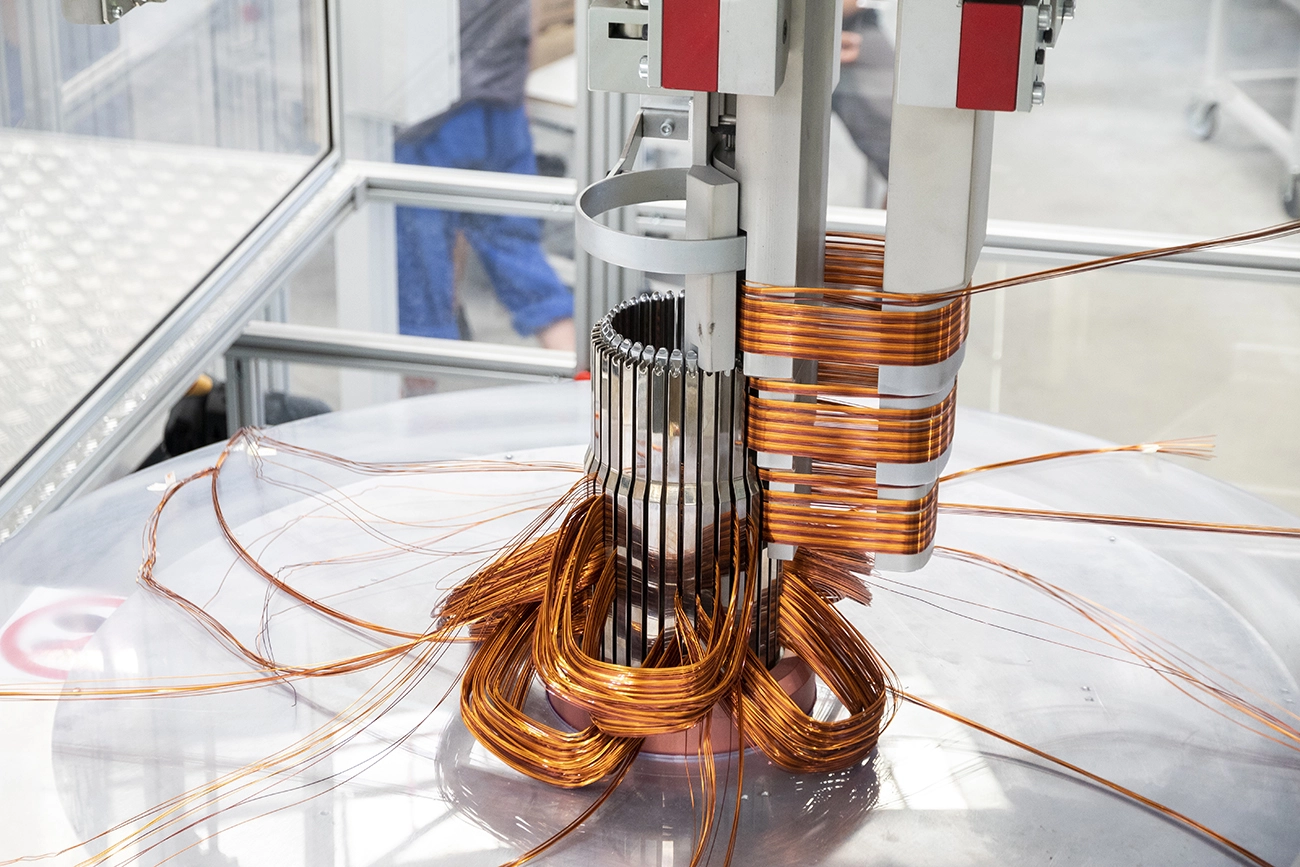

Motor winding machines are crucial for producing coils in electric motors used in actuators, stabilizers, rudder controls, and lift motors.
These machines ensure precise wire placement, which is essential for creating durable and reliable motors for aerospace applications.

Inductor winding machines produce coils for generators and transformers used in aerospace systems.
These machines handle various materials like copper or aluminum and are designed to achieve consistent inductance and resistance, which are key for energy efficiency and performance.

Filament winding machines create strong, lightweight components, such as rotor blades and tubular structures.
These are ideal for applications requiring a high strength-to-weight ratio, a critical factor in aerospace designs.
Some aerospace projects require customized winding machines tailored to specific size, weight, or performance requirements.
These machines are engineered to meet unique operational needs, ensuring optimal performance and efficiency.
From simple manual setups to fully automated and specialized machines, winding technology supports the high precision, safety, and durability required in aerospace manufacturing.
Each type contributes to crafting components that ensure reliable and efficient performance in the most demanding environments.
Winding machines are essential in aerospace and defense manufacturing, where precision and reliability are non-negotiable.
These machines support the production of critical components, ensuring that systems operate seamlessly in even the most demanding environments.

Actuators and motors play a vital role in aircraft stability and control.
Winding machines ensure the precise production of coils used in flaps, rudder controls, and stabilizers, guaranteeing accurate movements and operational reliability.
Whether for small aircraft or large defense systems, these components depend on precision winding for optimal performance.

Winding machines are indispensable in producing coils for fuel pumps, coolant pumps, and hydraulic systems, which are critical to aerospace functionality.
Reliable winding ensures the durability and efficiency of these systems, supporting everything from energy generation to temperature regulation in aerospace vehicles.

Drones and lift motors are integral to modern aerospace operations, including surveillance and cargo transport.
Automated winding machines help create lightweight, high-performance motors by ensuring consistent wire placement and efficient coil designs, meeting the aerospace industry’s stringent weight and performance standards.

Radar systems, electromagnetic actuators, and missile guidance systems rely on advanced electromagnetic components.
Winding machines produce the high-precision coils needed for these systems to function accurately and reliably in critical defense applications.
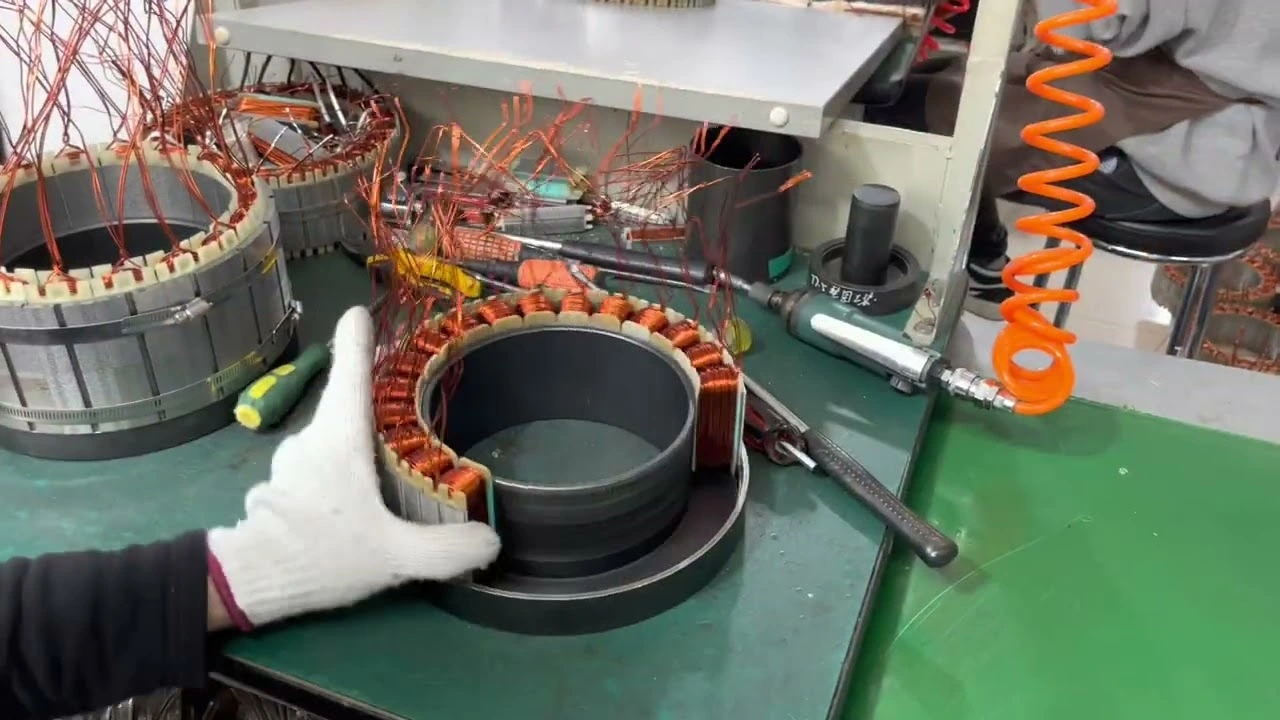
The introduction of automated winding machines has revolutionized aerospace and defense manufacturing, offering unparalleled advantages in terms of quality, safety, efficiency, and cost savings.
Let’s take a closer look at how automation is addressing industry challenges and driving innovation.
One of the biggest benefits of automated winding machines is their ability to ensure consistent production quality.
Automation eliminates the errors that are common in manual processes, resulting in uniform coils with precise tension and placement.
This not only reduces material waste but also brings down the cost per part, improving overall manufacturing efficiency.

Automating repetitive and labor-intensive tasks significantly reduces the physical strain on workers.
Instead of performing intricate winding operations manually, workers can focus on machine oversight, minimizing the risk of injuries caused by repetitive motion or heavy machinery.
Automation creates a safer workplace while boosting productivity.
Automation enables manufacturers to scale production by reducing downtime and increasing production speeds.
Automated machines work continuously with minimal interruptions, allowing aerospace and defense companies to meet the growing demand for high-quality components without sacrificing reliability or precision.
By minimizing reliance on skilled labor, automated winding machines lower training costs and streamline production workflows.
With efficient systems in place, manufacturers can optimize their resources, reduce overhead, and achieve significant long-term cost savings.
Automated winding machines are more than a manufacturing tool—they’re a game-changer for the aerospace and defense industries, offering a perfect balance of precision, safety, and efficiency in today’s competitive market.
Aerospace winding machines are equipped with advanced technologies that ensure precision, consistency, and seamless integration into modern manufacturing workflows.
Let’s explore the key innovations that make these machines indispensable in aerospace and defense applications.

Transitioning from manual to automated winding can be challenging, especially when dealing with strict aerospace design certifications.
Winding machines with DFM support simplify this process by aligning manufacturing capabilities with design requirements.
This ensures that every coil produced not only meets operational specifications but also complies with industry standards.

Precision is critical in aerospace manufacturing, and error-proofing sensors play a vital role in maintaining it.
These sensors detect and eliminate common issues like loading mistakes, misalignments, or part handling errors.
By ensuring consistent wire tension and placement, they reduce material waste and improve overall product quality.

Real-time monitoring and testing capabilities give manufacturers full visibility into the winding process.
Automated systems track parameters like tension, coil alignment, and spacing in real time, allowing for immediate adjustments to maintain high standards of quality.
This proactive approach ensures that every component meets the stringent demands of aerospace applications.
Modern aerospace production requires seamless integration across all systems.
Winding machines connected to MES platforms enable efficient data exchange, ensuring that production schedules, material usage, and quality metrics are synchronized with broader workflows.
This connectivity boosts operational efficiency and ensures smooth coordination across the manufacturing process.
These cutting-edge technologies make winding machines the cornerstone of aerospace manufacturing, offering unparalleled precision, efficiency, and reliability for mission-critical applications.

The aerospace industry faces unique challenges in coil winding, given the critical role precision and consistency play in ensuring the safety and reliability of components.
Traditional manual winding methods often fall short in meeting these demands due to several key issues.
By addressing these challenges, automated winding machines help aerospace manufacturers maintain high production standards, meet growing demand, and ensure compliance with stringent safety and quality requirements.
Automation not only enhances efficiency but also enables companies to stay competitive in an evolving industry.

The future of automated winding machines in the aerospace and defense industries is brighter than ever.
As demand for high-precision winding solutions continues to grow, manufacturers are turning to advanced technologies to meet evolving industry needs.
These machines are becoming essential for producing components that ensure safety, reliability, and efficiency in aerospace systems.
Advancements in automation, sensor technology, and artificial intelligence are driving the next generation of winding machines.
AI-powered systems will enhance precision, reduce waste, and enable real-time quality monitoring, while improved sensors will allow for even greater consistency and customization.
Additionally, the industry is placing more emphasis on sustainability and lightweight materials, which automated winding machines are well-equipped to handle.
By optimizing the winding process, these machines enable the production of components that are both durable and environmentally friendly, ensuring compliance with future aerospace regulations.
Automated winding machines will remain a cornerstone of innovation, paving the way for greater efficiency and sustainability in aerospace and defense manufacturing.

Automated winding machines have revolutionized aerospace and defense manufacturing, ensuring precision, reliability, and efficiency in producing mission-critical components.
By addressing challenges like labor shortages and quality inconsistencies, these machines enhance safety and streamline production processes, making them indispensable in meeting the industry’s growing demands.
Ready to elevate your manufacturing processes?
Explore the benefits of automated winding machines to improve quality, efficiency, and sustainability in aerospace and defense applications.
Start optimizing your production today to stay ahead in this competitive industry!
Winding machines come in various types, each designed for specific applications:
Winding operations rely on specialized equipment based on the application:
Winding machines offer several key benefits:
Coil winding machines are designed to wind electrical coils for applications like motors, transformers, inductors, and chokes. They are versatile and are used for:
There are three main winding techniques used in different applications:


Explore transformer winding, its types, working principles, and applications. Learn how windings impact voltage regulation, efficiency, and energy transfer.

Compare toroidal and E-I transformers by efficiency, noise, size, cost, EMI, inrush current, and applications to find the right choice.

Master coil winding machine operation with practical tips on setup, tension control, programming, safety, maintenance, and precise, efficient winding.
A guide to leading transformer winding machine manufacturers worldwide, comparing their specialties and solutions to help you find the right production partner.

A concise guide to concentrated vs distributed windings, covering structure, EMF, efficiency, losses, and key applications.

Top coil winding machine manufacturers in India offer CNC, toroidal, and SPM solutions for transformer and motor industries worldwide.
 English
  Spanish
  Russian
  Italian
  German
  Chinese