Explore role of electrical coil winding machines in manufacturing motors, transformers, inductors. Learn about their types, features, benefits, applications.
Electrical coil winding machines are essential in the electrical and electronics industry, driving the production of critical components like motors, transformers, and inductors.
These machines automate the coil winding process, ensuring precision, consistency, and efficiency in manufacturing.
With advancements in technology, modern winding machines not only improve production speed but also offer customizable settings to meet diverse requirements.
In this article, we’ll explore how these cutting-edge machines are revolutionizing manufacturing by enhancing precision, efficiency, and product quality, making them indispensable across industries.
Importance of Electrical Coil Winding Machines
Electrical coil winding machines play a vital role in modern manufacturing, especially in the production of reliable and high-performance electromagnetic components.
From motors and transformers to inductors and solenoids, these machines ensure that each coil is wound with unparalleled precision and consistency, making them indispensable for a wide range of industries.
Precision winding directly impacts the efficiency and durability of the components being manufactured.
For example, in transformers, accurate winding ensures proper voltage regulation and minimal energy loss.
Similarly, in motors, consistent winding improves energy transfer, resulting in enhanced performance and longer lifespans.
Without precise winding, components can suffer from defects, inefficiencies, and reduced reliability.
The significance of coil winding machines extends across diverse industries.
In the electronics sector, they are used to produce components for devices like speakers, microphones, and RFID tags.
The automotive industry relies on these machines to manufacture high-efficiency motors and alternators.
Meanwhile, in medical devices and microelectronics, specialized coil winding machines ensure the precise assembly of intricate components, where even minor inaccuracies can compromise functionality.
In a world that demands efficiency, reliability, and scalability, electrical coil winding machines are the unsung heroes, enabling the production of components that power our everyday technologies.
Their importance is only growing as industries evolve and require ever-more advanced solutions.
Types of Electrical Coil Winding Machines
Electrical coil winding machines come in a variety of types, each designed for specific applications.
These machines are critical in manufacturing components for motors, transformers, inductors, and many other electromagnetic devices.
Let’s explore the key types and their applications.
Whether stepping up or stepping down voltage, transformer coil winding machines ensure coils are wound with exact tension and alignment, minimizing energy loss and ensuring consistent performance in power grids, electronics, and renewable energy systems.
Inductor and Choke Coil Winding Machines
Inductor and choke coil winding machines are essential for manufacturing components that store magnetic energy and resist current changes.
These machines are widely used in industries like telecommunications, power supplies, and automotive systems, where energy efficiency and stability are critical.
Specialized Winding Machines
Specialized machines cater to unique applications such as:
Solenoids: Used in valves, switches, and relays for precise control.
Speakers and Microphones: Ensuring high-quality sound with finely wound coils.
RFID Assembly: Producing coils for tags used in logistics and security.
Fine Wire Bonding: Creating intricate coils for medical devices and microelectronics.
These diverse machines ensure manufacturers can produce components that meet the specific demands of modern industries.
By leveraging the right type of coil winding machine, businesses can achieve precision, efficiency, and reliability, no matter the application.
Features and Specifications of Electrical Coil Winding Machines
Modern electrical coil winding machines are packed with features and specifications that make them indispensable for precision manufacturing.
Whether you’re producing coils for motors, transformers, or inductors, these advanced machines ensure efficiency, accuracy, and scalability in every production run.
Automation
Automation is at the heart of these machines, ensuring consistent and precise winding with minimal human intervention.
By automating the winding process, manufacturers can reduce labor costs and virtually eliminate defects caused by manual errors.
Automation also speeds up production, making it easier to meet growing demands in industries like electronics and automotive.
Programmable Capabilities
Advanced coil winding machines offer programmable settings that allow manufacturers to customize parameters like wire diameter, turn count, layering, and coil dimensions.
This level of flexibility ensures that the machine can handle a wide range of production requirements, from small-scale prototypes to large-scale manufacturing.
Tension Control and Wire Guide Systems
Precise tension control mechanisms and wire guide systems ensure that coils are wound tightly and uniformly, preventing gaps, wire overlaps, or loose windings.
This not only improves the durability of the coils but also enhances their performance in applications where reliability is critical.
Single vs. Multi-Spindle Configurations
Coil-winding machines are available in both single-spindle and multi-spindle configurations.
Single-spindle machines are ideal for custom or small-batch production, while multi-spindle machines enable high-speed, high-volume production, accommodating up to 18 spindles for large-scale operations.
Advanced Features
Many machines come with built-in counters and sensors to track winding progress and ensure accuracy.
Integration with production systems enables real-time monitoring, while features like RS-232 interfaces and built-in storage enhance ease of use.
These advanced capabilities allow for seamless workflows and superior product quality.
By leveraging these innovative features, electrical coil winding machines help manufacturers achieve precision, efficiency, and flexibility, ensuring they can meet the demands of today’s fast-evolving industries.
Applications in Electrical and Electronics Manufacturing
Electrical coil-winding machines play a crucial role in the manufacturing of components that power modern devices and systems.
These machines are indispensable in producing precise and reliable electromagnetic components, ensuring the performance and durability required across a wide range of applications.
Motors and Generators
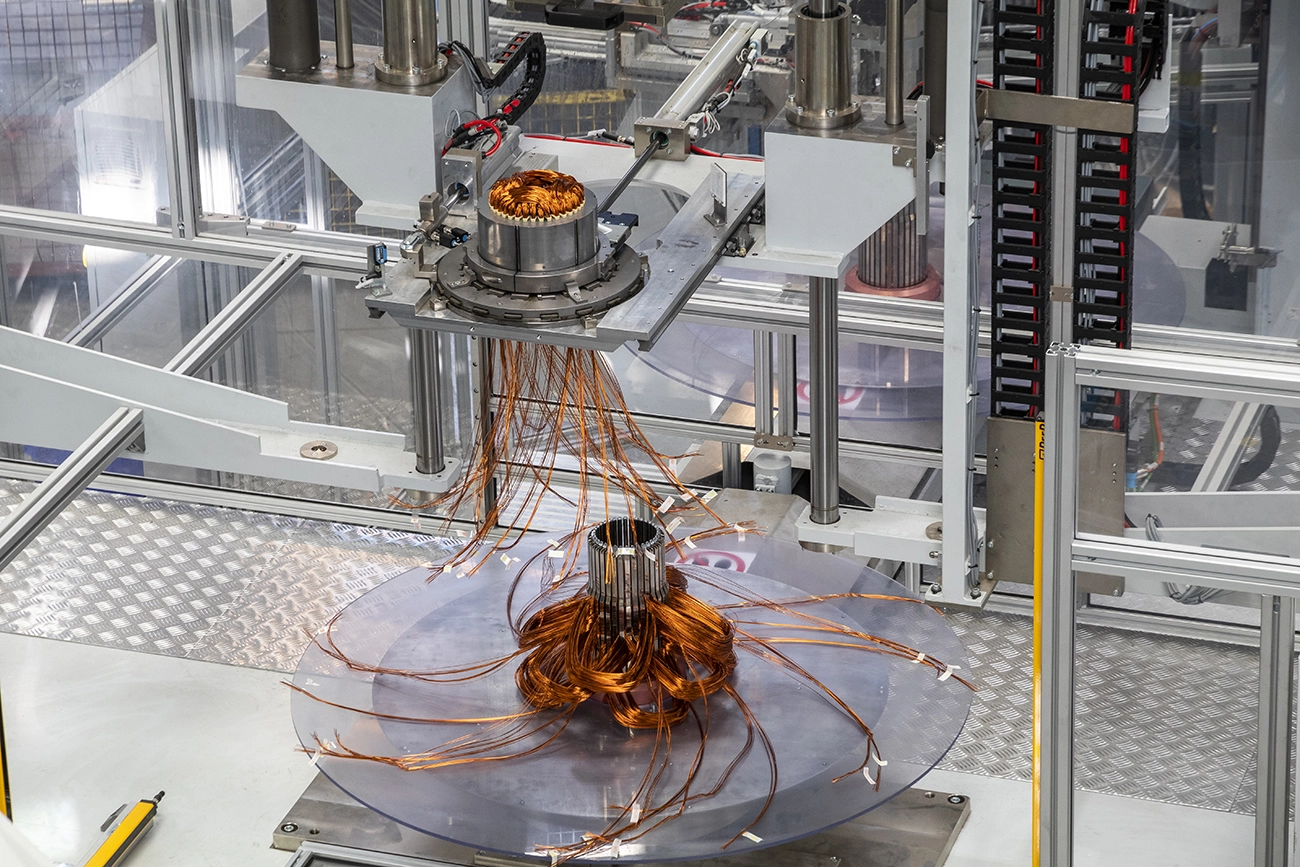
One of the primary applications of winding machines is producing coils for industrial motors, household appliances, and alternators.
Whether it’s the motor in your washing machine or the alternator in your car, these coils need to be wound with exceptional precision to ensure efficiency, reliability, and long lifespans.
Transformers and Inductors
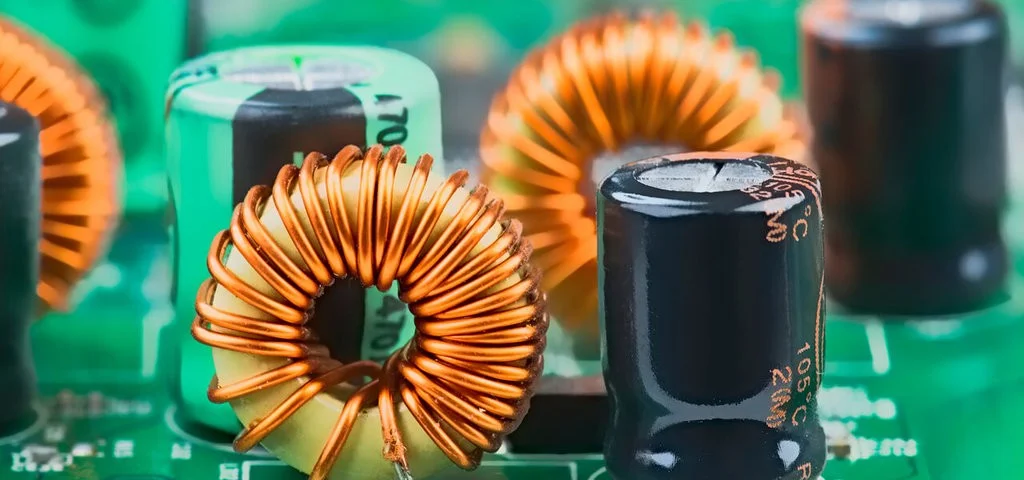
Winding machines are also vital for manufacturing transformers and inductors, which are essential for regulating voltage and storing energy in electrical systems.
Properly wound coils ensure energy efficiency and precise voltage regulation, making them critical components in power grids, electronic devices, and renewable energy systems.
Electromagnetic Components
From solenoids used in valves and switches to speakers and microphones in audio devices, electromagnetic components rely on high-quality coils.
Winding machines ensure the precision required for these components to function seamlessly, especially in industries like healthcare, where medical devices depend on accurate and reliable electromagnetic performance.
RFID and Microelectronics
Specialized winding machines are also used for high-precision assemblies, such as RFID tags and microelectronics.
These applications demand coils with fine wire and intricate designs, which winding machines deliver with unmatched accuracy.
This precision supports advancements in logistics, security, and medical technology.
Benefits of Electrical Coil Winding Machines
Electrical coil winding machines offer a wealth of benefits that make them a cornerstone of modern manufacturing.
From improving production precision to reducing costs, these machines have revolutionized the way electromagnetic components are created.
Here’s how they make a difference:
Precision and Consistency
One of the greatest advantages of coil winding machines is their ability to produce high-quality components with precision and consistency.
By automating the winding process, these machines minimize defects, ensuring that every coil meets exact specifications.
This is especially important for critical applications, such as transformers and medical devices, where even a minor flaw can impact performance.
Time Efficiency
Automation is a game-changer for production efficiency.
Coil winding machines drastically reduce production cycles, enabling manufacturers to meet tight deadlines and scale up production effortlessly.
By automating repetitive tasks, they also alleviate labor demands, allowing workers to focus on higher-value activities.
Customization
With programmable features, coil winding machines provide the flexibility to accommodate diverse manufacturing requirements.
Whether it’s adjusting wire diameter, turn count, or layering, these machines can be fine-tuned to meet the exact needs of each project.
Cost Savings
Accurate winding reduces material waste, helping manufacturers optimize resource usage.
Additionally, by minimizing reliance on skilled labor and cutting down on errors, these machines contribute to significant operational cost savings over time.
Versatility
From small, intricate coils for microelectronics to large-scale transformers, these machines can handle various core shapes, wire gauges, and production scales.
This versatility ensures that manufacturers can cater to a wide range of industries with a single solution.
Challenges and Solutions
While electrical coil winding machines bring numerous benefits, they also come with a few challenges that manufacturers need to address.
Let’s explore these hurdles and how to overcome them effectively.
Challenges
One of the primary challenges is the high initial cost of advanced coil winding machines.
The investment can seem steep for small or medium-sized manufacturers, especially those new to automation.
Another hurdle is the complexity of programming and maintenance, as these machines often require specialized knowledge to operate efficiently and troubleshoot issues.
Without proper expertise, businesses may struggle to fully utilize their potential.
Solutions
To address these challenges, investing in comprehensive training programs for operators is essential.
These programs ensure that employees can program, maintain, and operate the machines with confidence, maximizing their efficiency and reducing downtime.
By enhancing production efficiency, minimizing defects, and improving product quality, these machines save money in the long run.
Businesses can also benefit from the scalability and increased production capacity that these machines offer, making them a valuable asset for future growth.
Future Trends in Coil Winding Machines
The future of coil winding machines is exciting, with advancements shaping how manufacturers approach efficiency and sustainability.
As the demand for automation in electronics manufacturing continues to rise, coil-winding machines are evolving to meet the needs of faster, more precise production processes.
Automation reduces labor dependency while enhancing production speed and consistency.
Advances in AI and machine learning are driving the next wave of innovation.
These technologies enable real-time monitoring and error-proofing, ensuring flawless coil winding with minimal human intervention.
Machines equipped with AI can detect and address issues during production, resulting in higher-quality products and reduced downtime.
Another key trend is the growing focus on eco-friendly materials and sustainable manufacturing.
Manufacturers are increasingly adopting processes that minimize waste and support the use of recyclable materials, aligning with global efforts to reduce environmental impact.
These trends underscore how coil winding machines are becoming smarter, greener, and more efficient, paving the way for a sustainable and technologically advanced future in electronics manufacturing.
Conclusion
Electrical coil winding machines are essential tools in modern manufacturing, ensuring precision, efficiency, and exceptional quality in every component produced.
From electronics and automotive to medical devices, their versatility and advanced features make them indispensable across industries.
They empower manufacturers to meet evolving demands with reliability and innovation.
Ready to stay ahead of the competition?
By adopting advanced coil winding technologies, manufacturers can enhance product quality, streamline production processes, and achieve sustainable growth.
Invest in cutting-edge solutions today and position your business for success in an ever-evolving market.
FAQs About Electrical Coil Winding Machines
1. What is an electrical coil winding machine?
An electrical coil winding machine is a specialized piece of equipment used to wind coils for components like motors, transformers, inductors, and chokes. It automates the process of wrapping wire around a core, ensuring precision and consistency. These machines are widely used in wire winding, wire welding, and wire bonding applications to produce high-quality electromagnetic components.
2. What are the types of winding machines?
There are several types of winding machines, each suited for specific applications, including:
Coil winding machine: For winding motor and transformer coils.
Film winding machine: Used for winding thin materials like film.
Rope winding machine: Designed for winding ropes and cables.
Paper winding machine: Ideal for paper and foil winding in packaging or electronics.
Foil winding machine: Specially used for transformer and inductor winding.
Roll slitting machines: Cuts and winds large rolls of material.
Spool winding machine: Wraps wire or material around a spool.
Cop winding machine: Creates compact, elongated wound structures for textiles.
3. What is the difference between a coil and a winding?
The term “coil” usually refers to a single loop of wire wound around a core, whereas “winding” can refer to multiple coils arranged to form a complete structure. In simpler terms, a coil is a basic unit, while a winding is a combination of coils. Each loop in a winding is called a turn, and the number of turns is a key characteristic of a winding.
4. What industries use electrical coil winding machines?
These machines are widely used in industries like:
Electronics: For components like transformers, inductors, and RFID tags.
Automotive: Producing motor windings for electric vehicles and alternators.
Medical Devices: Ensuring precision coils for equipment like MRI machines.
Telecommunications: Manufacturing inductors and coils for signal processing.
5. What are the benefits of using electrical coil winding machines?
Precision and consistency: Ensures accurate winding with minimal defects.
Efficiency: Automation speeds up production and reduces labor demands.
Customization: Programmable features allow for flexible designs.
Cost savings: Reduces material waste and operational costs.
Versatility: Accommodates a variety of core shapes and wire gauges.
Related Winding Machines for You
Automatic Inductor Winding Machine
Inductor Winding Machine
Stator Winding Machine
Rectangular Transformer Winding Machine
Desktop Toroidal Transformer Winding Machine
Floor Type Toroidal Transformer Winding Machine
Toroid Taping Machine
Hear From Our Proud Partners
With Guangri's winding machines, we've noticed a tremendous boost in efficiency and consistent performance that has reshaped our production landscape.
We've come to rely on the durability and user-friendliness of Guangri machinery; it's become the cornerstone of our operational success.
The precision and speed of Guangri machines have been game-changers, catapulting our productivity to new heights and streamlining our processes.
Seamless production and top-notch quality are the hallmarks of our Guangri machine experience, ensuring uninterrupted operations.
Guangri's technological innovations have not just improved but completely transformed our manufacturing workflow with remarkable efficiency.
In an industry where excellence is expected, Guangri machines stand out for their reliable performance and superior craftsmanship.
Guangri has redefined reliability for us. The exceptional performance of their machines has exceeded what we thought was possible.
Guangri's precision machinery has distinguished our production capabilities, setting a new standard of excellence within our industry.
Lasted Articles for You
Stay current with our newest contributions to the world of industrial machinery and innovation. Engage with our most recent thought leadership pieces and enrich your understanding of the industry’s future.
Explore transformer winding, its types, working principles, and applications. Learn how windings impact voltage regulation, efficiency, and energy transfer.
A guide to leading transformer winding machine manufacturers worldwide, comparing their specialties and solutions to help you find the right production partner.
To provide the best experiences, we use technologies like cookies to store and/or access device information. Consenting to these technologies will allow us to process data such as browsing behavior or unique IDs on this site. Not consenting or withdrawing consent, may adversely affect certain features and functions.
Functional Always active
The technical storage or access is strictly necessary for the legitimate purpose of enabling the use of a specific service explicitly requested by the subscriber or user, or for the sole purpose of carrying out the transmission of a communication over an electronic communications network.
Preferences
The technical storage or access is necessary for the legitimate purpose of storing preferences that are not requested by the subscriber or user.
Statistics
The technical storage or access that is used exclusively for statistical purposes.The technical storage or access that is used exclusively for anonymous statistical purposes. Without a subpoena, voluntary compliance on the part of your Internet Service Provider, or additional records from a third party, information stored or retrieved for this purpose alone cannot usually be used to identify you.
Marketing
The technical storage or access is required to create user profiles to send advertising, or to track the user on a website or across several websites for similar marketing purposes.
To provide the best experiences, we use technologies like cookies to store and/or access device information. Consenting to these technologies will allow us to process data such as browsing behavior or unique IDs on this site. Not consenting or withdrawing consent, may adversely affect certain features and functions.
Functional Always active
The technical storage or access is strictly necessary for the legitimate purpose of enabling the use of a specific service explicitly requested by the subscriber or user, or for the sole purpose of carrying out the transmission of a communication over an electronic communications network.
Preferences
The technical storage or access is necessary for the legitimate purpose of storing preferences that are not requested by the subscriber or user.
Statistics
The technical storage or access that is used exclusively for statistical purposes.The technical storage or access that is used exclusively for anonymous statistical purposes. Without a subpoena, voluntary compliance on the part of your Internet Service Provider, or additional records from a third party, information stored or retrieved for this purpose alone cannot usually be used to identify you.
Marketing
The technical storage or access is required to create user profiles to send advertising, or to track the user on a website or across several websites for similar marketing purposes.





 English
  Spanish
  Russian
  Italian
  German
  Chinese