


Magnetic components play a critical role in modern power electronics by using magnetic fields to control the flow of electrical energy. Depending on the application, they can Energie speichern, convert voltage, Filtersignale, and reduce Elektromagnetische Interferenz (EMI), making them essential to reliable and efficient power conversion systems.

Aus Elektrofahrzeuge (EVs) Und Smartphones Zu Medizinprodukte Und erneuerbare Energiesysteme, magnetic components are essential for maintaining reliable, efficient, and compact power systems. Without them, accurate power regulation, voltage conversion, and energy transfer would be far more difficult to achieve.
As demand continues to grow for kleiner, Schneller, Und umweltfreundlichere Elektronik, die Gestaltung und Auswahl von magnetische Komponenten have become increasingly important. Understanding how these components work—and selecting the right solution for each application—can directly affect Effizienz, Sicherheitund insgesamt Systemleistung.
Was sind magnetische Komponenten?

Magnetische Komponenten sind passive elektrische Geräte that control and transfer energy through magnetic fields. At their core, they typically use wire windings—usually Kupfer oder Aluminium—wrapped around a magnetic material. When current flows through these windings, a magnetic field is created, allowing the component to regulate voltage, current, or electromagnetic noise.
In power electronics, these components are essential because they can Energie speichern, Filtersignale, Und Energie effizient umwandeln without generating energy themselves.
The three main types of magnetic components each serve a different function:
- Transformer: Provide Spannungsumwandlung, stepping voltage up or down between circuits through carefully designed Transformatorwicklungen.
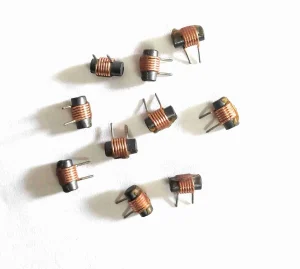
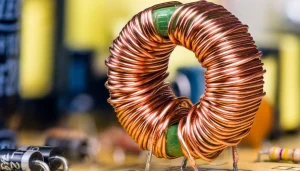
- Induktoren: Help stabilize electrical current by resisting sudden changes, making them useful for Energiespeicher und Filtern.
- Drosseln: Specialized inductors designed to Unterdrückung elektromagnetischer Störungen (electromagnetic interference) and reduce unwanted high-frequency noise.
From smartphones to solar inverters, these magnetic components work behind the scenes to support stable, efficient, and reliable power management.
Wichtige Arten magnetischer Komponenten
Magnetic components are available in several forms, each designed for a specific role in power management. Among them, three main types are widely used across modern electronic and electrical systems.
A. Transformatoren

Transformer sind unverzichtbar für Spannungsumwandlung, transferring electrical energy between circuits through magnetic coupling and carefully designed Transformatorwicklungen. They are commonly used for:
- Stepping voltage up or down
- Providing galvanic isolation to reduce electric shock risk and prevent ground loops
- Supporting power conditioning zur Stabilisierung der Spannung und zum Schutz empfindlicher Geräte
Häufige Anwendungen enthalten:
- AC-DC-Wandler in Stromversorgungen
- Rechenzentren und Server
- Ladestationen für Elektrofahrzeuge
- Industrielle Automatisierungssysteme
B. Induktoren

Induktoren are coils designed to Energie in Magnetfeldern speichern while resisting sudden changes in current. This makes them especially useful for:
- Glättungsstrom in Schaltnetzteilen
- Energie speichern in compact electronic circuits
- Schutz von Komponenten von Spannungsspitzen
Common applications include:
- DC-DC-Wandler
- Motorantriebsschaltungen
- Smartphones and portable electronic devices
C. Drosseln

Drosseln sind Spezialinduktivitäten entworfen, um Filtern Sie hochfrequentes Rauschen while allowing desired signals, such as DC or low-frequency AC, to pass through. By reducing unwanted EMI, they help improve signal quality and overall system stability.
Typical applications include:
- Telekommunikationssysteme
- Audiogeräte
- Netzteilfilter
Together, these magnetic components play distinct but essential roles in building stabile, effiziente und sichere Leistungselektroniksysteme.
Funktionsweise magnetischer Komponenten

At the core of magnetic device operation Ist Faradaysches Induktionsgesetz: a changing magnetic field within a closed loop induces a voltage (EMF) in that loop. Magnetic components apply this principle by combining Kupferwicklungen mit einem ferromagnetischer Kern, which helps concentrate magnetischer Fluss and support efficient energy transfer.
- Primärwicklung → AC current creates an alternating magnetic field within the transformer core.
- Kern → Concentrates and guides the magnetic flux with minimal loss.
- Sekundärwicklung → Receives the changing magnetic flux and induces a new voltage according to Faraday’s Law.
Für inductors and chokes, the same electromagnetic principle is applied differently for energy storage or noise suppressionDurch die Anpassung der Kernmaterial, Geometrie, Und Anzahl der Umdrehungen, engineers can optimize inductance, saturation current, and frequency response to meet specific power-electronic requirements.
Anwendungsfälle nach Branche

Magnetische Komponenten sind allgegenwärtig. So werden sie in verschiedenen Branchen eingesetzt:
Automobilindustrie – Gefunden in Wechselrichter für Elektrofahrzeuge, Bordladegeräte und Batteriemanagementsysteme (BMS).
Telekommunikation - Aktivieren Signalintegrität, Isolierung und Rauschunterdrückung in Hochfrequenzsystemen.
Unterhaltungselektronik - Leistung Handy-Ladegeräte, Laptops und Smart-Home-Geräte effizient.
Medizin - Unterstützung tragbare Geräte, Bildgebungssysteme und stromisolierte Diagnosegeräte.
Industrielle Automatisierung – Verwendet in Motorantriebe, SPSund DC-DC-Wandler zur Prozesssteuerung.
Verteidigung – Eingesetzt in robuste Transformatoren für Avionik, Radar und unternehmenskritische Elektronik.
Abschluss

With these electromagnetic principles in mind,magnetic components are essential to efficient power electronics, supporting functions such as Energiespeicher, Spannungsumwandlung, Und noise suppression. Well-designed components and Transformatorwicklungen help improve system stability, safety, and overall performance across a wide range of industrial applications.
For support with more efficient magnetic designs, explore our solutions or kontaktiere uns for expert assistance tailored to your application.

 German
 English
 Spanish
 Russian
 Italian
 Chinese