


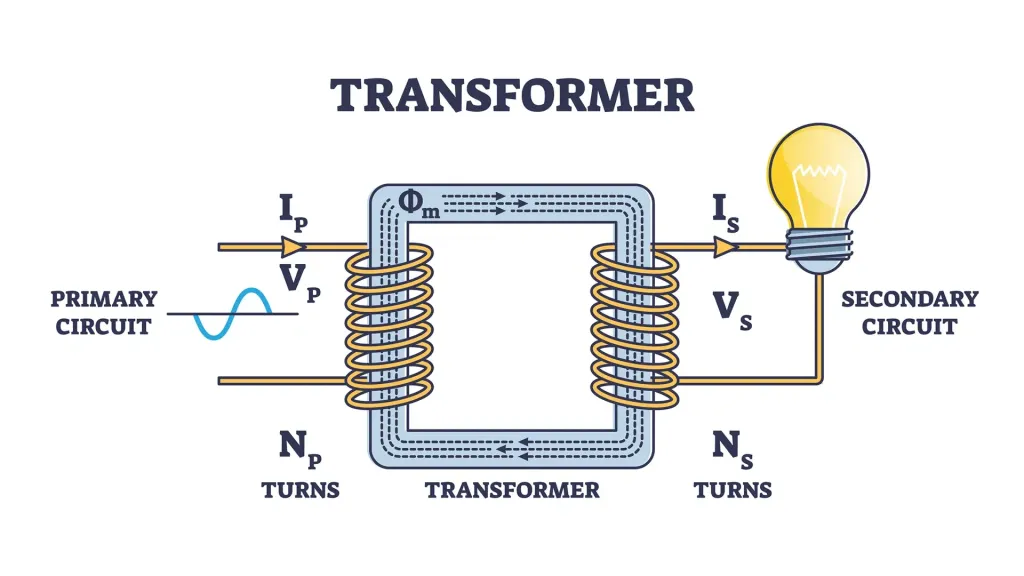
So, what exactly is 變壓器繞組? In simple terms, transformer windings are carefully arranged coils of wire—typically 銅或鋁—wound around a 磁芯 to transfer electrical energy within a transformer. When 交流電(AC) passes through the primary winding, it produces a changing magnetic field that induces voltage in the secondary winding. This principle, known as 電磁感應, allows a transformer to increase or reduce voltage efficiently to suit different electrical applications.
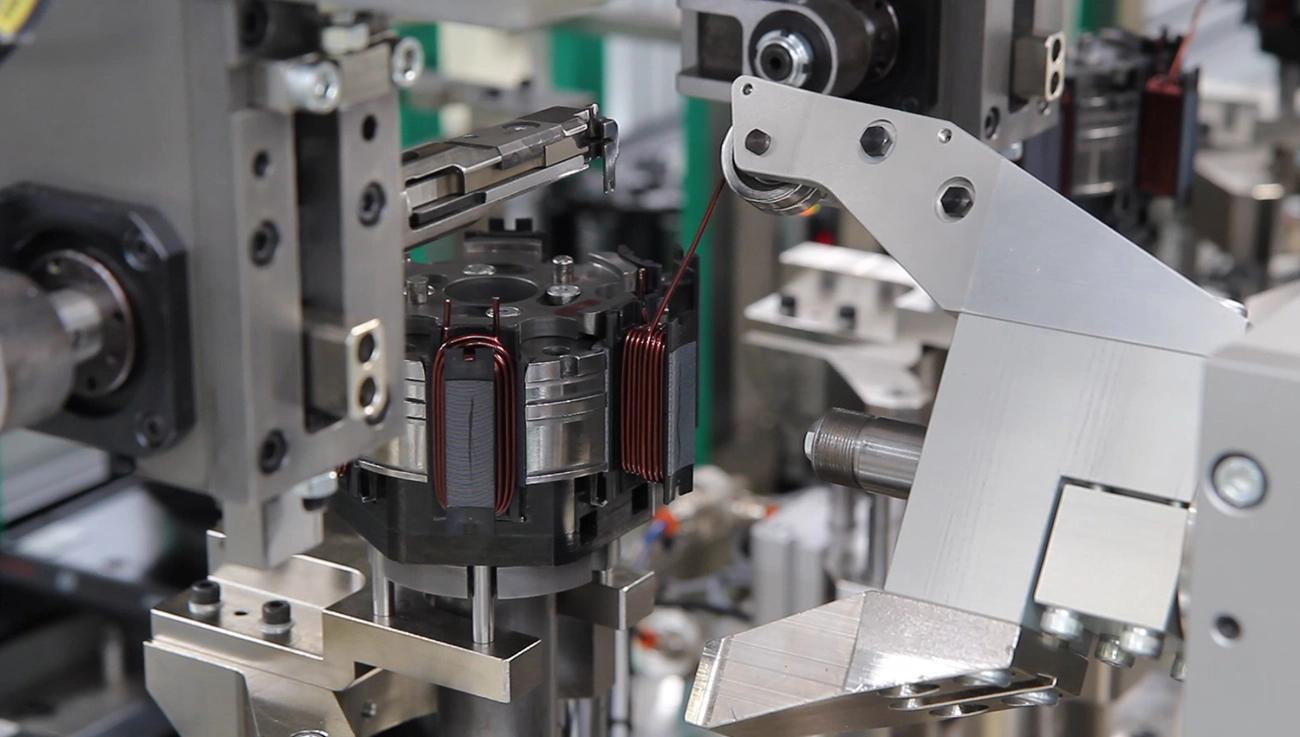
Whether supplying power to a home appliance or supporting equipment across an entire factory, high-quality transformer windings are essential for reliable and efficient voltage conversion. Produced with precise 繞線機, each 變壓器繞組 helps ensure the required 電壓 is delivered safely while supporting the efficient transfer of electrical energy within the power system.
Primary & Secondary Transformer Windings: Working Principle
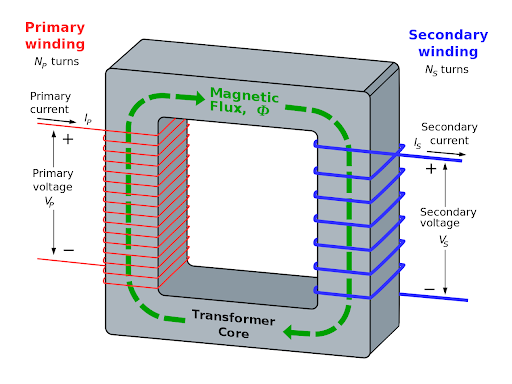
A typical transformer consists of two main sets of transformer windings: the 初級繞組 和 次級繞組.
這 初級繞組 is connected directly to the 輸入電源. When AC current flows through it, it generates a 變化的磁場 within the transformer core. This magnetic field is essential to the 變壓器繞組 process, allowing electrical energy to be transferred from the primary side to the secondary side.
這 次級繞組 is positioned close to the primary winding, where it responds to the changing magnetic field. Through 電磁感應, a new voltage is induced in the secondary winding and delivered to the 輸出負載, such as appliances, tools, or industrial equipment.
The number of turns in the primary and secondary transformer windings determines whether the voltage is increased (step-up) or reduced (step-down). This simple but effective 變壓器繞組 principle enables transformers to provide the appropriate voltage for different electrical applications.
變壓器繞組的工作原理
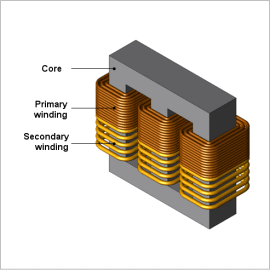
理解 變壓器繞組的工作原理, it helps to start with a fundamental principle of physics—法拉第電磁感應定律. When the electric current flowing through the 初級繞組 changes, it produces a changing 磁場 within the transformer core. This magnetic field then induces a voltage in the 次級繞組, allowing electrical energy to be transferred between the transformer windings.
The voltage produced in the 次級繞組 depends on the number of turns in the primary and secondary transformer windings. This relationship is known as the 匝數比.
For example, if the primary winding has 100 turns and the secondary has 50, the output voltage is reduced by half, creating a 降壓變壓器. If the secondary winding has more turns than the primary, the transformer instead 提高電壓.
A simple rule helps explain how transformer windings work:
- Voltage ratio = Turns ratio
- Current ratio = Inverse of the 匝數比
This is one of the key advantages of 變壓器繞組: voltage levels can be increased or reduced efficiently without moving parts, relying on electromagnetic principles and the relationship between winding turns.
Transformer Winding and Core Layouts
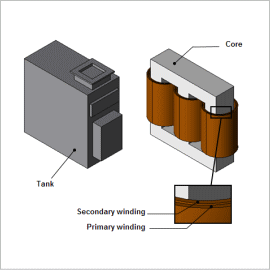
The arrangement of transformer windings around the 核 has a direct impact on transformer efficiency and performance. In many designs, the windings are placed around a 疊片鐵芯, which helps reduce 渦流—circulating electrical currents that can generate unwanted heat and energy loss. By limiting these losses, the laminated core helps maintain efficient and concentrated magnetic flux during 變壓器繞組 手術。
There are two common layouts for transformer windings: 核心型 和 殼型. 在一個 鐵心式變壓器, the windings are arranged around the core, while in a 殼式變壓器, the core surrounds the windings. The choice of layout influences how effectively magnetic flux is transferred between the coils and how much 漏磁通—magnetic flux that does not link both windings—is produced.
The most suitable 變壓器繞組 layout depends on factors such as transformer size, voltage level, and cooling requirements. Both designs, however, are intended to improve magnetic coupling and use the magnetic energy generated by the windings efficiently.
Common Transformer Winding Types
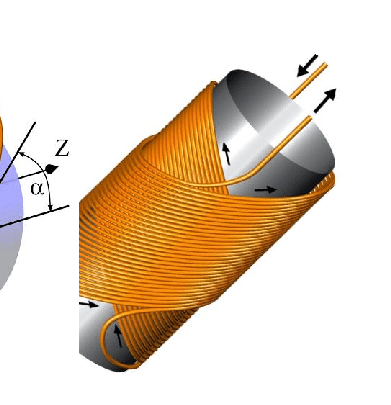
變壓器繞組 can be arranged in different patterns to suit specific applications, space limitations, voltage levels, and cooling requirements. Common 變壓器繞組 types include:
螺旋繞線: A spiral-shaped winding commonly 用於大電流變壓器. Its simple and robust structure makes it well suited for handling large currents.
盤式繞線: Built from flat coil sections arranged in layers, this design provides effective cooling and is commonly used in medium- to high-voltage transformers.
三明治繞線: Primary and secondary winding sections are arranged alternately to reduce leakage flux and improve magnetic coupling between the transformer windings.
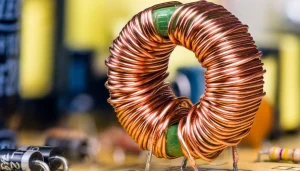
環形繞組: The coil is wound around a ring-shaped toroidal core, creating a compact and efficient design with low electromagnetic interference.
Each 變壓器繞組 type offers specific advantages. Some designs provide a more compact structure, while others improve heat dissipation or help reduce energy losses. Choosing the right 變壓器繞組 depends on the transformer’s application, operating conditions, and performance requirements.
Transformer Winding Materials & Losses
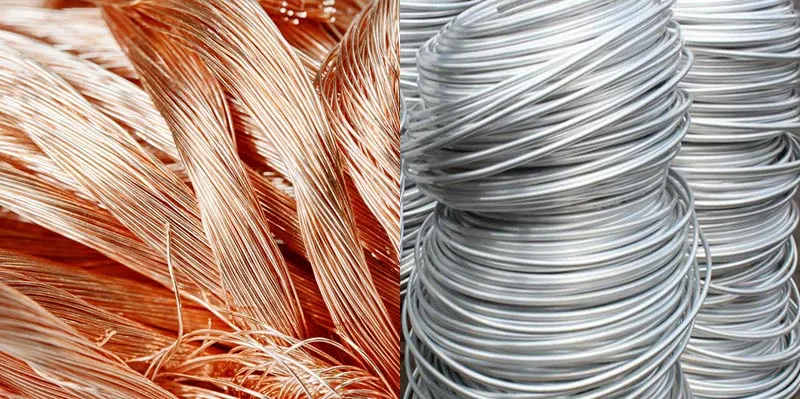
變壓器繞組 are commonly made from 銅 或者 鋁, with each material offering different advantages. 銅 is widely preferred for 變壓器繞組 because of its excellent electrical conductivity, strength, and ability to support a 更緊湊的繞線設計 while handling higher electrical loads. 鋁, by comparison, is 更輕、更實惠, making it a practical option when reducing weight or overall cost is a priority.
However, no 變壓器繞組 material is completely free from energy loss. As current flows through the transformer windings, electrical resistance causes some energy to be converted into heat. This is known as 銅損, 或者 I²R損失, and occurs because of the resistance of the winding conductor. Another source of loss is 漏磁通, where part of the magnetic flux escapes instead of effectively linking the primary and secondary windings.
These energy losses, including 銅損 和 漏磁通, can reduce a transformer’s overall efficiency. For this reason, proper 變壓器繞組 design and careful selection of winding materials are essential for minimizing energy losses and achieving reliable, efficient transformer performance.
結論
Transformer winding is at the core of transformer operation, enabling safe and efficient voltage conversion through carefully designed copper or aluminum coils. Understanding different 變壓器繞組 types, layouts, and materials can help you select or design a transformer that better matches your application and performance requirements.
If you have questions or need support choosing the right winding solution, 立即聯絡我們的團隊 for expert guidance, customized solutions, and more information about transformer windings.
關於變壓器繞組的常見問題解答
1. Why Are Transformer Windings Insulated?
Insulation between transformer windings, turns, and wire layers helps prevent electrical short circuits. It also protects the winding system from voltage stress, heat, and moisture, improving transformer safety, reliability, and service life.
2. What Causes Transformer Winding Failure?
Common causes of 變壓器繞組 failure include overheating, insulation breakdown, short circuits, mechanical stress, and moisture. Proper cooling, routine inspection, and regular electrical testing can help identify potential problems and reduce the risk of premature winding failure.
3. How Is Transformer Winding Resistance Measured?
Transformer winding resistance is typically measured using a low-resistance ohmmeter, such as a DLRO. This test helps identify problems such as loose connections, shorted turns, or damaged conductors before they develop into more serious transformer faults.

 Chinese
 English
 Spanish
 Russian
 Italian
 German