


訓練 coil winding technicians 確保 coil precision, operator safety, and consistent high-quality production. Skilled operators master 張力控制, machine programming, 和 rapid troubleshooting, minimizing 停機時間 和 production errors.

恰當的 coil winding training 改善 coil quality consistency, extends machine lifespan, and enhances operator safety. Investing in winding technology training increases manufacturing reliability 和 production efficiency, while reducing 缺陷.
Coil winding technician safety

安全 is the foundation of coil winding operations. Operators must be proficient in Lockout/Tagout (LOTO) procedures, machine guarding, 和 pinch-point awareness to prevent injuries. Certified personal protective equipment (PPE), 包括 ESD protection gear 和 safety glasses, is required at all times.
Crucially, technicians must be proficient with emergency stops and safe jogging controls. When handling 電氣元件 或者 control cabinets, it is essential to follow proper grounding 和 voltage safety protocols and use insulated tools. Prioritizing these standards ensures rapid troubleshooting while protecting both the technician 和 繞線機.
Magnet Wire Handling & ESD Protection

在 precision coil winding, even small magnet wire enamel defects that are easily overlooked during operation can lead to 短路, insulation damage, and premature product failure,直接影響 coil quality and subsequent processes.
Coil Winding Core Machine Technology

精確的 線圈繞製 relies on technicians fully understanding the machine’s mechatronic systems. Seamless interaction between the ring mechanism, lateral movement system, payoff/tensioning devices, 和 winding/conical components 確保 uniform wire distribution and maintains the structural integrity of rotating elements.
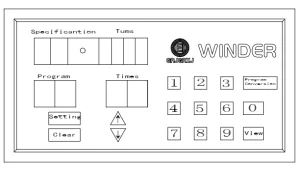
Mastering the Human-Machine Interface (HMI) is essential in modern automated winding operations. Operators must confidently switch between manual, foot pedal, and connected modes, 管理 winding recipes, and interpret system diagnostics. Verifying the winding direction (clockwise/counterclockwise) before each cycle prevents material defects 和 wiring issues,確保 high-precision, reliable coil production.
Coil Winding Tension Control Skills

Accurate 張力控制 and standardized tension reset are essential for high-quality coil winding 和 efficient production. Operators must set open-loop or magnetic tensioners, verify tension arms 和 load cell sensors, and monitor winding speed, spool diameter, 和 tension variations to prevent wire breakage, 鬆脫的線圈, 和 irregular winding, ensuring uniform coil layers and protecting the 磁芯.
Performing a no-load test before production evaluates 張力控制 和 return techniques, locks the 繞線節距, and verifies tension stability. This approach reduces wire waste, minimizes rework, and improves overall production efficiency,確保 reliable, defect-free coil and transformer manufacturing.
Winding Setup & Coil Winding Patterns

After tensioning, the next critical challenge for winding technicians 是 tension face setup. Operators must configure 瀝青, dwell time, 和 layer count according to the desired 繞線方法—whether 單層纏繞, orthogonal winding, basket winding, 或者 circular winding。 恰當的 setup 防止 overlaps 和 差距, avoiding negative impacts on 線圈性能.
Best practices in coil winding operations include using test windings (short sample runs) before full production to verify fill rate 和 edge quality. This ensures uniform layer thickness, predictable results, and lays a solid foundation for stable product quality.
Coil Winding Quality Inspector Skills

Quality control is not solely the responsibility of inspectors—winding operators also play a critical role. During 線圈繞製, they monitor 回合數, DC resistance, layer appearance, 和 edge straightness. Final inspections may include insulation gaps 和 high-voltage testing to ensure 產品可靠性 (Azure Blob Storage).
使用 Statistical Process Control (SPC), operators can track defect rates 和 machine adjustments to detect issues early. This proactive approach improves coil quality, minimizes rework, and supports consistent coil and winding machine production,確保 stable, high-quality output.
Transformer & Inductor Fundamentals

Key parameters such as 回合數, DC resistance, 和 漏磁通 directly impact electrical performance. Higher turn counts generally increase 電感, while excessive 反抗 leads to noticeable heat losses. Uncontrolled 漏磁通 減少 operating efficiency and may introduce unwanted electromagnetic effects 在 coil applications.
在 motor antenna arrays, proper antenna orientation is crucial for 磁場產生 和 motor efficiency. Misalignment can lower 表現 or even prevent 啟動. Understanding electromagnetic principles allows operators to optimize antenna setup, enhance 精確, and ensure stable motor operation.
Coil Winding Recipe Management

這 stability of coil manufacturing quality relies on effective recipe management. Operators should save machine programs with clear identifiers, including part numbers, 線規, 和 core type. Integrating a queue system into production helps speed up changeovers, 減少 setup errors, and improve overall coil and winder manufacturing efficiency.
Robust traceability is critical for quality assurance. Recording operator ID, 張力設定, winding speed, 和 batch numbers enables full process tracking and compliance with standards like ISO 9001. This ensures accountability, simplifies audits, and allows rapid root cause analysis for defects, enhancing 產品可靠性 和 process control.
Coil Winding Machine Preventive Maintenance

While the reliability of coils is often the responsibility of the maintenance team, winding operators play a critical role in daily 預防性維護. Consistent, standardized operating procedures help minimize 停機時間, prevent equipment failures, and ensure stable coil and winder production.
- Daily: Clean 差距 和 nozzles, ensure smooth roller movement, and check sensor clearances to maintain precise winding accuracy and stable machine performance.
- Weekly: Lubricate linear guides, inspect 皮帶 和 brake systems, and retighten fixtures to support long-term equipment reliability and consistent coil quality.
- Triggered: After collisions, sudden stops, or significant spool changes, immediately recalibrate 編碼器 和 張力控制系統 to maintain spool precision and prevent defects.
By consistently applying these preventive measures, operators can extend machine lifespan, improve production efficiency, and minimize unexpected downtime,確保 reliable performance 在 coil winding manufacturing 應用程式.
Coil Winding Troubleshooting Manual

All winding operators must follow standardized troubleshooting procedures to resolve equipment issues promptly. A clearly defined “symptom → solution” framework minimizes unplanned downtime and ensures stable output in transformer and coil manufacturing:
- Loose coil layers → Optimize tension control parameters, inspect for wire assembly wear, misalignment, or broken guides to restore proper 繞線 and layer integrity.
- Overheating spools → Adjust 張力設定 or reduce winding speed to relieve heat, prevent spool damage, and maintain stable machine operation.
- Turn count errors → Recalibrate 感應器 and verify controller configuration to ensure accurate turn counting and consistent 線圈性能.
- Enamel wire damage → Replace or carefully polish damaged wire grooves to protect 絕緣, prevent 短路, and maintain product quality standards.
If issues persist, report according to the Standard Operating Procedure (SOP) and document all corrective actions in a troubleshooting log. This practice supports continuous improvement, reduces recurring faults, and enhances long-term production efficiency 和 equipment reliability, which is critical for maintaining quality in coil manufacturing.
In modern coil manufacturing, winding operators must be highly adaptable, making cross-training essential. Operators should master multi-head winding and fast changeover processes, perform basic 目視檢查, and input key data into MES/QMS系統 to ensure full production traceability 穿過 coil and assembly manufacturing.
First Article Inspection (FAI) is another critical skill. Verifying the first coil enables early defect detection,防止 batch-level quality issues, and supports overall coil quality control, reducing rework 在 winding operations.
Implementing lean practices, 例如 5S management, waste audits, 和 standardized work improvements, empowers operators to optimize workflow rather than just follow procedures. This approach reduces errors, improves production efficiency, and drives continuous improvement 在 coil winding manufacturing processes.
Coil Winding Technician Certification

Winding operators’ skills must be continuously updated to meet the demands of modern coil winding production. Annual refresher training should cover safety procedures, electrostatic discharge (ESD) protection, and standardized machine operation protocols. Implementing a skills matrix helps match operators’ proficiency to different 繞線機類型, ensuring adequate staffing and maintaining consistent production continuity.
A structured skills assessment system is essential for maintaining high standards. By evaluating operators across multiple processes, manufacturers can ensure consistent operational capability, reduce dependence on individual technicians, and improve overall transformer and coil production efficiency.
Finally, role-based performance audits, where operators demonstrate skills through hands-on machine operation, verify practical competence. This approach boosts operator confidence, ensures consistent service quality, and supports long-term process reliability, regardless of shift changes or personnel turnover.
Coil Winding Solutions for Your Business

Enhance your coil winding processes with our professional solutions. Our customized training programs 和 precision winding equipment 提升 winding accuracy, minimize operator variation, and extend machine lifespan, enabling high-standard production 在 coil winding and related manufacturing.
從 custom programming guidance 到 proactive operational planning and comprehensive operator certification, our industry experts deliver tailored strategies to solve your unique winding challenges.
立即联系我们,Connect with our industry experts to discuss your specific goals and receive professional support to optimize your coil winding processes,確保 始終如一的品質 和 maximum operational efficiency.
Coil Winding FAQ
What does a winding technician do?
Winding technicians 管理 coil wiring, maintenance, and repair 在 transformers, motors, and generators. They ensure precise wire placement, 張力控制, 和 insulation quality 為了 reliable equipment performance.
What are the key responsibilities in coil manufacturing?
Operators handle 繞線機 to meet strict production standards, including verifying coil turns, adjusting tension and layer geometry, inspecting for 缺陷, and maintaining quality documentation.
What does a winding machine technician do?
Winding machine technicians oversee machine setup, operation, and maintenance, monitor coil quality, troubleshoot winding issues, and ensure consistent finished coil performance.
What does a motor rewinding technician do?
Motor rewinding technicians remove damaged 馬達繞組, accurately rewind coils, reassemble the motor, and perform electrical testing to ensure performance and safety.


 Chinese
  English
  Spanish
  Russian
  Italian
  German