


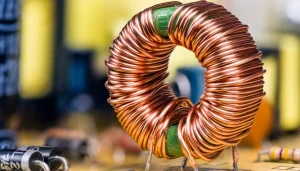
Тороидальные трансформаторы feature a compact doughnut-shaped core design that provides excellent magnetic efficiency and balanced performance. This closed-loop structure helps reduce stray magnetic fields, lower audible noise, and improve energy transfer compared with традиционный ламинированный core transformers.
The symmetrical design also supports more even обмотка трансформатора distribution, helping reduce leakage, minimize электромагнитные помехи (ЭМИ), and achieve more stable, reliable operation.

Тороидальные трансформаторы обычно используются в аудиооборудование, медицинские приборы, и блоки питания, where clean power delivery, compact design, and quiet operation are important. A well-designed тороидальный трансформатор improves efficiency, reliability, and overall performance by optimizing core materials, structure, and transformer winding methods.
Toroidal Transformer Benefits

Тороидальные трансформаторы are widely valued for their компактный размер, lightweight design, и высокая эффективность (often reaching Эффективность 90–95%). Their кольцевое ядро использует copper space more effectively, helping improve transformer performance while maintaining a smaller, more efficient structure. This makes them well suited for compact systems и space-limited applications.
Another major advantage of тороидальные трансформаторы это их low audible noise и reduced stray magnetic fields. The balanced transformer winding design вокруг сердечник из ориентированной по зерну стали helps maintain magnetic flux control, уменьшать электромагнитные помехи (ЭМИ), and support stable operation—making them ideal for sensitive applications such as медицинские приборы и аудиооборудование
Toroidal Transformer Core Design

The core of a тороидальный трансформатор обычно изготавливается из кремнистая сталь с ориентированной зернистостью, which provides low core loss and strong magnetic performance. Регулируя отношение диаметра к высоте of the тороидальный сердечник, designers can create lower-profile designs with larger diameters or achieve higher плотность мощности with taller core structures.
To achieve better toroidal transformer efficiency, engineers often target an optimal core ratio где потери меди are around 60% of железо losses. This balance helps improve передача энергии, maintain lower operating temperatures, and support more reliable transformer performance. Selecting the right геометрия сердечника и transformer materials from the beginning provides a strong foundation for a durable, high-performance design.
Toroidal Transformer Design Calculations

Designing a тороидальный трансформатор starts with the fundamentals of Закон Фарадея. This principle determines the required number of wire turns needed to generate the desired выходное напряжение and achieve efficient transformer performance:
Индуктивность is the next key factor, calculated based on the core outer diameter (OD), внутренний диаметр (ВД), высота, и material permeability. Selecting the right toroidal transformer core dimensions helps maintain высокая эффективность while reducing potential losses.
Designers also consider the произведение площади (Ap), an important parameter that combines размер ядра и winding space. The Ap value helps balance core dimensions, winding area, и плотность мощности, while also considering тепловые пределы to ensure the трансформатор operates with stable temperature and reliable performance.
Winding Design & Leakage Control

Хороший конструкция обмотки is just as important as proper toroidal transformer core design. A uniform transformer winding distribution around the toroid helps minimize индуктивность рассеяния и электромагнитные помехи (ЭМИ). This balanced winding layout reduces stray magnetic fields, improves энергоэффективность, and supports more stable performance, especially in sensitive electronic applications.
Для high-performance toroidal transformers, windings may be arranged in carefully planned sections to control leakage effects and achieve specific filtering performance. This approach helps fine-tune the transformer’s response, improving stability and making it better suited for its intended application.
Simulation-Based Performance Optimization

Современный конструкция тороидального трансформатора benefits greatly from Finite Element Method (FEM) modeling. This simulation method allows engineers to visualize распределение магнитного потока, идентифицировать пути утечки, и оценить, как core geometry changes affect performance before building a prototype.
Beyond simulation, designers can further improve performance through automated design optimization. Регулируя коэффициент заполнения (copper-to-window area ratio) and Y/Z geometric ratios, engineers can achieve a better balance between эффективность, transformer weight, и управление температурным режимом. These techniques, based on NASA design research, help create легче, кулери многое другое reliable transformers.
High-Frequency Transformer Considerations

Для high-frequency transformer designs, выбор материала plays a critical role. Traditional grain-oriented steel cores are suitable for low-frequency power applications, пока ферритовые сердечники provide lower losses for wide-band pulse applications и switching power supplies.
In systems such as ИБП и Преобразователи на основе GaN/SiC, engineers must carefully manage высокочастотная индуктивность рассеяния и паразитная емкость. Excessive capacitance can create unwanted resonances, while poor leakage control may reduce transformer efficiency. Achieving stable performance requires precise winding layouts and, when needed, additional экранирование или insulation techniques to maintain reliable operation.
Practical Design Challenges & Trade-Offs

Designing a тороидальный трансформатор involves more than calculations—it also requires solving practical manufacturing challenges. Winding complexity is a key issue because the wire must repeatedly pass through the center of the тороидальный сердечник, often requiring specialized tooling. Careful lead routing is also needed to avoid strain and unwanted coupling effects.
Another important factor is balancing transformer size and efficiency. A smaller core design can reduce weight and material costs but may increase потери меди due to thinner wire. In applications like portable equipment и аэрокосмические системы, engineers may accept this trade-off to achieve a lighter, more compact конструкция трансформатора.
Essential Tools & Design References

If you’re designing a тороидальный трансформатор, using the right design tools and technical references can help improve accuracy and reduce development time. Traditional transformer design formulas from industry handbooks, along with NASA’s early toroid design software, remain useful starting points for calculating key parameters. Today’s simulation software can further simplify the process by helping engineers optimize turns calculation, flux density, и тепловые характеристики with less trial and error.
Для более глубокого изучения можно использовать такие ресурсы, как Справочник по проектированию трансформаторов и индукторов и специализированные производитель design guides provide proven methods and practical insights. Combining these design references with hands-on testing helps create эффективный, reliable, and practical transformer designs.
Bring Your Transformer Ideas to Life

Если вам нужно изготовленные на заказ тороидальные трансформаторы, transformer design optimization, или technical troubleshooting support, our team is ready to assist. We combine engineering expertise с precision manufacturing to provide solutions that match your производительность, расходы, и reliability requirements.
Свяжитесь с нами сегодня to discuss your project, request a quote, or explore transformer design solutions. Let’s turn your transformer ideas into efficient, reliable, and practical solutions.
Часто задаваемые вопросы
1.How to design a toroidal transformer?
Начать с Закон Фарадея to calculate the required ЭДС, then determine key parameters such as повороты, power rating, operating frequency, и duty cycle. Использовать core dimensions и material data to size the transformer properly, while considering повышение температуры to ensure stable operation.
2. Каковы недостатки тороидальных трансформаторов?
Пока тороидальные трансформаторы offer high efficiency and compact designs, they also come with some trade-offs:
Higher manufacturing cost due to complex production processes and premium materials
Ограниченная мощность, as they are typically not suitable for high-power applications above ~4 kW
Core fragility, since the core material can be brittle and have low thermal expansion, making it more vulnerable to damage
Более высокий пусковой ток, which may trigger fuses or affect connected components if not properly managed
3. Звучат ли тороидальные трансформаторы лучше?
Тороидальные трансформаторы can help deliver cleaner audio performance with lower hum и electrical noise, making them a popular choice in аудиосистемы. Their closed-core structure and tightly wound design help reduce EMI (electromagnetic interference) and vibration. However, overall sound quality also depends on the complete system design and the quality of other components.
4. Какая конструкция трансформатора наиболее эффективна?
Maximum transformer efficiency is achieved by balancing потери меди и потери железа. Для тороидальные трансформаторы, the optimal design principle is often based on keeping copper losses at around 60% of iron losses.
Современный transformer designs can achieve Эффективность 98% или выше, especially when using advanced основные материалы такой как аморфные стальные сердечники to reduce core losses. The most efficient design ultimately depends on основные материалы, конструкция обмотки, and actual условия эксплуатации.

 Russian
  English
  Spanish
  Italian
  German
  Chinese